Why Are mRNA Vaccines Not Giving Long-Lasting Protection?
The secret to long-term mRNA immunity may lie in the bone marrow’s plasma cells.
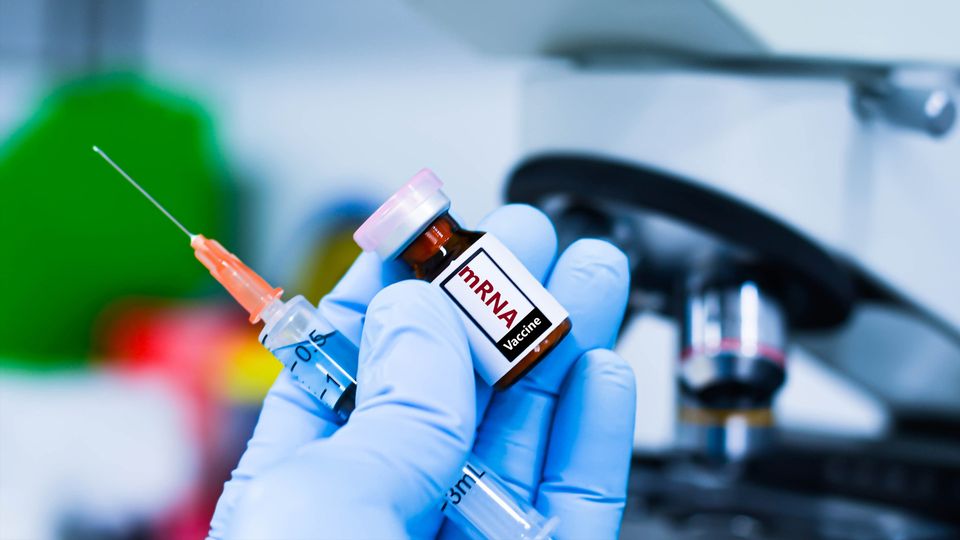
Why do mRNA vaccines struggle to provide lasting protection, and could the absence of bone marrow long-lived plasma cells explain the waning antibody levels and provide insight for durable vaccine development?
Viral infections, reinfections and immunity – SARS-CoV-2 as an example
Viral infections can spread through human-to-human interaction when viral particles enter the body via mucous membranes, such as those in the nose, mouth or eyes, as well as through open wounds.
Briefly, the cascade of events for respiratory viruses goes as follows: viruses infect the airway by binding to specific receptors on our cells within the respiratory tract; for example, the ACE2 receptors on the pneumocytes within the alveoli are targeted by SARS-CoV-2. The subsequent targeting allows the viral pathogen to enter the cell and release its genetic material, hijacking the cell’s machinery to cause viral replication. The immune system recognizes the immunogenic viral RNA produced through pattern recognition receptors and arms the innate immune system. Antigen-presenting cells (APCs), such as dendritic cells, take in antigens and present them to CD4+ T cells, priming them; likewise, B cells also recognize antigens, internalizing them and presenting them on MHC II receptors on their surface. The B and T cells then undergo linked recognition, producing memory B and T cells and plasma cells, leading to adaptive immunity. These plasma cells are required to produce antibodies against the virus that produce protection against reinfection.
It is known that long-lived bone marrow plasma cells are needed to produce protective antibodies against reinfection. It is also known that patients who have recovered from COVID-19 initially have a substantially lower risk of reinfection with SARS-CoV-2.
A major concern during the pandemic was that this loss in humoral antibodies would correlate to a loss in protection against the virus. However, Turner and colleagues showed that COVID-19-recovered individuals indeed had circulating memory B cells directed against SAR-CoV-2 and that the longevity of serum antibodies is not the only factor in determining durable immunity against reinfection as memory B cells could rapidly differentiate into antibody-secreting cells during virus re-exposure.
Protecting against infections with vaccination
What about protecting against a viral infection even before the first exposure?
The first commercially produced and FDA-approved mRNA vaccine was against the SARS-CoV-2 within the United States. While the usual production of a conventional vaccine takes 10–15 years, the COVID-19 vaccine was developed in less than one year, raising concerns about safety and efficacy. A meta-analysis from 2024 concluded that of the vaccines tested, mRNA and inactivated-based vaccines had the greatest effect after the first and second dose, with mild local and systemic adverse effects and a very rare rate of adverse effects.
What has been seen, however, is that without mRNA vaccine boosters, the rate of reinfection increases as these vaccines do not protect against new variants.
How mRNA vaccines interact with the immune system
There is a concern about the lack of durable protection from mRNA vaccination. To understand why, we need to delve into the engineering of the mRNA vaccine as well as the hypothesized method of immune response that produces protection.
The mRNA vaccines consist of a 5’cap attached to the 5’UTR, followed by the coding sequence for the SARS-CoV-2 spike protein, terminated by a 3’UTR and a poly-A tail. This mRNA is encapsulated in a lipid nanoparticle (LNP) and stabilized by polyethylene glycol (PEG).
After intramuscular injection of the vaccine, the mRNA-LNP is taken up by APCs, such as dendritic cells, and trafficked to the lymph nodes. Here, they prime both CD4+ and CD8+ T cells. CD8+ induces the production of cytotoxic T cells, which destroy infected cells, while the antigen-primed CD4+ T cell differentiates into Th1 cells or T follicular helper (Tfh) cells. The Tfh cells help to initiate a germinal center reaction, which results in the formation of affinity matured memory B cells and antibody-secreted long-lived plasma cells.6
The desired outcome of the vaccination regimen is to produce long-lived plasma B cells that can survive for years, producing neutralizing antibodies against the viral antigen as well as the memory B cells, which, when re-exposed to the antigen, give rise to new high-affinity antibody-secreting cells capable of neutralizing the antigen.
Nevertheless, this is not the case. In recent years, during the COVID-19 pandemic, protective antibodies for immunized individuals waned over the months after the completion of the vaccination regimen. Should the long-lived plasma B cells not be active and re-confer protection against the virus? Yes, that is the function of the adaptive immune system, yet this seems not to be happening.
Why mRNA does not produce durable protection, a hypothesis
The mechanism by which mRNA vaccination generates an adaptive immune response and subsequent immunity is unknown. Giannotta and Giannotta
What is known is that the mRNA-LNP is taken up by APCs and is found at the site of injection and the draining lymph nodes, showing the translation of the mRNA cargo into spike protein. This confers that the mRNA is reaching the cytosol within the cells. Monocytes will express the antigen on their surface, typically done by bone marrow-derived APCs to prime CD8+ T cells using MHC class I molecules.
However, mRNA-LNP is also taken up by non-immune cells as an off-target effect; these non-immune cells then generate proinflammatory cytokines and chemokines at the site of immunization, which can trigger antigen-specific antibodies and induction of CD8+ T-cell responses through cross-presentation. Antigen-specific CD8+ T cells are the main determinant for immune protection.
These CD8+ cells, along with memory B cells, block the progression of infection. However, one major issue with vaccination is that CD8+ T cells produce a low concentration of CD38 versus that of natural infection.
Moreover, it is not known exactly how CD4+ T cells are activated. The SARS-CoV-2 mRNA-LNP induces proinflammatory and functional CD4+ and CD8+ T cells and a Th1 response. However, these mRNA-LNPs only encode a truncated version of the spike protein. T cells do not recognize the virus. CD8+ T cells recognize only virus-infected cells, and CD4+ T cells recognize viral antigens of infected cells. Conceptually, only long-lived plasma B cells can recognize the virus. However, there may be some reasons long-lived plasma B cells are not present after vaccination, in the same way as they are from natural infection:
- Cross-reactive T-cell immunity – SARS-CoV-2 shares a broad CD4+ and 8+ T-cell cross-reactivity with human endemic coronaviruses and evokes a secondary response to cross-reactive epitopes. This could eradicate the mRNA-LNP SARS-CoV-2 infection immediately.
- CD4+ cell-mediated memory – Cross-reactive T cells against common coronavirus may become activated, limiting the mRNA-LNP SARS-CoV-2 infection. In other words, pre-existing spike-cross- reactive T cells may be activated, limiting the infection. And as T-cell activation is required for germinal center development, this may intervene with the vaccination.
- Cross-reactive memory B cells and re-exposure – Memory B cells can defend against infection but not prevent it, and upon re-exposure to the virus/antigen, if no long-lived plasma cells are present, the memory B cells are recalled. Cross-reactive memory B cells may become activated upon mRNA-LNP SARS-CoV-2 infection.9
- Waning levels of anti-spike antibody levels – Although waning levels of antibody-mediated protection is expected. During the outbreak of the delta variant, highly vaccinated populations did not see protection, causing serious illness and, in some, death.
mRNA vaccines do not produce long-lived plasma B Cells
Their hypothesis was correct – Recently, Nguyen and colleagues published in Nature Medicine that the waning of SARS-CoV-2 specific antibodies could be accounted for by the absence of bone marrow long-lived plasma cells after vaccination.
Expert Perspectives on Spatial Transcriptomics
This eBook introduces you to six researchers who have adopted spatial transcriptomics in their fields of oncology, immunology and neuroscience. They share how taking a spatial approach has allowed them to make incredible breakthroughs.View eBook
To do this, the team recruited 19 healthy adults between 2.5–33 months after receiving a SARS-CoV-2 vaccine and measured influenza, tetanus and SARS-CoV-2 antibody-secreting cells within the bone marrow. While the influenza and tetanus-specific IgG titers correlated with long-lived plasma cells, serum levels for SARS-CoV-2 did not. It is widely assumed that long-lived plasma cells come from memory B cells, yet SARS-CoV-2 vaccination fails to imprint the required B cell phenotype even 33 months after vaccination.
However, it is important to note that the study only looked at 19 healthy individuals who self-reported their vaccination status. It is also important to note that bone marrow antibody-secreting cells are rare, and bone marrow aspirates may be a better sample for this type of interrogation.
Nonetheless, the reasoning behind the failure to produce long-lived plasma cell response is unknown.
mRNA Vaccines, what is next?
There must be a way to produce durable protection using mRNA vaccines, specifically producing long-lived plasma cells within the bone marrow. That may be done by altering the vaccination regimen. Studies looking at increasing the mRNA dose within the LNP to overcome the limits of anti-LNP antibodies and cross-reactive memory B cells may be an option. The addition of adjuvants to augment the immune response could also be tried.
Alternatively, the engineering of different spike proteins could be tried to alter the response. For the foreseeable future, it may be necessary to administer mRNA vaccine boosters for high-risk individuals every 4–6 months to provide protection.
References:
1. Lumley SF, O’Donnell D, Stoesser NE, et al. Antibody status and incidence of SARS-CoV-2 infection in health care workers. N Engl J Med. 2021;384(6):533-540. doi: 10.1056/nejmoa2034545
2. Seow J, Graham C, Merrick B, et al. Longitudinal observation and decline of neutralizing antibody responses in the three months following SARS-CoV-2 infection in humans. Nat Microbiol. 2020;5(12):1598-1607. doi: 10.1038/s41564-020-00813-8
3. Turner JS, Kim W, Kalaidina E, et al. SARS-CoV-2 infection induces long-lived bone marrow plasma cells in humans. Nature. 2021;595(7867):421-425. doi: 10.1038/s41586-021-03647-4
4. Beladiya J, Kumar A, Vasava Y, et al. Safety and efficacy of COVID-19 vaccines: a systematic review and meta-analysis of controlled and randomized clinical trials. Rev Med Virol. 2024;34(1). doi: 10.1002/rmv.2507
5. Tartof SY, Slezak JM, Puzniak L, et al. Effectiveness of BNT162b2 BA.4/5 bivalent mRNA vaccine against a range of COVID-19 outcomes in a large health system in the USA: a test-negative case–control study. Lancet Respir Med. 2023;11(12):1089-1100. doi: 10.1016/S2213-2600(23)00306-5
6. Bettini E, Locci M. SARS-CoV-2 mRNA vaccines: immunological mechanism and beyond. Vaccines. 2021;9(2):1-20. doi: 10.3390/vaccines9020147
7. Giannotta G, Giannotta N. mRNA COVID-19 vaccines and long-lived plasma cells: a complicated relationship. Vaccines. 2021;9(12). doi: 10.3390/vaccines9121503
8. Oberhardt V, Luxenburger H, Kemming J, et al. Rapid and stable mobilization of CD8+ T cells by SARS-CoV-2 mRNA vaccine. Nature. 2021;597(7875):268-273. doi: 10.1038/s41586-021-03841-4
9. Song G, He W ting, Callaghan S, et al. Cross-reactive serum and memory B-cell responses to spike protein in SARS-CoV-2 and endemic coronavirus infection. Nat Commun. 2021;12(1). doi: 10.1038/s41467-021-23074-3
10. Shitrit P, Zuckerman NS, Mor O, Gottesman BS, Chowers M. Nosocomial outbreak caused by the SARS-CoV-2 Delta variant in a highly vaccinated population, Israel, July 2021. Eurosurveillance. 2021;26(39). doi: 10.2807/1560-7917.ES.2021.26.39.2100822
11. Nguyen DC, Hentenaar IT, Morrison-Porter A, et al. SARS-CoV-2-specific plasma cells are not durably established in the bone marrow long-lived compartment after mRNA vaccination. Nat Med. 2025;31(1):235-244. doi: 10.1038/s41591-024-03278-y