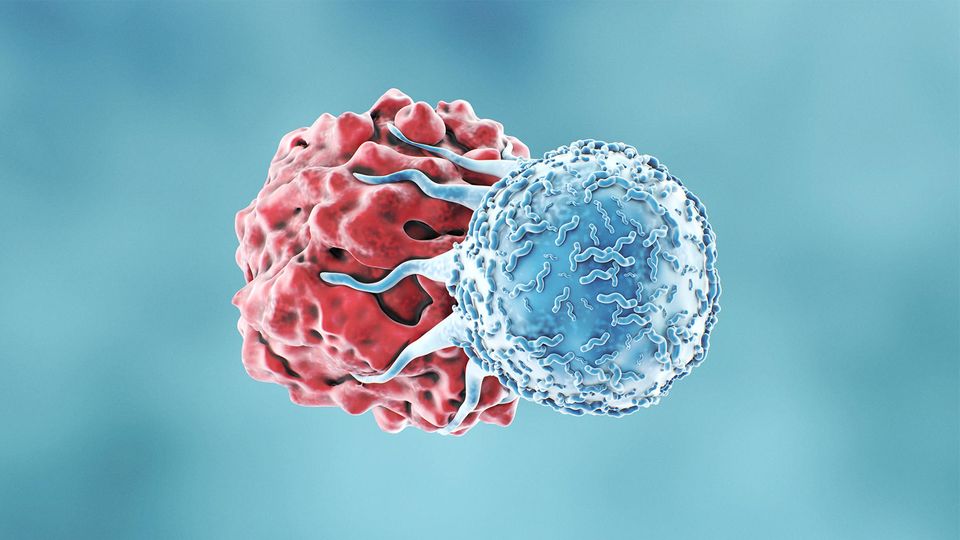
Regulatory T cells (Tregs) are essential for maintaining immune homeostasis and self-tolerance.
Research has shown that Treg dysfunction is implicated in autoimmune and inflammatory diseases. However, a lack of targets for the modulation of Tregs has held back therapeutic intervention.
This poster explores how a robust CRISPR-based screening platform enables the identification of novel regulators of the Treg phenotype to support drug discovery.
Download this poster to explore:
- Target identification and validation in primary human T cells at scale
- A modality-agnostic CRISPR/Cas9 screening platform
- In vitro assays to analyze genotype–phenotype correlations and associated cytokine profiles
Evotec SE, Manfred Eigen Campus, Essener Bogen 7, 22419 Hamburg, Germany (Corporate Headquarters) info@evotec.com | www.evotec.com
Uncovering novel targets to boost regulatory
T cell phenotype
Poster II.517
Abstract# 2888
Ariane Walsh1
, Marina Kramer
1
, Miriam Prohaczka1, Bianca Giuliani
1
, Maiara Severo-Witte
2
, Jan Wahmes
1
,
Kamran Honarnejad1
, Hauke Cornils
1
, Markus Dangl
2
1 Evotec SE, Hamburg, Germany;
2 Evotec International GmbH, Göttingen, Germany
Pipeline platform Modality Indication space TV Hit ID-H2L LO
MytomAb platform
Asset 1
Bispecific antibodies for
enhanced cell depletion
Rheumatology
Gastroenterology
Asset 2 Rheumatology
Gastroenterology
Asset 3 Fibrotic disease
MApyl for AI/ML
driven design Asset 4 Smal molecule
inhibitor Gastroenterology
FFmAb antibody
screening platform
Asset 5
Blocking antibodies
Rheumatology
Gastroenterology
Dermatology Asset 6
E.MPD Asset 7 Small molecule inhibitor
Rheumatology
Gastroenterology
Fibrotic diseases
Treg CRISPR
screen
Target ID screen;
modality-agnostic Target-dependent
HPF transcriptomic
screen
Small molecule screen to
reverse fibrosis Fibrotic diseases
Hit-to-Lead entry
Lead compound optimization
Lead antibody optimization
Lead antibody identified
Target validation
Target deconvolution & validation
Optimized core molecule
Optimized core molecule
Optimized core molecule
iPSC-derived cell therapy programs:
Cell Type MoA Indication space
iT cells Reset of pathogenic B cell compartment Rheumatology; Antibody-driven diseases
iMACs Elimination of fibrogenic myofibroblasts Fibrotic diseases
Our scientific foundations for co-creating next-generation therapeutics.
• We harness Evotec’s fully integrated, end-to-end R&D platforms and deep therapeutic area expertise to enable novel
approaches and accelerate the development of drug candidates targeting autoimmune and inflammatory diseases.
• By combining our internal R&D efforts with strategic partnerships we co-create and advance cutting-edge therapeutic
pipelines in I&I across diverse modalities, including small molecules, biotherapeutics, and iPSC-based cell therapies.
Tables: Our internal I&I portfolio available for strategic partnering and licensing opportunities.
Evotec’s Inflammation & Immunology (I&I) portfolio
PD-1 CD25
FoxP3
CTLA-4
FoxP3
Ki67 viability
Increase in FoxP3+ Tregs
No change in FoxP3+ Tregs
Decrease in FoxP3+ Tregs
Significant change in the % of
FoxP3+ Tregs after target KO:
Figure 2: Scaled expression levels of FACS markers in total CD4+ T cells after target KO: FoxP3, viability (both measured as %),
CTLA-4, PD-1, CD25 and Ki67 (all measured as median fluorescence intensity (MFI)).
The CRISPR screen FACS read-outs reveal candidate regulators of the Treg phenotype.
The “Druggable Genome” screen in total CD 4+ T cells identified:
• 453 candidate genes whose KO significantly increased the proportion of FoxP3+ cells (blue dots); the genes represent
potential targets to inhibit, block or degrade for the treatment of autoimmune and inflammatory diseases.
• 321 candidate genes whose KO significantly decreased the proportion of FoxP3+ cells (red dots); these genes represent
potential targets to inhibit, block or degrade for immuno-oncology applications.
• In addition to FoxP3 expression, the screen assessed changes in key Treg-associated markers (CTLA-4, PD-1,
CD25), proliferation (Ki67), and cell viability following gene KO.
Our modality-agnostic CRISPR-based screening platform for the identification of
novel Treg phenotype modulators
Regulators of Foxp3 as a promising approach to treat autoimmune diseases.
• Regulatory T cells (Tregs) are essential for maintaining immune homeostasis and self-tolerance. Their development and
function are regulated by the transcription factor forkhead box P3 (FoxP3).
• Treg deficiency or dysfunction is implicated in a range of autoimmune and inflammatory diseases. However, therapeutic
modulation of Tregs remains challenging due to a lack of therapeutic targets.
• To overcome this, we established a modality-agnostic CRISPR/Cas9-based target identification platform in primary
human CD4+ T cells, enabling the discovery of novel regulators of FoxP3 for potential therapeutic intervention.
Figure 1: Workflow of Evotec’s CRISPR/Cas9 technology screening platform in primary human T cells
• Isolation of total CD4+ T cells from healthy donors
• Overnight T cell activation
• “Druggable genome” CRISPR library (~8000 genes)
• Arrayed format;
pool of 4 gRNAs/target
• CRISPR/Cas9 KO using RNP transfection by electroporation
Cell
isolation 1.
CRISPR�editing 2.
FACS
read-out 4.
• Seven-colour FACS read-out
• Hit ID was done based on the frequency of FoxP3+ Tregs in
total CD4+ T cells
• Primary hits were identified, for which target knockout (KO)
led to a significant increase in Tregs
Cell
culture 3.
• Five-day culture using two different media conditions:
1. Maintenance of Tregs (non-inducing; nTregs)
2. Low sub-optimal induction of FoxP3 (iTregs)
FoxP3
CD4
nTreg iTreg
In vitro assays validate target impact on Treg phenotype and function
Selected targets for which the KO increased FoxP3+ cells were further analyzed for genotype-phenotype
correlations and associated cytokine profiles.
• CRISPR editing efficiencies of selected gRNA pools in CD4+ T cells were assessed by multiplexed targeted amplicon
sequencing (rhAmp-seq, IDT). 90% of samples showed >90% efficiency; 97% exceeded 70% efficiency (Figure 3).
• We could confirm genes from the screen for which the KO not only enhanced FoxP3 expression across multiple tested
donors but also upregulated other Treg relevant markers as well as cytokines such as IL-10 (Figures 4-6).
3 4 5 6 7 3 4 5 6 7
0
1
2
3
4
5
days post CRISPR
fold change vs. non-targeted control % viable CD4 T cells % FoxP3+ Tregs
3 4 5 6 7 3 4 5 6 7 3 4 5 6 7 3 4 5 6 7
0
1
2
3
4
5
days post CRISPR
fold change in CD4 T cells
vs. non-targeted control MFI CD25 MFI CTLA-4 MFI PD-1 MFI TIGIT
Figure 5: Changes in FoxP3, CD25, CTLA-4, PD-1, TIGIT, and
cell viability in CD4+ T cells on different days following KO of a
target identified in the screen (FACS).
3 5 3 5 3 5
0
1
2
3
4
days post CRISPR
fold change vs. non-targeted control% IFNg % IL-10 % IL-17A
Figure 6. Cytokine production (IFN-γ, IL-10, IL-17A)
by CD4+ T cells on different days post-KO of one
identified target, measured by intracellular flow
cytometry following PMA/ionomycin stimulation.
Non-targeted
control
Targeted KO
FoxP3+
FoxP3+
Figure 4: FoxP3 expression (FACS) and IFN-γ, IL-10 and IL-17A
cytokine release (FluoroSpot) by CD4+ T cells 5 days after CRISPR
target KO of one target identified in the screen.
Figure 3: CRISPR editing efficiency (In/Del
analysis) of gRNA pools targeting 53 genes
(blue circles) in primary CD4 T cells of 4 donors.
Conclusion
• Evotec has established a robust CRISPR-based screening platform capable of target identification and validation in
primary human T cells at scale.
• This platform enabled the discovery of novel regulators of the Treg phenotype, offering promising entry points for
drug discovery.
• These targets may be leveraged across multiple therapeutic modalities, including small molecule inhibitors, protein
degraders, and function-blocking antibodies, for the treatment of autoimmune and inflammatory diseases.
E.MPD: Our high-quality molecular patient database as a resource for disease
assessment and patient stratification
Leveraging patient transcriptomic data to drive target selection and enhance translatability.
• Differential expression analysis of identified Treg targets in I&I molecular patient datasets supports candidate
prioritization for downstream validation and potential hit identification in modality-relevant campaigns.
I. 25 Fresh Blood Single
CellRNAseq
• 19 SjS and 6 SLE profiles
generated
• 8 profiles from untreated patients
• Collection Ongoing
III. ~ 550 Whole Blood RNAseq
Profiles
• 174 SLE + 374 SjS samples so far
• 300 Healthy Control profiles
• 90+ untreated patients
II. High Sensitivity Seer Serum
proteomics
• 100 SjS and SLE profiles
• 200 Healthy Controls
• >1000 peptides regulated in SLE
and SjS detected
Two endotypes of SLE
and SjS patients
Clustering based on IFN�gene signature expression
Peptides Changed
Between SLE and Healthy
Volcano Plot; SLE vs
Healthy
scRNAseq profiles
of SjS patients
UMAP clustering
Figure 7: Ongoing non-interventional clinical study enabling longitudinal collection of patient samples from individuals with
Systemic Lupus Erythematosus (SLE) and Sjögren’s Syndrome (SjS), contributing to Evotec’s molecular patient database.
Conducted in collaboration with the Hannover Medical School (MHH) and Prof. Witte.