Transforming Drug Discovery With Oligonucleotide Therapeutics
eBook
Published: November 21, 2025
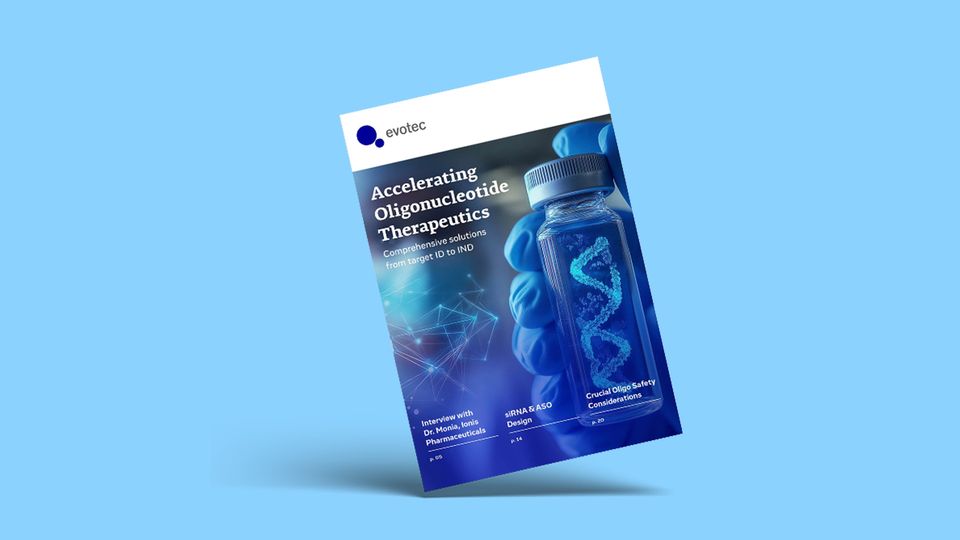
Credit: Evotec.
Oligonucleotide therapeutics are offering new solutions for complex, previously untreatable diseases. However, despite their potential, oligonucleotide programs often face hurdles in delivery, toxicity and off-target effects.
Addressing these technical barriers with streamlined, end-to-end workflows accelerates the path from concept to clinic.
This eBook explores critical aspects of oligonucleotide development, from in silico design to regulatory support.
Download this eBook to explore:
- How to streamline development from target identification to IND submission
- Approaches to enhance delivery, reduce toxicity and predict immunogenicity
- Strategies for integrating bioanalysis, PK/PD modeling and regulatory planning
Accelerating
Oligonucleotide
Therapeutics
Comprehensive solutions
from target ID to IND
Interview with
Dr. Monia, Ionis
Pharmaceuticals
p. 05
siRNA & ASO
Design
p. 14
Crucial Oligo Safety
Considerations
p. 20
1 The Spark of Innovation in Oligonucleotide Therapeutics 03
2 Evotec’s Letter from the Editor 04
3 Interview with Dr. Monia, CEO of Ionis Pharmaceuticals 05
4 End-to-End Oligonucleotide Platform 13
in-silico Oligonucleotide Design 14
Oligonucleotide Chemistry and Synthesis 15
Efficacy (Target Engagement in vitro) 18
ASO Screening and Profiling 18
in vitro Safety 20
Prediction of Hepatotoxicity (Caspase 3/7) 20
Prediction of Immunotoxicity (Bjab and hPBMCs) 21
Prediction of Neurotoxicity (MEA) 23
Off-target Analysis 25
PK/PD Characterization of Oligonucleotides 26
in vivo Studies 27
Bioanalytical Capabilities 28
– Quantitative methods 30
• LC-MS/MS 30
• SplintR Ligase qPCR 31
• QuantiGene™ 33
• ASO Immunodetection Techniques SMxPRO/MSD 34
• Semi-quantitative and Qualitative Methods 37
- High Content Quantitative Image Analysis 37
- High Content Imaging 38
in vitro ADME Characterization: in vitro Stability and Metabolic Profiling 39
in vitro ADME Characterization: Plasma Protein Binding 40
PK/PD Modeling 41
Pathology 44
Preclinical Development 46
Species Selection 46
Toxicological Profile 48
Preclinical Toxicology Study Design 49
Surgical Capabilities 49
Safety Pharmacology 50
Genotoxicology Profile 51
Regulatory Framework and Considerations 51
Quality and Compliance 52
Regulatory Support 53
Therapeutic Area Expertise 54
5 Closing remark 55
CONTENTS
3
I
n the rapidly evolving landscape of precision medicine, oligonucleotide therapeutics are heralding a new era of targeted treatments. These groundbreaking
molecules – capable of modulating gene
expression with unmatched specificity –
represent a paradigm shift in addressing
genetic and rare diseases. From neuroscience to metabolic disorders, they offer hope
for conditions once considered untreatable.
Unlike traditional drugs, oligonucleotides
target RNA, reaching the root of disease
pathways. By their very design they minimize off-target effects and open up possibilities for transformative therapies such
as RNA editing, protein upregulation and
exon skipping. With over 20 approved
drugs and many more in clinical trials, the
field has shifted from high-risk newcomer
to demonstrated clinical potential.
Evotec stands at the forefront of this revolution, combining scientific excellence with
the ability to take an integrated, end-toend approach to drug discovery and development. Through relentless innovation and
collaboration, we have turned challenges
into opportunities, empowering our customers to accelerate the journey from concept to clinic.
This eBook invites you to explore Evotec’s
oligonucleotide journey, cutting-edge technologies and our path towards transformative patient care through precision medicine. Dive deeper into the oligonucleotide
therapeutics revolution in an interview
with the CEO of Ionis Pharmaceuticals.
Learn how RNA-targeted therapeutics, including antisense oligonucleotides (ASOs)
and siRNAs, are innovating the pharmaceutical industry offering enhanced delivery and potency, while reducing off-target
side effects. And gain expert guidance on
how to develop groundbreaking oligonucleotide therapeutics, from concept through
to the clinic. Find the latest insights on aspects including in silico design, chemistry
and synthesis, efficacy, safety, bioanalysis,
stability and metabolic profiling, preclinical
development and more.
The Spark of Innovation
in Oligonucleotide
Therapeutics
4
Do you have a target idea that you
haven’t been able to find a drug
for? A favorite kinase or something
that has so many family members that
targeting it with a small molecule would be
problematic.
Do you want to cure a rare disease? Maybe
your target is a solution for a global epidemic
like MASH or obesity?
Oligonucleotide drugs have proven their
worth as serious contenders for drug makers. At first this modality was too new and
there were too many regulatory hurdles,
oligo drugs were on the edge and only considered for monogenic diseases where no
other treatment was available and what
was considered a big risk, was worth taking. But with 20 marketed drugs and many
100s more authorized for clinical trial use
this modality is catching up fast, the cost
to establish a proof of concept for the druggability of a target and its suitability for this
modality needs only the time it takes to
design and screen a library for hits, less than
6 months.
Trying to upregulate protein expression?
Modify splicing or just knocking down target RNA with the right team you can get to
candidate in 2 years.
Maybe you just need help setting up a
phenotypic assay? A complex disease model or novel mechanism of action, maybe just
some DMPK or regulatory advice. In this
eBook we detail how we go about our oligonucleotide projects from target ID to preclinical and clinical development. We hope you
find the information valuable. If you would
like to discuss with us personally, please feel
free to reach out at info@evotec.com.
Evotec’s
Letter From
the Editor
Hilary Brooks
VP and Modality Lead for
Oligonucleotide Therapeutics
5
For his cutting-edge insights into oligonucleotide therapies, we interviewed Dr. Brett Monia, Ph.D., at Ionis
Pharmaceuticals. The company is a leader in the field,
with groundbreaking technology platforms to develop
oligonucleotides, including ASOs and siRNAs and advanced chemistries and capabilities. In this interview,
Brett talks us through his journey with Ionis Pharmaceuticals. He discusses how the company’s oligonucleotides
platform is paving the way towards a brighter future,
with the potential to target a wide range of severe and
“undruggable” diseases, while overcoming drug delivery
challenges and toxicity concerns.
This interview was conducted on 4 October 2022.
Updated December 2024.
Interview with
Dr. Monia, CEO of
Ionis Pharmaceuticals
Brett Monia (BM), Chief Executive
Officer and Member of Board of Directors
at Ionis Pharmaceuticals.
Interviewed by Yalda Sedaghat (YS),
Oligonucleotide Tx Project Leader, Evotec.
Brett Monia serves as the
Chief Executive Officer
and a member of the
Board of Directors at Ionis
Pharmaceuticals, where he
is also a founding scientist.
His notable contributions
include pioneering research
in the medicinal chemistry
and mechanisms of action
of RNA-targeting modalities. Additionally, Dr. Monia
holds a position on the
Board of Directors for both
Ionis Pharmaceuticals and
Cognition Therapeutics.
As a founding member of
the Oligonucleotide Therapeutics Society (OTS),
Dr. Monia has served as its
President and on its Board
of Directors. In 2025, he
was honored with the year’s
OTS Lifetime Achievement
Award. In an interview
with Yalda Sedaghat from
Evotec, Dr. Monia recounted his journey in the field
of oligonucleotide therapeutics and addressed several
pertinent questions on
oligonucleotide based drug
discovery and development.
About
6
The Journey to Becoming CEO
YS: Could you please share some details
about your background and educational experience? Specifically, what did you study
and how did you end up at Ionis?
BM: Sure, I got my PhD in pharmacology
at the University of Pennsylvania. I always
wanted to be in the drug industry, to discover and develop drugs, bring them to patients, do clinical trials, bring them to market, which is why I studied pharmacology.
And as I was finishing up pharmacology, I
then moved into a MD program at the University of Pennsylvania, and I was about to
start my medical degree studies when I was
approached by Stan Crooke, who was starting a new company in California that was
going to develop a new platform of drug
discovery called antisense. And I didn’t
know too much about antisense at the
time, but I read about it, and I realized that
this will be very hard, but if it can work, it’ll
really be a breakthrough for discovering new
medicines for patients because it can deliver types of medicines that really no other
platform would be able to do.
So, I put my medical degree on hold, and
I moved to California to help start ISIS
Pharmaceuticals, which is now Ionis Pharmaceuticals. I started as a bench scientist
and quickly took on more and more responsibility, expanded roles, I created a drug
discovery group which I led for many years
which is really responsible for the pipeline
of drugs we have today and the marketed
drugs we have today. And then my role expanded to include drug development, business development, and really all kinds of
different areas at Ionis that were important
to the company. It was about that time when
the board approached me and asked me to
consider moving into a CEO role. And that
was because Stan Crooke was planning to
retire and step off the board and step down.
I wasn’t really that excited about it honestly.
I didn’t see myself as a CEO, but maybe more
of a head of R&D someday, but I thought
about it. I talked to people; I got advice.
The board was persistent. And I loved the
company, and I felt like I could do things to
really help the company be more and more
successful. So, I moved into the CEO role in
2020, January 1st, and I’m now wrapping
up my fifth year as CEO, and it’s been going
very well for the company, and I’m really excited about where we are headed.
Introducing ASO-Based
Therapies
YS: Ionis Pharmaceuticals is dedicated to
the discovery and development of ASO
(antisense oligonucleotide)-based therapies. Can you please tell us about Ionis’
approach and the thinking behind it?
BM: So, the antisense platform is a revolutionary way, a new way, for discovering
developing drugs for treating all kinds of
diseases. Historically the pharmaceutical
industry has focused on proteins. Small
7
molecule drugs that bind to proteins, or
monoclonal antibodies that bind to proteins. And there’s been success there obviously, many successes. But the vast majority of diseases, chronic diseases in particular,
still remain without any good treatment
options today. Severe, lethal, fatal diseases
that have no treatment options. And small
molecules and antibodies haven’t delivered
enough value.
The other thing is that most of the drug targets that appear to be the right targets for
these diseases where there is a high unmet
need are not druggable with traditional approaches like small molecules or antibodies.
That’s because the mechanism by which
small molecules and antibodies work, they
just can’t bind to or get to those proteins.
Antisense, as I said, is a revolution because
it doesn’t target protein. It targets RNA
through Watson-Crick hybridization mechanisms and by targeting RNA, all targets
are druggable theoretically. All you need
to know is the sequence of the RNA and
you could design your antisense drug and
bind to that RNA and modulate the function of that RNA by either increasing the
production of a protein that’s missing in
a disease or decreasing the production of
a toxic protein. And that’s how antisense
works. And it works and is now a validated
approach with many drugs on the market
today, a rich pipeline of drugs that are approaching the market for severe diseases of
all kinds.
Overcoming Challenges in
Oligonucleotide Delivery
YS: Imagine for a second that delivery was
not an issue anymore and we could get
inside any cell type we wanted; do you think
any gene can be modified by ASOs?
BM: Based on the mechanism of action
of antisense drugs, theoretically any gene
product can be modulated, can be affected
by an antisense drug … if you can get the
drug there. If you can solve delivery. Delivery is the key really for all drug discovery
platforms when you think about it. Antisense is no different. If you have the right
chemistry, and you can deliver the drug to
the cell type of interest, or if you can deliver
the drug locally, like into the lung for lung
diseases or the CNS for CNS diseases, you
can theoretically modulate, block the production of a toxic gene product, regardless
of the gene, any gene should be approachable as long as you can solve the delivery
issue.
YS: In the near future, do you think we will
be lucky enough to find something like
GalNAc for targeted drug delivery?
“Ionis’s strong patientfocused culture is a key
differentiator.”
8
BM: Something like GalNAc for other tissues
you mean?
YS: Yes, do you still think that we will be
able to crack the code and achieve delivery
to other tissues and is Ionis active in this
area?
BM: So, the LICA chemistry platform, really
the start there was with targeting the liver,
the hepatocytes. LICA stands for Ligand
Conjugated Antisense, and it really has
been a breakthrough for ASOs, antisense,
as well as siRNA because it delivers the
drug almost entirely to the hepatocyte,
to the liver cells. And there is almost no
exposure outside of the liver so that greatly
increases the potency because you are
not wasting drug for liver targets. It’s all
getting to where it needs to go. And you’re
not causing off-target side effects because
you’re not exposing the drug to the rest of
the body, you’re only going to the liver. That
is GalNAc for the liver.
We are developing other LICAs for other tissues today, and we’re making great
progress. We have succeeded in a targeted
delivery LICA approach for pancreatic beta
cells where we can show very nice potency
in animals by attaching a ligand to an antisense drug or an siRNA drug and it goes
right to the beta cells in the pancreas and
shows very nice target engagement.
We’ve also done the same thing now for
muscle, both skeletal muscle and cardiac
muscle, cardiac myocytes where we have
been able to identify ligands that target a
particular receptor that is found in muscle
cells, binds to those receptors, and the drug
– siRNA or ASO – gets taken up into the
cells where the drug exerts its effect very
nicely. Very similarly to the liver in both of
these cases. We are working on additional
targeted delivery strategies, additional LICAs
for other tissues and cell types, as well as
similar approaches to overcome the blood
brain barrier for CNS diseases. We are making good progress. Right now, the next two
LICAs I see coming forward will be for muscle and to traverse the blood brain barrier for
CNS diseases, supporting IV or SC dosing.
A Spotlight on Ionis
Pharmaceuticals
YS: How do you see Ionis compared to other
pharmaceutical companies?
BM: Ionis is unique in several different
ways. The two biggest ways: Number 1,
the science, the platform, right? Obviously,
RNA targeted therapeutics, ASOs and
siRNAs, which we are doing both of at
Ionis is a very new and revolutionary way
to discover drugs that the pharmaceutical
industry hasn’t been a part of at all in
its history until recent. So purely from a
drug discovery platform basis is where we
differentiate from these other companies.
The other thing that I think separates Ionis
and makes it unique compared to other
pharmaceutical companies is the culture.
9
The culture at Ionis is incredibly strong
and it is a culture that is devoted to delivering transformational medicines for patients who are suffering from terrible diseases. And that is the primary driver. It’s
not the economics, it’s not the financials
around what the market could offer for a
given drug. If we believe that we can help
patients with a drug that we can discover,
we will deliver it. We will do the best of our
ability to deliver it. It’s also a great culture
of transparency, dedication to innovation
and science, and it’s an organization with
a culture that is committed to empowering individuals to pursue their scientific
innovative ideas without being harnessed,
without being held back. And in a company
with the fewest possible rules so that people don’t feel like they are cornered by too
many rules, too many committees. We try
to avoid bureaucracy at all costs.
YS: Ionis has been very successful in CNS
disorders with unprecedented therapies, to
treat spinal muscular atrophy (SMA) for example. However, clinical trials for Huntington’s disease were paused. Can you please
tell us about that? What could have been
done to prevent it? Could Ionis have foreseen this prior to what we saw in the clinic?
BM: So, the Huntington phase 3 trial last
year was stopped. The Huntington trial
tested our drug Tominersen which targets
the huntingtin gene in patients with symptomatic Huntington’s disease whether they
were early stage, middle stage, or late-stage
disease. It was decided after all the patients
actually enrolled in the Huntington trial, if
I recall nearly 800 patients in that study,
a safety oversight committee decided that
patients were not going to benefit if the
study completed, which would have taken
another year, so they recommended to stop
the study, and our partner Roche agreed. So,
the study was stopped.
What we showed in the study was very nice
reductions of huntingtin protein in patients,
but it wasn’t showing signs of benefit. Since
that time, our partner Roche has investigated the data from that phase 3 study
extensively, post hoc analysis and they
believe they have found a patient population, a sub-population in that trial that
was benefiting from Tominersen. That patient population are patients that have less
disease burden. They are earlier on in their
disease, and they are younger. It appeared
that those patients were doing better across
all endpoints that we looked at compared to
placebo. Based on that analysis, Roche has
started a new phase 2 study in that same
exact population of Huntington’s patients
to prove the hypothesis that if you can treat
patients that are earlier on their disease with
Tominersen, they can benefit.
“Delivery is identified
as a critical factor for
RNA-targeted therapies”
1 0
That is another example of a good target,
good drug, but a trial design that probably
wasn’t perfect.
YS: Why were the clinical trials designed
that way?
BM: Two reasons. Our preclinical data suggested that sure if you treat earlier, you can
actually prevent the disease from actually
occurring, before symptoms happen or you
can even reverse them if you treat early
enough. But also, animals that were further on in their disease progressed slower.
So, they were getting some benefit even
though they were still progressing, they
were progressing slower than placebo. So,
there was evidence that the different stages of the disease, patients with different
stages of the disease would benefit. Just
they would benefit differently. The second
reason is that we wanted to help as many
patients as we can. Patients that are early. Patients that are mid. Patients that are
late. And all of those patients need treatment so those are really the two reasons we
designed the trial that way.
The Power of Oligonucleotide
Chemistries
YS: My next question is actually about the
chemistry. The chemistry just keeps getting
better every day and your generation 2.5 antisense drug has shown remarkable activity
in vitro, in animal models and of course in the
clinic and the market. Ionis has a few ASOs
with cET, (constrained ethyl) modifications
in clinical trials for metabolic disorders, but
no marketed drug yet. Am I correct? Or are
we getting close to that?
BM: That’s correct. We have even better
chemistries now entering development,
such as our MsPA backbone chemistry
which support very infrequent dosing; as
infrequent as semi-annual or even annual
dosing.
YS: Other companies are developing
copycat drugs using your old chemistry,
2′-O-methoxyethyl (MOE), mainly because
the safety profile is known. What have you
learned through all these generations of
ASOs and siRNAs, and what workflows
would you recommend for reaching the
clinic with minimum to zero side effects?
BM: Chemistries for antisense oligonucleotides and siRNAs continue to evolve
and get better and better and better. New
chemistries that are being developed now
at Ionis are allowing us, for example, to remove phosphorothioate from the backbone.
“By targeting RNA, all
targets are druggable,
theoretically. This is a
breakthrough for discovering new medicines
for patients.”
1 1
Phosphorothioate is a wonderful chemistry
that supports RNase H and provides very
effective distribution in the body. However, phosphorothioates also can produce
pro-inflammatory effects at high concentrations in tissues. New backbone chemistries are now emerging at Ionis that allows
us to remove the phosphorothioate from
the backbone. And we have seen a really
exciting profile with these new backbones.
One backbone chemistry called MSPA as an
example. When we incorporate MSPA into
our oligonucleotides, and we really push the
dose to produce pro-inflammatory effects,
we are actually not seeing pro-inflammatory effects, so we are greatly reducing those
off-target side effects. And what we are also
getting from this backbone is a marked increase in stability, allowing us to dose much
less frequently, potentially in the clinic. Every few months for example. Or twice a year
for example. Because they are so stable.
The other thing that is happening with new
chemistries, and really this gets to another
way to tackle off target effects and to avoid
them is potency. The lower the dose, the
better off you are, the less side affects you
are going to get. Especially if you can get
your drug to the cell type of interest. Newer chemistries, like gen 2.5 cET chemistry,
the MSPA backbone, and of course that’s
what LICAs do. LICAs for liver, for muscle,
for pancreas, and other tissues. What they
do is they allow us to go to much, much
lower doses so that we can avoid off target
effects and only deliver the drug to the cell
type of interest and really that’s what it’s all
about is to avoid chemistries that produce
off-target effects and utilize chemistries
that give you higher potency so that you
can go to the lowest dose possible. That’s
what cET brings. That’s what MSPA brings.
That’s what LICA chemistry brings – greater
potency, lower dose.
YS: How about reducing the number of
phosphorothioate from the backbone of
ASOs and siRNAs?
BM: We don’t remove all the phosphorothioate. We remove some of it. And that’s
enough to avoid off target effects. By incorporating these MSPA backbone chemistries
into them. So LNA chemistry like cET chemistry improves potency based on its ability
to bind to RNA more tightly, higher affinity,
right? But you raise a good point too is that
we don’t have good ways to predict the best
sequences still to develop an antisense drug
or where to place some of these chemistries
when we decorate the molecules, right?
And a lot of this has to be done through
screening. Hard, brutal screening. Screening lots of oligonucleotides with different
decorations, different amounts of different
chemistries in them in different sequences
so you’ve got a lot there to screen.
We have some idea. We have some rules.
We have plenty of rules actually, but we
still don’t have enough. And we still have
to screen to find the right sequence and
the right composition of chemistry that’s
optimal to maximize potency and to avoid
off-target effects.
1 2
Final Outlooks on
Oligonucleotides
YS: Ionis and Alnylam are key players in the
field of RNA-targeted drug discovery and
development. Both companies focus on
creating innovative gene-based therapies.
Of course, factors like delivery, specificity,
tissue longevity, and safety are important.
Do you see a clear winner here, ASO vs.
siRNA? Example: the head-to-head ASO/
siRNA in the cardiovascular field for the
same ATTR target, Eplontersen vs. Onpattro
or Amvuttra.
BM: I do not see the need to declare winners
and losers. Both ASO and siRNA platforms
have delivered a great deal of success and
benefit for patients, and are poised to expand greatly on this in the future. Both
mechanisms offer advantages and disadvantages. The key is to utilize the best
mechanism, ASO or siRNA, to make the best
drug for a particular target and disease. That
is what we are doing at Ionis.
YS: How about gene therapy, do you envision
a future for that?
BM: Traditional gene replacement therapy
has had limited success to date, especially considering the many decades that this
approach has been in development. However, I include gene editing as gene therapy, and maybe as the latest generation of
gene therapy. Although there is much that
needs to be done to validate this platform
as a safe and effective approach in medicine, I am reasonably optimistic that this
approach will have success. This is one reason why we are also investing in gene editing at Ionis.
1 3
When looking to develop innovative oligonucleotide therapies, partnering with a
CRO/CDMO with specialist oligonucleotide
capabilities can help you ensure success. Our
integrated multidisciplinary team ensures
that your oligonucleotide discovery and development program will progress efficiently
from whatever entry point you require, up to
and including regulatory submission.
With more than 40 dedicated and experienced oligo experts, we will design and
select state-of-the-art oligonucleotides,
providing comprehensive preclinical data
sets, reduced transition times and efficient communication. We can also help
with disease area expertise and animal
models to identify new targets or validate
existing ones. Our computational chemists
and bioinformaticians are involved in the
early stages, with sequence selection and
oligonucleotide synthesis. We then have a
skilled set of biologists, pharmacologists,
chemists, toxicologists, pathologists and
regulatory experts to support screening
and in vitro/in vivo proof of concept (PoC)
right through to (and including) GLP safety studies and entrance into the clinic. We
guide your programs through key deliverables, anticipated outcomes, project decision points and crucial stage handovers for
oligonucleotides.
Figure 1. Example of a timeline for a generic end-to-end oligo project. Partners can choose to join at any or all stages
of the continuum, from target identification up to and including preclinical IND.
End-to-End
Oligonucleotide
Platform
Year 1 Year 2 Year 3 Year 4
Q1 Q2 Q3 Q4 Q1 Q2 Q3 Q4 Q1 Q2 Q3 Q4 Q1 Q2 Q3 Q4
Screen,
H2L
Rodent,
early safety
IND enabling
tox + CMC
In silico
library design,
synthesis
and in vitro
screening
Safety assessment and
de-risking activities go/
no-go decision point
Preclinical tox and
GMP manufacturing
lead selection and
resynthesis
for vivo
scale
3 4
2
5
1
In vivo target
engagement
PDC
nomination
IND filing
6
1 4
In silico Oligonucleotide Design
In silico design focuses on identifying sequences with optimal drug-like profiles from
a pool of potential candidates targeting a
specific biomolecule. We have developed a
proprietary pipeline to facilitate the selection of molecules exhibiting the most favorable combination of properties, enhancing
the likelihood of identifying the best candidates during the screening process.
Our pipeline is highly adaptable to the specific requirements of any project and includes the prediction of multiple features,
such as:
Off-target effects and conservation
analysis across a wide range of species
Toxicity assessments/presence of repeats
Efficacy predictions and secondary
structure analysis/thermodynamics
parameters
Our sequence design capabilities encompass siRNAs and ASOs with various mechanisms of action, including gene downregulation or upregulation, steric hindrance
with RNA-binding proteins (RBPs), allelespecific downregulation, anti-MiR and exon
skipping.
Figure 2. A proprietary pipeline for generating and selecting the most promising oligonucleotide sequences with
favorable drug-like properties.
ASO selection
no in-silico
predicted
off-target in
humans
no mismatch
not conserved
in macaque
and not
conserved
in mouse
not
conserved
in macaque
no snps with MAF
>0.1
no toxic motif
all potential
oligos of length
15 to 25
target transcript
conserved in
macaque
not conserved
in mouse
conserved
in mouse
with
ASO/siRNA design platform
1 Detailed target analysis 2 Generate ASOs/siRNAs of specified sizes
3 Align ASOs/siRNAs using BWA to:
4 Compute additional descriptors and proceed to the semi-automatic selection
1 5
Oligonucleotide Chemistry
and Synthesis
Following oligonucleotide design, We have
a broad oligonucleotide synthesis platform
that can fully support our partners’ projects.
For the early phases of a discovery project,
we have small-scale synthesis platforms
based on the MerMade 48X Synthesizer.
With a range of associated instrumentation,
our platform can rapidly deliver single- and
double-stranded oligonucleotide libraries
for initial screening purposes, through to
the synthesis of high purity lead compounds
suitable for full in vitro and in vivo profiling.
As a project matures, our mid-scale capabilities using the ÄKTA oligosynt™ platform
can supply advanced leads and candidate
oligonucleotides on scales from 100s of milFigure 3. Evotec scientist performing small-scale synthesis on the MerMade 48X Synthesizer.
ligrams up to 10s of grams to support efficacy, tolerability and toxicology studies in
rodents and higher species.
Our analytical chemistry teams are equipped
with the latest high-resolution LC-MS systems to ensure the highest quality of delivered compounds. A range of complementary characterization techniques are available,
in addition to the generation of analytical
packages to support advanced studies including packages for entry into preclinical
development and regulatory support.
Our synthesis experts are able to produce a
wide range of oligonucleotide classes, from
single-stranded antisense gapmers and mix-
1 6
Figure 4. Evotec scientist desalting the oligo.
Figure 5. An overview of Evotec’s oligonucleotide synthesis capabilities, including milligram and gram scale
production and the upcoming GMP scale manufacture.
mers through to double-stranded siRNAs
and miRNAs, incorporating a variety of industry standard and project specific chemical modifications to the backbones, sugars
and nucleobases. We work with commercial
building blocks from multiple suppliers and
can also synthesize custom reagents for
novel oligonucleotide modifications according to project and client needs.
A wide range of conjugation chemistries are
also available to improve cellular uptake or
enable tissue and organ targeting. In addition to well-known and validated strategies
for improving targeting and uptake such as
GalNAc, lipid and cholesterol conjugates,
etc. with dedicated and well-equipped
chemistry teams, we have expertise and a
strong track record in linker chemistry and
peptide synthesis. We also offer a wide
range of capabilities for conjugation, antibody generation and small molecule synthesis. Other chemical classes can also be
harnessed to expand the chemical scope of
oligonucleotide therapeutics and accommodate a project’s individual needs.
Current Platform Capabilities in Oligonucleotide Synthesis
Milligram scale Gram scale GMP Manufacture (0.5 kg)
Future platform expansion
Wide range of chemistry
capabilities
– Phosphate and phosphorothioate chemistry
– Fully modified sugar
chemistry (2’-F, 2’-OMe,
2’-MOE, LNA, others.)
– Nucleobase modifications
(5-MeC 5-MeU etc.)
– Wide range of building
blocks available from
multiple suppliers
– Conjugation chemistry
(GalNAc, lipids,
dyes, ASO-peptides
conjugates)
– In-house building block/
linker/ligand synthesis
available
Small scale equipment and capacities:
2 complete Oligo discovery platforms in Evotec
Medium scale equipment and
capacities: Gram scale to support
preclinical studies
AKTA Flux 6
(Tangential Flow
filtration)
SP VirTis
AdVantage Pro
Freeze Dryer
– AKTA Oligosynt
– Latest automated
system for research to
process development
scales (50 µmol to
12 mmol)
Post synthetic processing
Post synthetic processing
(in addition to small scale)
Synthesis Synthesis
MerMade 48X (Automated
parallel synthesis from
200 nmol to 5 µmol)
Agilent 1260/1290
Infinity II
(HPLC Purification)
AKTA Pure
(Desalting)
Purification
Thermomixer
for strand
annealing
Nanodrop
Concentration
determination
Genevac
evaporation/
freeze drying
Endosafe
Endotoxin
titration
AccurateMass
LC/MS
1 7
Conjugation of therapeutic oligonucleotides to ligands and biomolecules can improve tissue/organ targeting
and uptake
A range of molecule classes are being exploited or investigated in the industry including:
– Sugars/carbohydrates – e.g. GalNAc for liver targeting
– Lipids – e.g. C16 or cholesterol for liver, kidney, adipose, CNS
– Peptides, e.g. GLP-1 analogues for pancreas
– Antibodies – e.g. TFR1 mAB for skeletomuscular tissue
Wide range of conjugation chemistries used in Evotec/Partner projects
– Lipids, carbohydrates, dyes, peptides, biotin etc.
– 5’ and 3’ modifications for all ASOs
– Passenger strand modifications for siRNA
– Cleavable and non cleavable linkers
– Organic chemistry capabilities for synthesis of novel or
non-commercial conjugate and linker building blocks
GalNAc ASO/siRNA conjugates
Dye labelled ASOs
Peptide – ASO conjugates
siRNA – antibody conjugates
Lipid – Oligo conjugates
Figure 6. Improving targeted ASO delivery by using ligands and biomolecules.
1 8
Efficacy (Target Engagement in vitro)
ASO Screening and Profiling
Oligonucleotides can modulate mRNA expression or splicing, leading to altered protein expression and potentially reversed
disease phenotypes. We design customized
screening cascades to monitor each step of
this process, ensuring the selection of the
most potent and safest oligonucleotides.
We have developed a miniaturized (384-
well), multiplexed, one-step RT-qPCR using
proprietary reagents to measure target
expression modulation (down- or up-regulation) or splicing modification of over 1,000
oligonucleotides in under a month. Hits are
confirmed through concentration-response
testing to identify the most potent ASOs.
Hit validation is performed by assessing
downstream effects, such as protein level
modulation and/or functional assays. Various technologies, including high-content
imaging, ELISA, MSD, TR-FRET and Simple Western, are employed for protein level
analysis. The functional effects of oligonucleotides are evaluated using customized
cellular assays in both healthy and diseased
contexts, depending on the target function.
We offer a wide array of cell models, including immortalized cell lines, primary cells,
iPSC-derived cells and patient-derived cells for
genetically based diseases. Our iPSC platform,
combined with gene editing (e.g., CRISPR
technology), ensures that oligonucleotides
are tested on disease-relevant cell systems.
Figure 7. Typical workflow of in vitro discovery activities for oligonucleotide therapeutics projects. High-throughput
oligonucleotide screening (RNA readout), followed by protein analysis and/or phenotypic assays using diseaserelevant cell models to identify the most potent ASOs.
Screening and cell treatment – ~1000 oligos throughput
Protein analysis Phenotypic and disease-relevant assays
Expression of target
(and relevant isoforms)
Optimization of oligonucleotides delivery
according to modality
and conjugation strategy
Automated handling,
storage and compound
plates preparation
Echo dispenser
RNA analysis qPCR
read-out
– 1-Step qPCR protocol
– Multiplexed qPCR
High-throughput
Genedata Screener
analysis
– Western Blot and Simple Western (Jess)
– High Content Screening (HCS) Operetta CLS
– Meso Scale Discovery (MSD)
Simple Western
Jess
High content
imaging
Operetta CLS
Metabolic studies Seahorse FX
Functional studies FLIPR Penta
Other assays
– High content
imaging
– Electrophysiology
– Pathway
analysis
– Biochemical
assays
Cell treatment
up to 384w format
1 9
Figure 8. Examples of cells employed for in vitro profiling of oligonucleotides, ranging from iPSC-derived cell models
(either 2D or 3D) to patient-derived cells for splicing correcting oligonucleotides.
2 0
In vitro Safety
A crucial aspect of antisense therapeutics
discovery is early safety monitoring in the
preclinical phase to predict potential toxicities. We conduct medium-throughput toxicity prediction assays during hit validation
to mitigate risks as oligonucleotides progress through the screening cascade. Established assays for predicting hepatotoxicity,
immunogenicity, and neurotoxicity utilize
well-characterized reference ASOs from
preclinical models or clinical settings. Hepatotoxicity is monitored via caspase pathway activation, while immunogenicity is
assessed through TLR9 activation in a human lymphoma cell line. For selected leads,
cytokine release in freshly prepared PBMCs
from multiple healthy donors is tested to
confirm the lack of immunogenicity in a
clinically relevant setting.
Prediction of Hepatotoxicity
(Caspase 3/7)
To assess the potential hepatotoxicity of
the selected antisense oligonucleotides, we
employ a Caspase 3/7 assay as described
by Dieckmann et al. (2018)1 and Shen W
et al. (2019)2. Human (HeLa) and murine
(AML12) cells are used for prediction of potential hepatoxicity in human and mouse,
respectively. The use of human and murine
models helps two-fold: prediction of hepatoxicity in human and de-risking of following in vivo studies in rodents. The results
show caspase 3/7 activation and indicated
that the toxic control ASO LN43 induced
caspase activation, whereas neither the
non-toxic control ASO LN32 nor the test
ASOs triggered such activation.
References
1 Dieckmann A, Hagedorn PH, Burki Y, et al. A Sensitive In Vitro Approach to Assess the HybridizationDependent Toxic Potential of High Affinity Gapmer Oligonucleotides. Mol Ther Nucleic Acids. 2018;10:45-54.
doi:10.1016/j.omtn.2017.11.004
2 Shen W., De Hoyos C. Migarawa M. et al. Chemical modification of PS-ASO therapeutics reduces cellular proteinbinding and improves the therapeutic index. Nature Biotechnology 2019 37:6. 10.1038/s41587-019-0106-2
Figure 9. Caspase-Glo®
3/7 Assay showing the
induced caspase activation
with the toxic control,
ASO LN43 in human
and murine cell lines.
Cells are transfected
5 concentrations ranging
from 100 nM to 1 nM
Molarity for 24 hours
Luminescence fold
increase vs. UT
Human Cells
-10
16
14
12
10
8
6
4
2
0
-10 -9-9 -8-8 --77 --66
0
2
4
6
8
10
12
14
16
HeLa cells
Molarity
Luminescence fold increase
vs. UT
-10 -9 -8 -7 -6
0
2
4
6
8
10
12
14
16
AML12 cells
Molarity
Luminescence fold increase
vs. UT
LN43
LN32
UT
Murine Cells
Molarity
Luminescence fold
increase vs. UT
-10
16
14
12
10
8
6
4
2
0
-10 -9 -8 -7 -6 -9 -8 -7 -6
0
2
4
6
8
10
12
14
16
HeLa cells
Molarity
Luminescence fold increase
vs. UT
-10 -9 -8 -7 -6
0
2
4
6
8
10
12
14
16
AML12 cells
Molarity
Luminescence fold increase
vs. UT
LN43
LN32
UT
LN43
LN32
UT
-10 -9 -8 -7 -6
0
2
4
6
8
10
12
14
16
HeLa cells
Molarity
Luminescence fold increase
vs. UT
-10 -9 -8 -7 -6
0
2
4
6
8
10
12
14
16
AML12 cells
Molarity
Luminescence fold increase
vs. UT
LN43
LN32
UT
2 1
Prediction of Immunotoxicity
(Bjab and hPBMCs)
The in vitro immunogenicity assays on the
Bjab cell line and human peripheral blood
mononuclear cells (hPBMCs) are essential
for the evaluation of potential inflammatory risk associated with ASO treatment.
We developed these predictive assays after
in vivo studies on rodents and non-human
primates were unable to predict the immunogenicity of some ASOs1. Instead of
animal models, these assays use Bjab cells
(Burkitt lymphoma cell line) or fresh hPBMCs (coming from our blood bank service
that guarantees fresh blood from healthy
volunteers). The Bjab cell line has been described to respond to ASOs that showed
immunogenicity in the clinic with a CCL22
mRNA increase (not elicited by non-immunogenic ASOs), through TRL9-dependent
signalling2. The model has been demonstrated to robustly predict potential ASO
immunogenicity. The Bjab assay is validated and performed in a high throughput format to allow assessment of a larger number
number of ASOs for an immunogenicity prediction at hit validation stage (Figure 10).
Only freshly isolated hPBMCs seem suitable compared to cryopreserved cells1 and
are used to assess the potential risk of
proinflammatory cytokines modulated by
ASOs in a complex and translational model, where different networks involved in the
recognition of both DNA and RNA oligonucleotides, including the Toll-like receptors
(TLRs), are present. After treatment of
Figure 10. Fold change CCL22 mRNA induction in Bjab
cells of positive and negative ASO clonical controls.
Data are expressed as fold change relative to untreated
cells ± standard deviation.2
hPBMCs with ASOs, cytokine concentrations are measured in supernatants by the
Intelliflex xMAP™ instrument with multiplexed approach (Figure 11). Viability is
analyzed in pellets.
During our assay development process,
several cytokines and molecular tools were
tested to ensure a robust readout that is
benchmarked to relevant positive and negative clinical controls.
The difference between clinically relevant
positive and negative control ASOs demonstrates that this assay is sufficiently sensitive to distinguish between immunogenic
and non-immunogenic ASOs (Figure 11)
despite donor-to-donor variability and subtle pro-inflammatory effects that might
otherwise be overlooked during preclinical
and could translate into significant toxicity
in clinical trials.2
1×10⁻⁸
100
75
50
25
0
1×10⁻⁷ 1×10⁻⁶ 1×10⁻⁵
[ASO]
Fold change CCI22 (rel to UT)
1×10 -8 1×10 -7 1×10 -6 1×10 -5
0
25
50
75
100
[ASO]
Fold change CCl22 (rel to UT)
UT
ASO positive clinASO negative clUT
ASO positive clinical control
ASO negative clinical control
2 2
Cell viability, donor 2
Cytokine, donor 1
Cytokine, donor 2
Figure 11. Top graphs: Cell viability assessed in cell pellets after treatment with dilution curves of reference
ASOs in two donors. Data are expressed as relative luminescence unit (RLU) ± SEM. Middle and bottom graphs:
Cytokine release in supernatants from the same ASOs tested with the Luminex assay. The graphs on the right are
an enlargement of those on the left, given that positive technical control shows higher cytokine release compared
with other clinical ASOs. Data are expressed as pg/mL of cytokine ± SEM.
References
1 Burel SA, Machemer T, Baker BF, et al. Early-Stage Identification and Avoidance of Antisense Oligonucleotides
Causing Species-Specific Inflammatory Responses in Human Volunteer Peripheral Blood Mononuclear Cells.
Nucleic Acid Ther. 2022;32(6):457-472. doi:10.1089/nat.2022.0033
2 Pollak, A., Cauntay, P, Machemer T., et al. Inflammatory Non-CpG Antisense Oligonucleotides Are Signaling
Through TLR9 in Human Burkitt Lymphoma B Bjab Cells. Nucleic Acid Ther. 2022, 10.1089/nat.2022.0034
3 Vollmer J, Weeratna R, Payette P, et al. Characterization of three CpG oligodeoxynucleotide classes with distinct
immunostimulatory activities. Eur J Immunol. 2004;34(1):251-262. doi:10.1002/eji.200324032
Neg ctrl
Technical ctrl
ASO positive
clinical ctrl
ASO negative
clinical ctrl
Neg ctrl
Technical ctrl
ASO positive
clinical ctrl
ASO negative
clinical ctrl
Neg ctrl
Technical ctrl
ASO positive
clinical ctrl
ASO negative
clinical ctrl
Cytokine, donor 1
Cytokine, donor 2
Luminescence [RLU]
Cytokine conc [pg/mL]
Cytokine conc [pg/mL]
Cytokine conc [pg/mL]
Cytokine conc [pg/mL]
Log ASO conc [M]
Log ASO conc [M] Log ASO conc [M]
Log ASO conc [M] Log ASO conc [M]
Cell viability, donor 1
Luminescence [RLU]
Log ASO conc [M]
2 3
Prediction of Acute Neurotoxicity for CNS Applications –
Multielectrode Array (MEA)
The development of ASOs for central nervous system administration often encounters high attrition rates, due to acute neurotoxicity. This neurotoxicity is influenced by
both the nucleotide sequence and chemical
modifications, and it remains largely unpredictable during the design phase.
We have established an in vitro screening assay utilizing the Multielectrode Array
(MEA) to characterize these neurotoxic
oligonucleotides. MEA systems facilitate
the study of electrically active cells, such as
neural networks. Our observations indicate
a strong correlation between specific assay
parameters and neurotoxicity, enabling us
to effectively exclude neurotoxic ASOs from
further in vivo development.
Figure 12. Various intracellular and extracellular
approaches to record neuronal electrical activity with
a multielectrode array (MEA) system.1
Patch
clamp
Neuron
Substrate Microelectrode
Array (extracellular
field potential)
Extracellular
(Action potentials)
Intracellular
(transmembrane
potentials)
Figure 13. Multielectrode array (MEA) approach2
(A) Schematic of chamber set-up.
(B) Representative image of cultured neurons (14 DIV) grown on MEA.
(C) Single electrode recordings showing examples of different firing patterns. Scale bars 30 μV.
A B C
2 4
References
1 Mateus JC. Optimization of a multielectrode array (MEA)-based approach to study the impact of Aβ on the
SH-SY5Y cell line. 2015. https://api.semanticscholar.org/CorpusID:139373792
2 Roberts TP, Kern FB, Fernando C, et al. Encoding Temporal Regularities and Information Copying in Hippocampal
Circuits. Sci Rep. 2019;9(1). doi:10.1038/s41598-019-55395-1
3 Mack CM, Lin BJ, Turner JD, Johnstone AFM, Burgoon LD, Shafer TJ. Burst and principal components analyses
of MEA data for 16 chemicals describe at least three effects classes. Neurotoxicology. 2014;40. doi:10.1016/j.
neuro.2013.11.008
4 https://axionbiosystems.com/maestro-and-omni
The impact of these ASOs on the functional
properties of the neuronal network is then
assessed at various time points. Electrophysiological parameters that show strong
correlation with in vivo neurotoxicity are
analyzed to identify potential neurotoxic
ASOs. This assay facilitates the early identification of neurotoxic ASOs, thereby reducing attrition rates during in vivo tolerability
studies.
Figure 14. Microelectrode Array (MEA) neurotoxicity assay. A) MEA well-containing electrode grids on which
cells are cultured. B) Example recorded neuronal activity showing threshold for detecting action potentials 3, 4.
C) Test ASOs are added on DIV13 and their effects are recorded after 1h, 2h, 4h and 24h post-treatment.
D) Effect of ASOs on selected electrophysiological parameters.
A
D
Burst
Spike
Detection
Threshold
B C
Control
Test ASO
Not Toxic Parameter 1 Undefined Parameter 1 Toxic Parameter 1
Parameter 5 Parameter 2
Parameter 4 Parameter 3
Parameter 5 Parameter 2
Parameter 4 Parameter 3
Parameter 5 Parameter 2
Parameter 4 Parameter 3
+ASO Recording neuronal activity
after 1, 2, 3, 4, 24 hr
Mouse cortical primary
neurons + Astrocytes
DIV 13
2 5
Off-Target Analysis
Figure 15. Sophisticated transcriptomics platforms to derisk off-target effects.
Mitochondrial
stress
Complement
activation
Pathway analysis
Standardized semiautomatic
process for sample avoids bias
Standardized tissue
sampling
protocol
Mus musculus/Rattus norvegicus
LN2 RNAlater
From tissue sample to ready-to-sequence library within one week
PanHunter sophisticated analysis for in vitro or in vivo transcriptomics analysis
Compatible
with various
tissue storage
solutions
Barcoded
sample tracking in 96-well
format
RNA extraction RNA QC Automated reformatting ScreenSeq
Qualitative
Quantitative
Barcoded vials and semi-automated workflow for sample tracking
Target KD Target KD per cell type
2 6
PK and PK/PD Characterization
of Oligonucleotides
Pharmacokinetics (PK) and pharmacodynamics (PD) characterization are essential to predict how drugs including oligonucleotides will behave in the body, helping to
ensure a smooth transition from preclinical
to clinical development. PK/PD strategies
include in vitro ADME studies and translational in vivo animal models.
We provide comprehensive support for the
in vitro ADME and in vivo characterization
of oligonucleotides, through a variety of
in vitro assays and in vivo models. This work
is underpinned by extensive bioanalytical
expertise across multiple modalities. The
data generated are utilized by our expert
modelers to evaluate the pharmacokinetic and pharmacodynamic relationships of
oligonucleotides, facilitating accurate human predictions from the discovery phase
through to development. The ability to have
accurate pharmacokinetic and pharmacodynamic data are an essential component
of a solid PK/PD translational model.
Figure 16. PK and PK/PD strategies, including in vitro and in vivo studies, underpinned by extensive bioanalysis and
PK and modeling. 1 for ASO; 2If on path/if requested.
Solid track record for successful application of PK and PK/PD strategies in different therapeutic areas
Numerous scientists with accumulated experience to implement in vivo PK and PK/PD translational
studies from target validation to development phase
In vitro Characterization
A range of in vitro assays:
– Plasma Protein binding1
– Plasma/tissues stability
– MetID
– Early in vitro tox. (cytotoxicity,
mitochondrial toxicity, etc.)
– CYP induction2; CYP and transporters inhibition2
In vivo PK/biodistribution
– Rodents (including transgenic mice) and NHPs
– Availability of a range of existing animal models/
administration routes in
different therapeutic areas
– Development of novel
animal models
PK, PK/PD modeling
PK assessment and PK/PD
modeling capabilities to allow
translation from preclinical
species to humans, from
discovery to development
phase
Bioanalysis
Unique bioanalytical platform, including
LC/MS-MS, QuantiGene, MSD, Splint
Ligase and Imaging (IVIS), to support
in vivo PK and PK/PD studies
LC/MS-MS
QuantiGene
Splint
Ligase
Imaging
2 7
in vivo Studies
Following in vitro screening, we continue
with an in vivo program to progress to clinic.
We have full in vivo capabilities to support
oligo projects with determining the good
therapeutic window. For this aim, the in vivo
safety and in vivo proof of concept including target engagement or efficacy on disease models, will be evaluated. The in vivo
screening strategy for ASOs will be adapted
to the major risks of each project. The therapeutic area is a main driver of the chronology
of the various studies.
As an example, for CNS projects, the acute
tolerability following Intra cerebro ventricular or intrathecal administration will be the
first risk to evaluate whereas for systemic administration the target engagement
in the organ of interest will be the primary
read-out. The choice of the screening cascade which will be proposed is led by the
complexity of the studies.
As an AAALAC accredited company and in
the spirit of the 3Rs (replacement, reduction
and refinement), we will propose to maximize the amount of information from each
in vivo study. To be rapidly evaluated for the
correlation between the concentration and
safety/efficacy ratio, we will specifically
design protocols for safety assessment,
target engagement and exposure. The translational PK/PD evaluation remains present
during the whole process of the in vivo
evaluation.
For safety assessment, we have developed a
complete panel of read-outs to mitigate risk:
General or specific clinical observation as
neurological behavioral assay
Histology and associated pathology
Clinical chemistry
Specific biomarkers including evaluation
of hepatotoxicity and nephrotoxicity
The discovery safety proposal will guide the
project through to GLP IND enabling toxicology studies.
For Proof of concept, you will benefit from
the therapeutic area expertise of our scientists. This includes the use of sophisticated
human-relevant disease models, such as humanized mice. If sequence homology allows,
target engagement in relevant target tissues
is conducted. This is fully supported by experts in all standard routes of administration
and is complemented by a suite of bioanalytical techniques applicable to oligonucleotide discovery, including LC-MS/MS, RNAscope, MSD, hELISA, IHC, H&E, QPCR, etc.
in vivo studies can be conducted in all
relevant rodent species and NHPs
Tailored oligonucleotide-specific in vivo
studies for optimal PK/PD and efficacy
readouts
Humanized mouse models (in-house or
purpose-bred) for PK/PD studies
Multiple animal disease models and
expert biology support from dedicated
therapeutic areas including Metabolic
Disease, Oncology, Infectious and
Immune, CNS, Pain and Neurology
2 8
Intravenous (IV)
Intracerebroventicular
(ICV), Local bolus
injection
Gradual administration
via mini pump
Intrathecal
(IT)
Intraparenchymal
(IP), Subcutaneous (SC)
Rodent tolerability studies are included
with all routes of administration, including prolonged formulations, inhalation,
intra-vitreal, icv, iv, subQ, perOs, intratracheal and intrathecal
In-depth analysis, including LC-MS/MS
(PK), qPCR and MSD (PD), multipleomics analysis (off-target analysis, pathway analysis, and early toxicity analysis)
and pathophysiological examination
(early tox analysis)
These industry-leading capabilities ensure
partners transition from preclinical to clinical
development with high confidence in their
compounds.
Figure 17. Example routes
of administration with rodent
tolerability studies.
Bioanalytical Capabilities
Bioanalysis is critical during both preclinical
and clinical development to characterize
candidate oligonucleotides in biological
samples. We have developed strong bioanalytical expertise to support multiple
modalities including the chemical complexities of oligonucleotides and oligonucleotide
conjugates (Figure 18). Depending on the
oligonucleotide type or its development
stage, an array of bioanalytical techniques
can be employed, including LC-MS/MS,
SplintR Ligase qPCR, QuantiGene™ and
SMxPRO/MSD (Figure 19). In addition to
the above-mentioned quantitative methods, we have the possibility to use semiquantitative and qualitative methods that
allow us to visualize the distribution of an
oligonucleotide down to the cellular level,
like high content quantitative image analysis
(multiplex of immunohistochemistry and in
situ hybridization). The techniques for each
oligonucleotides need to be chosen based
on the type of matrix analyzed, development
stage, sequence complexity, required sensitivity and possibility to perform a bioanalytical assay in a regulated environment, following ICH and the Regulatory Agencies’ (EMA,
FDA etc.) recommended best practices.
2 9
Figure 19. An array of bioanalytical techniques supporting oligonucleotide development.
Figure 18. Complex structures and chemistry: combination of aromatic bases, polar sugars and polyanionic phosphates
SplintR qPCR
– QuantStudio 7pro™ Real Time
applicable for hybridization-based
gene expression assay
– Higher sensitivity with an increase
in the length/size of the Oligonucleotides
– Semi-automated and easy sample
preparation
– High sensitivity
Hybridization ELISA
– Applicable for Oligonucleotides
above 15 mer using hybridization
– Applicable to plasma/serum, more
challenging in tissues due to matrix
effect
– Sensitivity and Dynamic range
higher with ECL detection; reduced
matrix effect
Whole body imaging
Fluorescent based imaging (IVIS)
– Non-destructive, use of fewer animals
– Temporal description of biodistribution
of compounds in the
same animal
– Can be used to assess
lipid nanoparticles
biodistribution
Whole Body Section Fluorescence
Imaging (WBSFI)
– Analogous to whole body autoradiography (QWBA) but using fluorescently
labelled test compound.
– High-resolution images
– Evaluation of several organs/tissues
in the same sample
– Semi-quantitative
– Only total fluorescence (drug itself
and its metabolites or its degradation
products) can be measured
– May be possible on larger animals than
mice (rat and NHP)
– Preliminary biodistribution evaluation
LC-MS/MS
UPLC coupled with triple
quadrupole/qToFor Xevo
TQ-S mass spectrometry
– Oligonucleotides
up to 40-50 mer
QuantiGene
– Hybridization-based
gene expression
assay that utilizes
branched DNA for
signal amplification.
– Quantification of
Oligonucleotides.
MSD
– Plate based immunoassay on the MSD
– Oligonucleotides
using hybridization of
labelled oligos utilized
as capture and
detections probes.
Linker & Conjugate
GalNAc conjugates (platform-based approach)
– Alnylam Pharmaceuticals with Enhanced Stabilization Chemistry (ESC+)
– Dicerna’s GALX platform
– Arrowhead’s TRiM platform
Lipophilic conjugates
– Olix (cp-asiRNA: 3’-cholesterol for permeation)
– Phio (sd-rx-RNA: 3’-cholesterol for self-delivery)
– Arrowhead’s DPC platform (Dynamic
PolyConjugate) with cholesterol
Peptide-conjugates formulations
– Siranomics: polypeptide nano
particules (PNP) targets liver
and tumors
Phosphorothioate (PSP)
Fomivirsen Ionis/Novartis
First Generation ASO
PS +LNA
Miravirsen
Santaris
PMO
Eteplirsen Sarepta
Golodirsen Sarepta
Viltolarsen NS Pharma
Third Generation ASO
2’O-methoxylethyl
(2‘-MOE)
Inotersen Akcea
Volanesorsen
PS + 2‘-MOE
Nusinersen
Ionis/Biogen
Mipomersen Ionis/Genzyme
Milasen BCH
Second Generation ASO
3 0
Quantitative Methods
LC-MS/MS
Developing methods for analyzing new
oligonucleotides is a complex process that
often requires an array of technologies to
Figure 20. An LC/MS assay workflow using a multi technique approach for sample preparation
Modality MW Technique Samples Bioanalytical capabilities
ASOs,
siRNAs
or Oligoconjugates
6–15 KDa Multi technique approach
– Protein Precipitation
Cold Ethanol, Methanol,
Acetonitrile mixtures and
ion pairing agents
– LLE (Phenol/chloroform),
– SPE: WAX or HLB micro
elution plates
– Multiple combination of
ppt, LLE and SPE
– Plasma and CSF
(rat, mouse, NHP)
– Tissue homogenates
[Lung, Kidney, Liver,
Bone marrow, fat tissues
(WAT, BAT), ovaries,
spleen, brain, spinal cord,
heart, muscles]
– Different buffers system
– Hepatocyte assay
– HUPLC IP-RP
(HFIP + Alkyl amines)
– Triple Quadruple MRM
– qToF high resolution
mass spectrometry
– Internal standard –
oligos analogue
Method
development
Use of generic workflow
Optimization of
sample extraction and
chromatography
Fast turnaround
(up to 10 Oligos)
Bioanalysis
Precision and
accuracy (Typical
LLOQ 5 ng/mL)
Support to in vitro and
in vivo studies with
easy method transfer
Area ratio
Analyte concentration
(ng/mL)
10,000
15,000
20,000
25,000
5,000
0
18
16
14
12
10
8
6
4
2
0
test various sample extraction and analysis
approaches.
3 1
One of the primary challenges in liquid
chromatography-mass spectrometry (LCMS/MS) analysis of oligonucleotides is the
presence of negatively multicharged species. This reduces assay sensitivity compared to assays involving singly charged
small molecules. Additionally, the negatively
multicharged backbone of oligonucleotides
tends to adhere to disposable materials
and instrument components, leading to
adsorption/desorption processes that result in compound loss, carryover and assay
non-linearity.
The high polarity of oligonucleotides also
contributes to their poor retention in
reversed-phase chromatography, necessitating the use of ion-pairing agents to
achieve adequate chromatographic retention. This introduces further complexity,
as ion-pairing reagents can bind to instrument components, potentially affecting
subsequent analyses performed on the
same instrument. Therefore, it is advisable
to dedicate specific instruments to these
assays. To better manage these challenges, we employ bio-inert ultra-performance
liquid chromatography (UPLC) systems
coupled with high-resolution mass spectrometry. Combining sample preparation with
high-resolution instrumentation allows to
achieve quantification limits in the low ng/
mL range.
SplintR Ligase qPCR
Quantification of oligonucleotide therapeutics in preclinical and clinical settings with
high precision and sensitivity is essential
to better elucidate their function, to facilitate clinical translation and to support
clinical studies. Currently, several hybridization-based methods have been developed to increase sensitivity and throughput of the current gold-standard LCMS
method. Among these, the SplintR ligase
qPCR method has been shown to possess
high sensitivity, throughput and to be cost
effective.1
The method involves hybridization of probes
and target oligonucleotide, subsequent enzymatic ligation by SplintR enzyme and
quantification by qPCR using the absolute
quantification method (Figure 22).
Figure 21. Evotec LC-MS/MS approach to streamline
bioanalysis based on project stage.
Up to 10 ASOs
in many tissues
Single matrix for
calibration & matrix
effect – potential
bias assessed for all
other tissues
One method that fits
all for fast results
Up to 3 ASOs in
selected matrices
Each ASO quantified
against a proper
curve (1 ASO - 1
Matrix approach)
Batch number
reflects number of
ASO x number matrix
Screening method
Ad-hoc method
3 2
In-house design of DNA-based probes allows for a fast and cost-effective process.
Probe set composition of 2 probes increases specificity in qPCR readout. Hybridization and enzymatic ligation of annealed
oligo-probes in biological matrixes occurs
in one-mix reaction using PCR thermocycler. The ligation product is the template
of qPCR readout for ASO quantification
References
1 Shin M. et al., NAT, 2022: Quantification of Antisense Oligonucleotides by Splint Ligation and Quantitative
Polymerase Chain Reaction).
using the absolute quantification standard
curve method (Figure 22).
SplintR ligase qPCR has shown high sensitivity and throughput with a broad linear
range (ng/ml to fg/ml) in difference tissues
and biofluids as well as low sample volume
required.
Figure 22. SplintR ligase qPCR workflow: probes-oligo hybridization and enzymatic ligation via SplintR ligase
followed by qPCR of ligation product for oligo quantification via absolute quantification standard curve method.
Modality MW Technique Samples Bioanalytical capabilities
Oligonucleotide
Therapeutics:
ASO
4–8 KDa Hybridization-based method
– Probes design for target ASO:
In-house design and selection
– Single enzymatic ligation step:
probes ligation with SplintR
ligase enzyme
– qPCR quantification step:
absolute quantification of ASO
by standard curve method
– Plasma and CSF
(mouse, cynomolgus
monkeys)
– Tissue homogenates
(Kidney, Liver)
– 96w and 384w format
workflow
– Automated liquid
handling with acoustic
Echo
– PCR thermal cycler
– QuantStudio 7 Pro
Real-Time PCR Systems
Method development
In-house probe design
and selection
Linear range definition
Matrix effect evaluation
Bioanalysis
Quality controls (QCs)
identification and validation
Support to in vivo studies
High sensitivity and throughput
Low cost
Ct values
Molarity (log scale)
10-14 10-7 10-8 10-9 10-10 10-11 10-12 10-13
35
30
25
20
15
10
5
0
3 3
QuantiGene™
The QuantiGene™ Singleplex Assay Kit
technology relies on a hybridization-based
gene expression assay that uses branched
DNA for signal amplification. It allows direct
quantitation of RNA, DNA and microRNA
using probe sets and can be adapted for
siRNA or ASOs. It can be used for quantification in serum, plasma, tissues, or cell
lysates. This technology is highly sensitive
and may be useful to quantify very low
concentrations in study samples, but it is
not specific (parent and truncated metabolites). As the technology relies on the use
of probe sets, it is more applicable for oligonucleotides with sizes larger than 16 nucleotides (nt). Indeed, it might be complicated to quantify ASOs shorter than 16 nt, as
there can be potential difficulties that prevent optimal binding.
Figure 23. Quantigene method development for oligonucleotide quantification.
Modality MW Technique Samples Bioanalytical capabilities
ASOs > 16-20 mer
(optimal binding for shorter
ASOs is challenging due
to reliance on
two probes)
– Hybridization-based gene
expression assay that
utilizes branched DNA for
signal amplification.
– Quantification of specific
RNA molecules based on
specific QuantiGene™
probes.
– Readout: luminescence
– Plasma and CSF (rat,
mouse, NHP).
– Tissue homogenates
[liver, kidney, brain,
heart, adipose tissues].
– Different buffers
systems depending on
the matrix to analyse.
QuantiGene™
Method development
Probes design
Can be performed on
specific oligos sequences
Bioanalysis
Precision & accuracy
(LLOQ down to pg/mL)
Supports in vivo studies
where high sensitivity
is required
Small sample size (5 to
160 µL depending on
minimum sample dilution
& 6 to 25 mg)
Log10 (signal)
Log10 concentration
Example of
calibration curves
0.0 0.5 1.0 1.5 2.0 2.5
7.5
7.0
6.5
6.0
5.5
5.0
4.5
https://www.thermofisher.com/de/de/home/life-science/
gene-expression-analysis-genotyping/quantigene-rna-assays.html
Label Probe
Amplifier
Pre-Amplifier
Target Probe
- A mix of oligos binding to specific RNA target
- Each pair of oligos secures one bDNA “tree”
RNA
3 4
ASO Immunodetection Techniques
SMxPRO/MSD
In developing novel oligonucleotide-based
therapeutics, the reliable detection and
quantification of ASOs in experimental and
clinical specimens are essential for understanding their mechanisms of action and
transitioning from preclinical to clinical research. This necessitates the use of specific
assays to detect ASOs in complex biological matrices. One such robust and sensitive
method is the hybridization-based immunoassay, which enables the quantification of
individual ASOs.
This method involves designing specific oligonucleotides complementary to the ASO
sequence (Figure 24). A biotinylated capture oligonucleotide and a DIG-conjugated
detection oligonucleotide simultaneously
anneal to the target ASO in the biological
matrix under denaturing conditions using
a PCR cycler. Incorporating locked nucleic
acid (LNA) nucleotide modifications enhances the hybridization affinity of the analyte, thereby improving sensitivity, specificity and robustness. Quantification of ASOs
is then achieved through immuno-based
detection of the formed hybrid (Figure 25).
Hallmarks of ASO immuno-based detection assay:
High sensitivity
Wide dynamic range (4–5 logs)
Little matrix effects
Figure 24. Design of oligo probes for ASO immunodetection assay on MSD or SMC platform.
Figure 25. Principle of ASO immunodetection assay on MSD or SMC platform.
Hybridization reaction Immunoassay-based detection
Simultaneous hybridization of probes
to ASO target under denaturing
conditions (on PCR cycler)
Biotinylated
capture
probe
Digoxygenin
detection
probe
ASO-probes
hybrid
SMCxPRO
For CSF/Plasma
- Ultra-high sensitivity
- Single molecule counting
- Reliable and suitable for
clinically relevant matrices
MSD S600
For tissue homogenates
- High throughput and sensitivity
- ELISA-like, well customizable
- Very robust
ASO
Hybrid binding
Hybrid
capture
on bead
Detect Elute Quantify
(laser
detection)
Immunodetection
3 5
The hybrid is typically quantified using traditional ELISA or the more robust Meso
Scale Discovery (MSD) platform1. We have
also developed a protocol for the SMC (single molecule counting) platform, which
offers significantly higher sensitivity. For
MSD assay applications, the hybrids bind
to a streptavidin-coated plate during the
first incubation step, followed by detection
using an ST-labeled anti-DIG antibody and
readout on an MSD reader. In contrast, our
advanced SMC assay captures the hybrid on
coated magnetic beads and detects it with
fluorescent-labeled antibodies. After elution
from the magnetic particles, quantification
is performed using laser detection.
ASO MSD assays are recommended for
measuring ASO concentrations in tissue
homogenates, such as biopsies from preclinical in vivo studies. On the other hand,
SMC applications enable high-sensitivity
detection of ASOs in biofluids such as cerebrospinal fluid (CSF) and plasma. This
innovative SMC technology exhibits significantly increased sensitivity compared to
MSD platform approaches and is suitable for
clinical research applications.
Figure 26. Successful detection of Malat-1 ASO by ASO immuno-based detection assay on the MSD platform.
Concentration-dependent ASO MM2 and MM5 detection independent of matrix (liver)
Good recovery (>4/6 data points within range of 80–120%)
Successful detection of ASO MM2 and MM5 in in vivo samples (liver tissue from Malat1 in vivo study,
14 days after treatment, assay input 5 μg/μl protein)
ASO Response ASO Recovery ASO Quantification
in vivo
Malat1 mRNA KD
in vivo
ASO MM5 assay ASO MM2 assay
3 6
Figure 27. Dynamic range and sensitivity of ASO detection on MSD versus SMCxPRO® platform.
References
1 Thayer et al., POE Immunoassay: Plate based oligonucleotide electrochemiluminescent immunoassay for the
quantifcation of nucleic acids in biological matrices. Scientific Reports | (2020) 10:10425.
100x fold increased sensitivity with SMCxPRO
compared to MSD
Good dilution linearity when ASO was spiked
in human CSF, very good recovery of ASO down
to 0.03 ng/mL.
High sensitivity ASO detection by ASO SMC assay on SMCxPro patform Signal (SMCxPRO) Signal MSD)
ASO spike in human CSF [ng/mL]
10 000
1 000
100
10
1000000
100000
10000
1000
100
10
MSD
SMCxPRO
3 7
Semi-quantitative and Qualitative Methods
High Content Quantitative Image Analysis
Oligonucleotides can be visualized in any
tissue of choice using the RNAscope™
technology. The RNAscopePlus™ assay, a
highly-specific and sensitive in-situ hybridization assay, enables the detection of single
oligonucleotide molecules. This assay is crucial for evaluating therapeutic ASO delivery,
biodistribution and cellular uptake. We have
implemented this method in-house and
can combine it with immunohistochemical
staining to localize ASOs in specific tissue
regions, different cell types and even cell
compartments within the same tissue section. By integrating in-situ hybridization
with immuno-histochemical staining to visualize target proteins, this method also enables the correlation between ASO uptake
and regulation of target proteins.
In addition, the assay allows for the analysis
of target proteins in PK/PD animal models.
Oligonucleotides can be detected and quantified and their efficacy and duration on
target proteins can also be analyzed. Quantification can be done on a single-cell level
and multiplex-fluorescent image acquisition
allows for up to 5 channels in parallel using a
fast and automated Axioscan slide scanner.
Automated image analysis is tailored to individual project needs and can measure parameters such as number of events, density,
texture and more.
Figure 28. Biodistribution of a therapeutic ASO in
various regions of a mouse brain (cortex, hippocampus
and cerebellum) as visualized by the RNAscopePlus™
assay. The ASO is specifically stained in yellow, with
no background signal observed in untreated controls,
indicating high specificity. The target protein, stained
in red, is downregulated in all analyzed brain regions
following ASO treatment. The ASO signal is differentially detectable in neurons, marked by NeuN and
in non-neuronal cells. Additionally, the nuclear dye
DAPI allows for the distinction between nuclear and
cytoplasmic localization of the ASO.
3 8
High Content Imaging
A typical image analysis workflow starts
with the annotation of tissue-specific regions by experts trained in e.g., neuroanatomy (fig 29A). This way, subsequent
evaluation of biodistribution can be stratified by brain areas like the hippocampus,
cerebellum, striatum, or any other assessable anatomic brain region. In the next
step, cells are typically identified by nuclear
staining. Additional cellular or cell typespecific markers can be used to identify
further cellular compartments, so that the
localized staining signal can be evaluated
(fig. 29B). The cellular localization of cell
type-specific markers can be used to identify cellular populations e.g., neurons, astrocytes and microglia (fig 29B).
When analyzing cellular staining, occasionally looking at only the signal intensity is not sufficient. Therefore, we routinely
quantify additional signal features like
morphology and texture. This allows us to
identify suitable parameters for the identification of specific cell types and the evaluation of complex staining. In the case of
an ASO-specific RNAscope, the staining
is, for example, quantified by segmentation of the spot-like signal (see fig. 29B),
after the application of a spot-texturefilter. If necessary or beneficial, images can
also be analyzed using in-house developed
Figure 29.
A. Typical analysis workflows start with the annotation
of tissue-specific regions, e.g., cortex, hippocampus and
thalamus in brain sections.
B. Immunofluorescent staining can be used to identify
cellular subregions (e.g., nuclei, cytoplasm), or cell
populations and to evaluate the signal-of-interest within
these populations and subregions.
C. Evaluation of single-cell data allows for the analysis
and augmentation of results on a single-cell level.
deep-learning classification algorithms.
Employing artificial intelligence (AI) this
way has proven useful when trying to
identify brain region-specific cell populations. At the end of our analysis workflows,
results will be either collected per tissue
region or we will prepare single-cell results.
The latter allows additional data exploration, evaluation of subtle effects within
a given region and a more complex data
augmentation (fig 29C).
References
1 Thayer MB, Humphreys SC, Chung KS, Lade JM, Cook KD, Rock BM. POE Immunoassay: Plate-based
oligonucleotide electro-chemiluminescent immunoassay for the quantification of nucleic acids in biological
matrices. Sci Rep. 2020;10(1). doi:10.1038/s41598-020-66829-6
A
B C
3 9
in vivo ADME Characterization:
in vitro Stability and Metabolic
Profiling
Several factors influence the in vivo pharmacokinetics and therapeutic efficacy of oligonucleotides, including their susceptibility to
nuclease-mediated metabolism. We develop
in vitro assays to investigate the stability of
oligonucleotide drugs in various matrices
and tissues during the lead optimization
process. These incubations are performed in
plasma or tissue homogenates from different
species, with varying incubation times. The
stability of each oligonucleotide is reported
as the percentage of the intact molecule remaining at each time point compared to time
zero and the half-life is calculated. To maximize the information obtained from in vitro
stability assays, metabolite profiling can be
conducted in parallel using high-resolution
mass spectrometry platforms and dedicated
software for data processing.
Figure 30. in vitro stability assays and metabolic profiling are performed in parallel using high-resolution (HR)
and low-resolution (LR) mass spectrometry (MS) platforms.
In vitro stability
Measured by incubation in homogenates
Up to 8 timepoints over 72 hours
Possibility to further process samples for early
metabolities evaluation
Stability in matrix of interest
Half life (t1/2) = ln(2) / K
Time (min)
ln (% Parent Remaining)
0
5
4.5
4
3.5
3
2.5
2
1.5
1
0.5
0 50 100 150 200 250 300 350 400
rp1
rp2
4 0
in vivo ADME Characterization:
Plasma Protein Binding
Investigating drug-plasma protein binding
is a crucial aspect of the drug development
process, including for oligonucleotides, as
it influences pharmacokinetics and biodistribution. Regulatory agencies such as the
FDA and EMA emphasize the importance of
plasma protein binding and advocate for the
development of appropriate in vitro studies
to examine this parameter.
We have developed an ultrafiltration assay that integrates standard ultrafiltration
methodology with LC-MS/MS analysis to
specifically assess the plasma protein binding (PPB) of ASOs. This assay employs two
known ASOs as positive controls for high
and low binding. The PPB results obtained
using our assay provide a reliable and generic approach for such investigations, yielding
results consistent with reported data for
the positive controls.
Ultrafiltration (UF)
- non-specific binding to membrane
+ relatively fast ultrafiltration procedure
Key factors affecting target gene knock down:
Favorable tissue distribution
Potency
Protein binding
Protein Binding affects: toxicity, plasma half-life,
tissue distribution/accumulation, cellular uptake,
activity and renal excretion
Protein Binding: is used to allometrically scale PK
parameters
Plasma protein binding (PBB)
Measured by ultrafiltration
Marketed ASO used as positive controls for
low and high protein binding
Plasma protein binding (% bound)
Marketed compounds
Volanesorsen
100
75
50
25
0
Eteplirsen
Evotec Mouse
Literature Mouse
Other CRO mouse
Evotec Human
Literature Human
Other CRO Human
Figure 31. Plasma protein binding.
4 1
PK/PD Modeling
Oligonucleotides have complex pharmacokinetic and pharmacodynamic relationships
that need to be investigated and understood to allow translatability of a compound.
Our integrated approach includes DMPK
and PK/PD modeling functions from the
start, allowing for the possibility to design
in vivo studies in the spirit of the 3R’s, while
maximizing the information obtained and
possibly reducing the number of studies required. Expert modelers can implement PK
and PK/PD models that can transition from
discovery to development.
Figure 32. Various strategies for PK and PK/PD modeling and human PK and dose prediction.
PK Modeling
NCA PK
Comp. PK
Semi-physiological Comp. PK
Pop PK
PK/PD
Modeling
Indirect link
Effect Comp.
PK/Emax
DRT
Human PK
and Dose
Prediction
Allometry
PK/PD
nI
i v ort
Ex Vivo
Response
Dose
Biophase
Log PK
Log PK=a·BWy
Log BW
4 2
Figure 33. PK/PD and POP-PK/PD modeling approaches enabling the transition from preclinical species to humans.
Constructing a multicompartmental pharmacokinetic (PK) model linked with a pharmacodynamic (PD) model is often necessary to accurately describe the PK/PD
relationship of an oligonucleotide. In the example below, a Malat 1-targeting antisense
oligonucleotide (ASO) has been modeled
Mathematical PK/
PopPK modeling of
data
In vivo pharmacokinetic and pharmacodynamic data
Mechanistic understanding
PK/PD modeling leverages the temporal gaps between
plasma and tissues exposure, as well as PD effect
Understanding of PK/PD relationships for oligos
Possibility to select optimum dose for efficacy and
toxicological studies
Bridging discovery with development activities
Translation from preclinical species to human
Support from preclinical to clinical studies
based on plasma, liver and kidney exposures,
as well as Malat 1 knockdown in the liver and
kidney. The established PK/PD model can
then be utilized to inform and optimize the
design of repeat-dosing or efficacy studies,
thereby increasing the likelihood of success
(Figure 34).
Mathematical
modeling of PK/PD
data
Human PK and
dose predictions
4 3
Figure 34. An example PK/PD modeling workflow using the Malat1 oligonucleotide (MM5).
Mechanistic understanding
Understanding PK/PD relationship of oligonucleotides in target tissue(s) is fundamental due to the different
plasma/tissues kinetic
PK (exposure by LC-MS) and PD (Malat 1 KD by gPCR) from a Malati oligonucleotide (MM5) were obtained
after single subcutaneous (SC) administration to mice at dose levels of 1, 8 and 25 mg/kg
PK/PD model design
Malat 1
expression
Malat 1
expression
Plasma
ka
k12
k21
kelpk kelpl
kelK kelk
Other
tissues
Kidney Liver
Dose
PK/PD model application
Pharmacokinetic
Pharmacodynamic
Liver
PK/PD model construction
Pharmacokinetic Pharmacodynamic
Plasma Liver
Liver
Kidney
Kidney
4 4
Pathology
Pathology is an integral part of oligonucleotide development, offering crucial insights
into drug safety and efficacy. This includes
early pathology studies for target validation and lead optimization, in addition to
preclinical toxicology screening and safety studies. Across these studies, rigorous
microscopic examination and interpretation
are required to detect any potential toxicity.
To accompany early safety in vivo or latestage programs with developmental candidates, we have a panel of expert pathologists and toxicologists to help interpret
in vivo safety. Below is an overview of our
expertise and capabilities in oligonucleotide pathology.
Microscopic Examination and Interpretation
Pathologists: DVM, PhD and board-certified (ECVP or ACVP)
Experience with different specialty areas, therapeutic modalities, RoA and animal models
Time- and cost-effective peer reviews on glass slides or WSI
Support to new drug modalities: Expertise with the safety of RNA therapeutics,
incl. CNS ASO, gene and cell therapy-based products
Neuropathology expertise to support direct delivery (intrathecal, intracerebroventricular,
intraparenchymal) and in-dwelling catheter administration studies in multiple species
Clinical Pathology Expertise
Data interpretation for standard clinical pathology parameters
Investigative biomarkers available (e.g. NFL), incl. validation and development
Transmission Electron Microscopy: From sampling to ultrastructural interpretation
Microscopic Imaging Services
High-resolution slide scanning (Aperio GT450)
Quantitative image analysis using open source or customized imaging software
(Visiopharm), incl. AI-assisted
4 5
Figure 35. GLP-compliant histochemical and immunohistochemical techniques.
GFAP
(astrocytes)
IBA-1
(microglia)
Figure 36. Histological examination of the GFAP stain and IBA-1 biomarker in different CNS cells.
Neuroanatomy-based matrix-guided
trimming protocol
Matrix channels selected
Standardized trimming
protocols (e.g. NTP 7
levels in rodents)
Target brain levels
requested
Blk
3A 1
Blk
3B
2
3
Blk
3C
4
5
Blk
3D
6
7
4 6
Preclinical Development
The preclinical development phase is aimed to support clinical trials and to get regulatory
approval (i.e. IND/CTA enabling) for use in patients. The preclinical safety assessment
framework spans from late lead optimization to the first administration to humans, as
highlighted below:
We have extensive capabilities to ensure an end-to-end oligonucleotide R&D continuum,
with strong synergies across discovery being translated to the full development paradigm.
This allows a fast and patient-oriented process to IND/CTA and clinical phases.
From the regulatory point of view, oligonucleotides represent a challenging field as they
share properties with both chemical and biological pharmaceuticals. Considering the
already marketed ONDs, most companies have adopted the two species small molecule
approach, as outlined by the ICH M3(R2) guideline.
Figure 37. The preclinical IND/CTA enabling phase, spanning from late lead optimization to Phase 1 clinical trials.
Species Selection
According to the international guidelines,
cross activity and full pharmacologic action
should be reproducible in at least one of the
two animal species adopted.
The non-human primate (NHP) is by far
the most common non-rodent species used
for both ASO and siRNA candidates. This
is mainly due to the highest likelihood of
on-target sequence-dependent crossover
and a robust historical background record.
Rodent species used may vary from rat
or mouse and include the eventual use of
transgenic or immunosuppressed animals.
If a human active candidate with limited
cross-species activity needs to be developed
(even if NHP are considered), a surrogate
molecule with proven activity in the chosen
rodent species can be included. This should
be tested in parallel to the clinical candidate
and will enable adequate assessment of the
on-target toxicity.
Drug Discovery Phase I Phase II Phase III Approval Market Clinical
Enabling
Lead
Optimization
4 7
We have the capabilities to design and develop a surrogate ASO to match the same design and chemistry as the clinical candidate.
These have a good general safety profile, to
allow the robust assessment and documentation of any potential on-target toxicities.
Considering that developmental and reproductive toxicology studies (DART) and carcinogenicity studies are run in rodents and
rabbits, surrogate ASOs must also be used
for OND that are only active in NHP.
Our Verona site has GLP capabilities and can
offer AAALAC-accredited facilities for preclinical integrated studies with rodents, dogs
and NHP:
Figure 38. AAALAC-accredited animal facilities for preclinical integrated studies.
Rodents – PK; PK/PD; Disease models;
Toxicology; Safety Pharm
– Males and females
– 37 rooms, up to 7-8K
– Capacity: 15-20 28d
studies/year
– 6,000 sqm
– Facilities
certified as
Bio Safety
Level 2
(BSL2) area
Dogs
(Marshall Beagles –
US and France)
– General Toxicology (males
and females)
– PK (males), CV (males)
– 6 kennels – 161 pens
– Capacity: 10 28d
studies/year
NHP
(Cynomolgus monkeys/
Macaca Fascicularis –
Mauritius and Asia)
– General Toxicology (males
and females)
– PK (males), CV (males)
– 6 housing rooms
70-100 animals
– Capacity: 6 28d studies/year
Rabbits – PK, Early Tox (capacity
limitations), investigative
studies (males and females)
16 animals – exploring capacity
expansion
4 8
Toxicological Profile
In general, oligonucleotide-based pharmaceuticals display a common toxicological
profile:
Adverse effects on the liver and kidneys
Clinical pathology alterations:
Hematological changes, prolongation of
the coagulation time and activation of the
complement system
Immunostimulation
It is possible to fully characterize and monitor these effects in the preclinical studies
to support human administrations.
Figure 39. An overview of the preclinical investigations for OND toxicity.
OND toxicity Predictive assays
In vitro/
in vivo
Off-target
effects
In silico evaluation/in vitro validation In silico
and
in vitro
Immunostimulatory
effects
– Quantification of cytokines/chemokines release in human PBMC or WBA by
ELISA
In vitro
– Quantification of cytokines as well as CCL22 mRNA levels in BJAB cells by
qRT-PCR
Toxicities
in high
exposure
organs
– Cytotoxicity by caspase assay In vitro
Predictive assays for hepatotoxicity:
– Quantification of LDH and ATP in primary hepatocytes In vitro
– Caspase assay in transfected mouse 3T3 fibroblasts or human HepG2 cells In vitro
– Evaluation of liver enzymes in mice/NHP In vitro
Predictive assays for nephrotoxicity:
– Quantification of EGF in human kidney tubule epithelial cells In vitro
– Quantification of kidney injury biomarkers using chip-cultured HRPTEC In vitro
– Quantification of urinary biomarkers (eg, β2-microglobulin and KIM-1) by ELISA In vivo
Thrombocytopenia
– Evaluation of platelet activation in human or HP platelet-rich plasma or
whole blood by flow cytometry (activation of CD62P and PAC-1)
In vivo and
in vitro
Inhibition of
coagulation
– Quantification of PT and aPTT in vitro in human/mouse/NP citrated plasma In vitro
Complement
activation
– Quantification of split products of the APC (C3a, Bb, and Ca) in vitro
in human/NHP/mouse serum
In vitro
CNS-specific
toxicities
– Prediction of neurotoxicity from sequence features In silico
– Quantification of spontaneous calcium oscillations in primary cortical
neuronal cultures
In vitro
4 9
Preclinical Toxicology
Study Design
In the IND/CTA enabling phase, both study
duration and route of administration should
match those intended to be adopted in
clinical trials. The following administration
routes are feasible and can be adopted in our
GLP studies:
Intravenous or subcutaneous
Intrathecal or intracerebroventricular
(ICV) targeting CNS
Intra-organ specific delivery
(i.e. surgery-based techniques)
Surgical Capabilities
Consolidated capabilities of performing
tailored surgical procedures in rodents, to
ensure out-of-standard route of administrations.
Some examples:
Intracerebroventricular
Intrathecal
Intra-articular
Intra-cochlea
Intra-myocardium
Intra-pancreatic
Specific formulations aimed to improve absorption can be considered (i.e. LNP coated
OND) and a full toxicological and immunotoxicological evaluation on the combination
can be provided.
The duration of the preclinical GLP studies
ranges from 1 to 3 months for the IND/CTA
enabling phase, up to chronic studies of 6
and 9 months for rodents and non-rodents,
respectively. Doses are not expected to be
high: They are normally expected within the
20–80 mg/kg range.
We normally design preclinical toxicology
studies as fully integrated studies, including the following pharmacology and efficacy
endpoints:
Toxicology endpoints: Clinical pathology, histopathology, specific biomarkers,
immunotoxicology/ADA
Biodistribution assessment: Plasma
and tissue sampling for OND exposure
and persistence assessments (with
time-course capabilities)
PK/PD and efficacy endpoints
(i.e. gene and protein expression,
immunogenicity)
5 0
Safety Pharmacology
As for small molecules, in vivo safety pharmacology studies are required to rule out adverse
functional effects on key organs such as the CNS, cardiovascular and respiratory systems.
In vivo models (GLP/Non-GLP)
CV: in vivo telemetry (ALL species) – Combined Neuro-Cardio dog model (DOG)
CNS: Irwin/neurobehavioural FOB testing (ALL species)
Respiratory function – WBP (rat)
Figure 41. Safety pharmacology study to assess the potential impact of a drug candidate on the electrical activity
of the heart.
P wave
Q S
R
T wave
QT interval
Electro-Cardio-Gram
K+ channel block
( AP Duration)
I Kr (hERG)
I to (K v4.3, Kv1.4)
I Ks (KCNQ1)
I K1 (Kir2.1)
I h (HCN4)
I Ca (Ca v1.2)
I Na (Na v1.5)
Cardiac Action Potential
Figure 40. GLP and non-GLP in vivo models for cardiovascular, CNS and respiratory systems.
5 1
Genotoxicology Profile
Despite the general lack of positive results
in regulatory genotoxicity studies, several health authorities still request in vitro
and in vivo genotoxicity assessments.
Therefore, evaluation strategies to test the
genotoxicity of “non-natural” oligonucleoRegulatory Framework and
Considerations
The regulatory framework and related
guidelines that are generally adopted are
reported below:
No specific guideline is currently available
for ONDs
ICH3 (M2): Nonclinical Safety Studies for
the Conduct of Human Clinical Trials and
Marketing Authorization for Pharmaceuticals (International Council for Harmonization)
ICH S6 Preclinical Safety Evaluation of
Biotechnology-Derived Pharmaceuticals
OECD 1&19: OECD Series on Principles of
Good Laboratory Practice (GLP) and Test
Item Characterization according to The
Organization for Economic Co-operation
and Development
FDA Guidance for Industry: Gene Therapy
Clinical Trials – Observing Subjects for
Delayed Adverse Events; November 2006
tides should preferably consider mammalian-based in vitro tests in addition to the
in vivo rodent-based evaluations, as follows:
In vitro mouse lymphoma assay
In vitro micronucleus test
Rodent micronucleus test
To design the preclinical development
strategy, a tailored risk assessment needs
to be undertaken on a case-by-case basis,
depending on the indications and target
patient population. In that regard, several of the currently approved oligonucleotide products (e.g., eteplirsen, mipomersen, inotersen, volanesorsen) are aimed to
treat rare, often genetic diseases for which
no alternative therapy is available. In such
cases, the presence of minimal safety concerns was considered acceptable. However,
new therapeutic indications aimed to treat
significantly larger populations with more
common diseases (e.g., cholesterol-lowering siRNA), would require an improved
risk-benefit assessment.
5 2
Quality and Compliance
Our Verona site is GLP and GCP certified,
with strong and consolidated experience in
quality and compliance.
Flexible and tailored study designs are a
must have. We can ensure this under the
highest quality standards. Integrated and
complex preclinical studies are made possible by combining toxicology and biodistribution GLP evaluations – which are always
required to support human administration –
with non-GLP efficacy and PK/PD assessment in the same study. These combined
studies allow a reduced and more ethical use
of animals.
In compliance with:
OECD Principles on Good
Laboratory Practice 1997
ENV/MC/CHEM(98)17
The GLP testing facility is regularly
inspected by the MoH GLP
Monitoring Unit every 2 years
Figure 42. Over 35 years of GLP and GCP compliance at the Evotec Verona site.
(as GSK)
Oct 1987 Italian Ministry of Health
May 1991 Italian Ministry of Health
Jul 1993 FDA
Oct 1998 Italian Ministry of Health
Feb 2001 Italian Ministry of Health
Sep 2005 Italian Ministry of Health
Oct 2008 Italian Ministry of Health
Aptuit/Evotec
Sep 2011 Italian Ministry of Health
Feb 2013 Italian Ministry of Health
Mar 2015 Italian Ministry of Health
May 2017 Italian Ministry of Health
July 2019 Italian Ministry of Health
Oct 2023 Italian Ministry of Health
5 3
Regulatory Support
Bringing novel oligonucleotides to market
presents unique scientific and regulatory
challenges across the pipeline, including API
and impurity characterization. Our Global
Regulatory Affairs (GRA) experts will strategically guide you through the hurdles and
challenges of an uncommon drug development including support to orphan drug designation and patient selection, as appropriate.
In addition, our GRA department, formed
by a team of nonclinical, clinical and CMC
experts is dedicated to assisting with the
preparation and submission of regulatory
documents, including INDs and CTAs, to
the relevant authorities and to support the
strategic preparation of meetings with the
health authorities. The GRA group can support in the following activities:
Global Regulatory Strategy (GRS), including the Target Product Profile (TPP)
Support meeting with EMA such as Innovation Task Force meeting and CHMP
Scientific advice or Local national scientific advice
Support the formal meetings with FDA,
i.e. INTERACT and pre-IND meeting
US and EMA orphan drug designation
US-IND preparation, finalization and submission to FDA through a validated EVT
RIM VAULT system
CTA preparation, finalization and submission through the central CTIS portal
A critical element for a successful regulatory strategy is the provision of a clear
product path to registration in the target disease and patient population (therapeutic indication) (i.e. accelerated programs, early interaction with agencies, orphan status, R&D
incentives). This is achieved by analysis of
the guidelines available, the precedents, or
potential program-specific agreements with
health authorities. In some cases, it might
require additional negotiation with health
authorities, for example when no guidelines,
no recent drug approvals, or no validated
clinical endpoints are available.
The regulatory strategy gives clear guidance to the drug development participating
functional teams to ensure critical strategic regulatory elements are considered and
embedded throughout the product development. As medicinal products continue to
evolve in complexity (such as ASOs), a robust and comprehensive regulatory strategy document is at an all-time advantage.
The Target Product Profile (TPP) is included in the regulatory strategy. To cite the
WHO definition, “a TPP outlines the desired ‘profile’ or characteristics of a target
product that is aimed at a particular disease or diseases. TPPs state intended use,
target populations and other desired attributes of products, including safety and efficacy-related characteristics. Such profiles
can guide product research and development (R&D)”. Our GRA team will collaborate
strictly with the ASO developers to support
the definition of a successful TPP.
5 4
Therapeutic Area Expertise
With complexity and competition rising in
drug R&D, success requires both technological innovation and in-depth therapeutic
expertise. Our extensive expertise across a
wide range of disease areas, including CNS
disorders, oncology, metabolic disorders
and rare diseases to name a few allows us
to bring projects forward with a higher rate
of success.
Efficient Problem Solving: Disease experts
can anticipate potential challenges and
address them proactively, reducing delays
and improving the overall efficiency of the
drug development process
Regulatory Insight: Knowledge of diseasespecific regulatory requirements helps in
navigating the complex regulatory landscape, ensuring compliance and facilitating
smoother transitions from preclinical to
clinical phases
Enhanced Data Interpretation: Experts
can provide deeper insights into the data
collected during preclinical studies, leading
to more accurate interpretations and better
decision making in subsequent phases
Innovative Approaches: Disease expertise
fosters innovation by applying the latest
scientific advancements and methodologies
to the discovery and preclinical stages, potentially leading to breakthrough therapies
These benefits highlight the importance of
disease expertise in enhancing the quality
and success rate of drug discovery and preclinical studies at Evotec.
Figure 43. Broad therapeutic area expertise covering a wide range of diseases.
This expertise offers several key benefits:
Targeted Drug Development: Disease
experts can identify and validate drug
targets more effectively, ensuring that the
compounds being developed are relevant
and have a higher chance of success in
treating the disease
Optimized Study Design: Expertise in
specific diseases allows for the design of
preclinical studies that closely mimic the
conditions and variables expected in human trials. This includes selecting appropriate models and endpoints to measure
efficacy and safety
CNS
diseases
Muscle
diseases
Metabolic
diseases
Liver
diseases
Oncology
Autoimmune
disease
Virology
Respiratory
diseases
Aging
Rare
diseases
Kidney
diseases
Fibrosis
Immunooncology
Inflammation
AMR TB
Women’s
Health
5 5
Thank you for reading our oligonucleotide ebook. We hope that you
have found what you’ve been looking for, but if not, please get in touch. We are
a team of curious and passionate scientists,
and we love a challenge.
The way we work is flexible. We will meet
with you to get an idea of what you have
in mind and then we will assemble a team
to discuss what we would propose to do to
tackle your specific request/problem/idea …
its free!
After discussing your project with you, we
will draw up a proposal of work, with timelines and costs for you to get a better idea of
how to progress. You can pick and choose,
you can argue, or you can fall in love with our
ideas. Either way, you decide if you want to
progress past this proposal stage to a work
order.
When a project starts we will share the
data obtained, our analysis and interpretation and we will recommend the next steps
and then we will decide together with you
how to progress. In this process, we are
your team. We pull in our scientific experts
as they are needed on the project, in silico,
in vivo, DPMK, omics, biophysics, bioanalytics etc.. A dedicated project manager will
track the spending for you monthly. You pay
only for the work that together we agree will
be completed.
This allows for your project to be driven by
data, to follow the biology and adapt to the
needs and challenges of each project as
they arise.
If you’re interested to learn more, please
reach out. We would love to discuss your
project with you and what we can do to
work together.
Closing Remarks
Evotec SE
Manfred Eigen Campus
Essener Bogen 7
22419 Hamburg (Germany)
info@evotec.com | www.evotec.com
Learn more:
Brought to you by

Download the eBook for FREE Now!
Information you provide will be shared with the sponsors for this content. Technology Networks or its sponsors may contact you to offer you content or products based on your interest in this topic. You may opt-out at any time.
Experiencing issues viewing the form? Click here to access an alternate version