This Fluorescent Probe Could Help Distinguish Alzheimer’s From Aging
A probe that selectively targets toxic oligomers could help identify the earliest stages of Alzheimer’s disease.
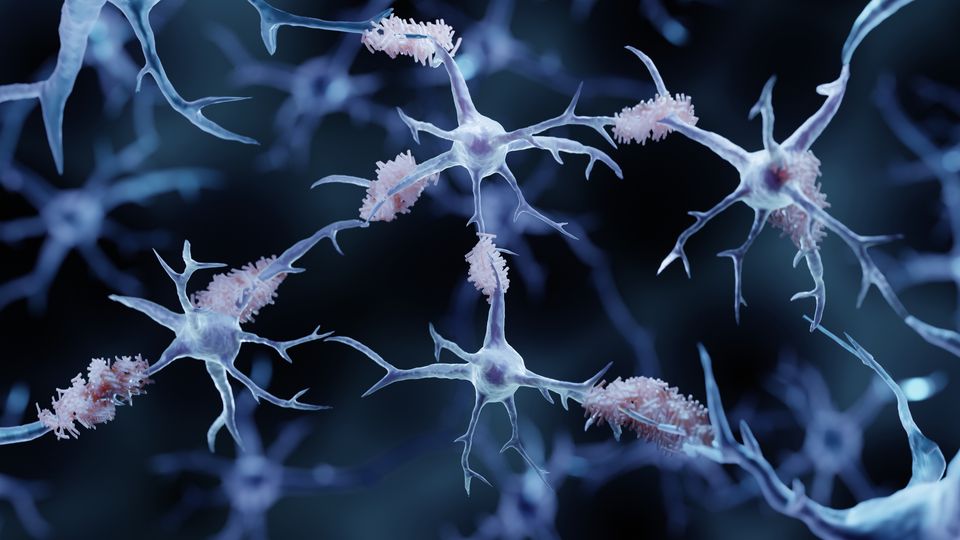
Subtle cognitive decline in early Alzheimer’s disease is often indistinguishable from normal aging; as a result, the disease readily goes undiagnosed for two to three years after symptom onset. By this point, significant and irreversible cognitive decline has already occurred. To improve disease outcomes, there’s a need for biomarkers capable of detecting pathological changes associated with Alzheimer’s disease at the earliest stages.
Dr. Yanyan Zhao, a postdoctoral research associate at the University of Cambridge, and her colleagues have developed a novel fluorescent probe, pTP-TFE, capable of probing early oligomeric pathology in neurodegenerative disease. The probe offers potential for both mechanistic studies and, in the future, could aid in the diagnosis of Alzheimer’s disease.
Technology Networks spoke with Zhao at the 2025 ELRIG Drug Discovery event to learn more about the fluorescent probe and its potential applications in improving outcomes for Alzheimer's patients.
Probing the brain: Alzheimer’s vs old age
Positron emission tomography imaging is a crucial tool for the diagnosis of Alzheimer's disease, enabling the noninvasive detection of amyloid and tau deposits. However, current imaging tracers predominantly detect late-stage fibrillar aggregates, missing the more neurotoxic oligomeric species implicated in early pathogenesis.
“There are lots of ongoing trials for antibody therapies for neurodegenerative diseases, but the results haven’t been as positive as was first hoped. A significant reason for this may be that the therapies are being applied at a late stage of the disease,” said Zhao. “If you have a clinical diagnosis method that can identify the disease approximately 10 years earlier and apply the therapy at that stage, you can make a huge difference to a person's life. Early detection and early treatment will ultimately lead to better disease outcomes.”
Aggregation of β-amyloid (Aβ) protein is a hallmark pathology of Alzheimer’s disease. This aggregation proceeds from monomers to misfolded fibril forms via highly toxic oligomeric intermediates. These oligomers represent the most toxic and dynamic form of the Aβ proteome, making them ideal targets for early diagnostics.
“There are two types of these oligomers. One is extracellular, one is intracellular,” explained Zhao. “The extracellular oligomers, the toxic species, come first, and these oligomers can harm synaptic communication, which is when your neurons pass a message from one to another. This is usually when memory problems are first described by patients, which can be confused with aging. If you can target these kinds of oligomers with diagnostic methods, you can tell whether a patient is in the early stages of Alzheimer's.”
Introducing pTP-TFE
To address the need for tools that can detect early signs of Alzheimer’s, Zhao and colleagues developed a probe, consisting of fluorescent pentameric oligothiophene (pTP), furnished with trifluoroethanol (TFE) functional groups, called pTP-TFE.
“When we do the in vitro assay using pTP-TFE with different species of oligomers, we can see that the fluorescence changes with size. This is very exciting because you can monitor this kind of change and track disease progression,” Zhao said.
When the probe was compared against the conventional amyloid dyes thioflavin T and pFTAA, pTP-TFE was the only probe capable of detecting significant differences across all oligomeric species of β-amyloid.
By monitoring time-dependent changes in pTP-TFE fluorescence, the researchers were able to track the dynamics of oligomer populations and thereby obtain kinetic information on the aggregation process.
The favorable cell permeability of pTP-TFE and its high affinity and selectivity for early soluble tau aggregates make it a promising molecular tool for studying tauopathy development and progression.
“We found the probe is more selective towards toxic tau oligomers derived from diseased vs control brain homogenates, so we can also tell the difference between a healthy and diseased brain,” stated Zhao. “That's why I think this is really a unique fluorescent probe. There are other probes available, but they don't show this kind of selectivity, and they don't show this size-dependent fluorescence.”
Zhao and colleagues foresee that this could provide a platform to aid in the development of sensitive assays for screening therapies designed to combat protein misfolding diseases at specific stages of aggregation.
However, before pTP-TFE can be applied in clinical contexts, such as in diagnostics, the researchers still need to overcome the challenge of transporting molecules to the brain. Zhao and colleagues hope that related compounds that can target these oligomers and cross the blood–brain barrier may provide a solution.
“We hope to use this fluorescent dye as a ligand base to do more virtual screenings across a large database to see whether we can find other compounds that can target these oligomers but can also enter the brain,” Zhao concluded.