The Science of Flow in Food Testing
Discover how rheological testing helps predict food quality from factory to fork.
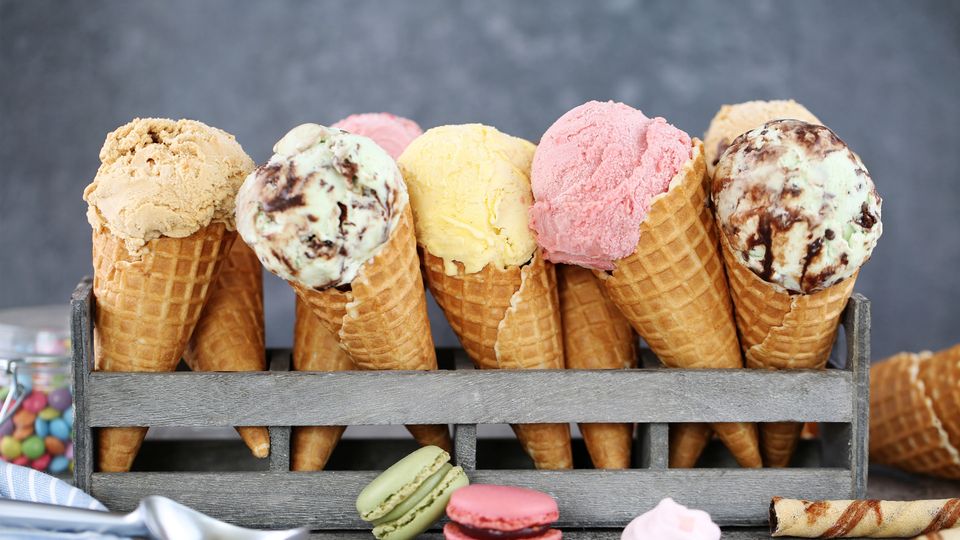
Rheological analysis has become an indispensable tool for the food industry, helping to increase manufacturing efficiency, reduce product failures and ensure consistent textures that consumers trust.
Rheology refers to how materials, including foods, will deform and flow when stress or shear is applied.1 At its core, rheological tests quantify mechanical properties such as viscosity, yield stress and elasticity. Modern rheometers extend far beyond these basics – probing structural responses like recovery, phase transitions between liquid and solid states and network formations.
Dr. Dieyckson Freire, a researcher at the University of Wisconsin–Madison who studies frozen desserts, highlights this in his work, “Rheology gives us insight into the architecture of foods. In ice cream, it can link meltdown behavior and sensory characteristics directly to the product’s structural and compositional factors.”
Rheology stands out among analytical methods because few techniques have such wide-ranging implications. For example, it can guide factory design while also revealing how consumers will experience the final product.
Even a basic grasp of its principles reveals why rheology is such a powerful bridge connecting science, industry and the eating experience.
What is rheology?
To gain meaningful results from any rheological test, it’s critical to first understand which property of the food should be evaluated. As rheometers are capable of such a wide array of measurements, selecting the appropriate one requires careful consideration.
Testing the viscosity of a food, for example, is one of the most common measurements performed on a rheometer. Viscosity refers to the resistance of a material to flow.2 While traditional viscometers – arguably the predecessor to modern rheometers – can also measure viscosity, they lack the broader capabilities of rheometers.
From a microscopic standpoint, viscosity arises in food due to the different molecules present. This variation in shape and size creates internal friction once the sample is put into motion by a viscometer or rheometer.
In practical terms, viscosity determines whether a food pours easily, feels thick or thin, or clings to a surface. For example, salad dressings, sauces and ketchup all rely on viscosity to deliver the right mouthfeel but also to perform as expected – like a dipping sauce coating a chicken nugget or a marinade adhering evenly to meat.
Beyond viscosity, ketchup also demonstrates another critical parameter that can be measured: yield stress, which is the amount of force needed to get a material to begin flowing.3 If you’ve ever shaken a ketchup bottle and nothing came out, it’s because you hadn’t yet applied enough force to overcome the yield stress.
Yield stress values are critical, not only for how consumers interact with the final product, but also for its processing and packaging. Stress values determine how a product will behave during steps such as pumping, extrusion or storage.
“Understanding yield stress is key to predicting how ice cream will hold its structure during storage, transport or when it finally reaches the consumer,” Freire noted.
A more intensive approach is to quantify the liquid-like properties as the viscous modulus (G’’) and the solid-like properties as the elastic modulus (G’). The ratio of these two values, called tan δ (or the loss tangent), quickly indicates whether a sample behaves more like a liquid (tan δ > 1) or more like a solid (tan δ < 1).
The benefit of determining the viscous and elastic modulus of a sample is that it gives a more detailed look into the microstructure of a food. As Dr. Etske Bijl, an associate professor at Wageningen University and Research, explained, “By measuring G′ and G″, we can see how the protein and fat network in cheese responds to stress. These values reveal whether the structure is soft, firm, flexible or stiff.”
With an understanding of what properties of a sample should be tested, the next challenge is to select the appropriate technique and testing conditions to glean the most useful insights and information.
Rheological techniques and tests
Rheometers are powerful instruments capable of running a wide variety of tests. Understanding which one to apply to your sample is critical to obtaining meaningful results. To generate relevant data, tests should be conducted under conditions that mimic how the food will be processed, stored or consumed.
One of the most fundamental rheological tests is generating a flow curve. This is critical because viscosity is not a fixed value, but changes with variations in conditions such as shear rate or temperature.

Advances in Food & Beverage Testing 2026
Ensuring the quality, safety and authenticity of food and beverages is a global priority. This event will highlight the key technologies, testing strategies and regulatory developments that support a transparent and trustworthy global food system.View Online Event
The shape of a flow curve reveals whether a food behaves as a Newtonian fluid, like water with constant viscosity, or as a non-Newtonian fluid, like ketchup, where viscosity changes with applied shear.
Freire highlighted the utility of this approach, saying, "Flow curves are especially valuable in dairy systems such as ice cream mixes, because they capture viscosity and predict how the mix will behave during processing. This insight helps optimize structural stability and ensures smooth production.”
While flow curves describe how a food behaves under steady shear, oscillatory tests probe its structure under small, repeated deformations. By applying a gentle oscillating stress or strain, this type of test will measure both the G′ and G″ of a sample.
As many foods are gels, emulsions or dispersions, oscillatory tests can elucidate how these different microstructures strengthen, break down or remain stable overtime. This type of test goes beyond viscosity alone to capture changes to a food’s structure that could occur during manufacturing, storage and consumption.
Bijl, who applies oscillatory rheology to study cheese production, explains: “By tracking G′ during acid and rennet gelation, we can watch liquid milk transform into a gel and ultimately into cheese. We have seen that cow’s milk tends to develop stronger acid gels while goat milk often forms firmer rennet gels.”
She added that “These differences highlight how oscillatory tests capture not only gel strength but also how processing conditions like heating reshape the microstructure of dairy systems.”
Creep and recovery tests measure how a material deforms under constant stress, and whether deformation is reversible once the stress is removed. In practice, a steady load is applied to the sample to observe its creep, or time-dependent deformation. When the load is released, the recovery phase reveals the balance between reversible and permanent deformation.
As Freire noted, “Creep and recovery tests are especially valuable in ice cream because they capture transient behavior and structural recovery. These measurements provide insight into the resilience of the ice cream matrix, helping us understand how the product responds to stress during handling and if it can recover its structure afterward.”
Stress growth tests measure how a material responds when stress is gradually increased over time. Unlike creep and recovery, which evaluate deformation under a constant load, stress growth tests identify the point at which a material’s internal structure can no longer withstand the applied force. This critical threshold, known as the yield stress, reflects the moment when a food’s microstructure begins to flow or collapse. In practical terms, it helps predict processing behavior, such as whether a product can maintain stability during pumping or mixing.
Temperature ramps and sweeps are used to evaluate how a food’s structure changes under controlled heating or cooling. By gradually varying the temperature while applying oscillatory stress, researchers can monitor transitions such as gelation, melting or protein denaturation.

Enhancing Efficiency in LC-MS/MS Analysis for Rapid Contaminant Detection
This webinar explores how different LC-MS/MS systems were evaluated and how new technological advancements enhanced data quality and precision at trace levels.View Webinar
“Oscillatory thermo-rheometry can evaluate how the structure of ice cream melts under various temperature changes,” explained Freire.
Practically speaking, temperature sweeps help predict how a product will hold up during storage, shipping and consumption, making them a critical tool for linking thermal conditions to texture and stability.
Frequency sweeps are used to probe the time-dependent behavior of foods by applying oscillatory stress at different frequencies. Unlike temperature sweeps, which reveal how a material responds to thermal changes, frequency sweeps examine how structure behaves over short versus long timescales.
These measurements are especially powerful for foods with complex microstructures, such as gels, doughs or emulsions. For example, soft gels often show strong frequency dependence, behaving more like liquids at low frequencies and more like solids at higher ones. By contrast, strong gels typically remain solid-like across frequencies, reflecting the presence of stable, crosslinked networks.
The future of food rheology
Looking forward, novel approaches are pushing rheology into new territory.
Interfacial rheology is emerging as a powerful way to study multiphasic systems such as foams, emulsions and dispersions, whereas thin interfacial layers often act as points of instability. Extensional rheology takes a different approach by examining how materials behave when stretched to reveal critical information about dough strength, extrusion behavior and fiber formation. Coupling rheology with tribology is also opening new ways to study oral processing, lubrication and texture perception.
Together, these innovations signal a future where rheological methods are a mainstay in testing food quality and a driver of innovation in how products are designed, processed and ultimately experienced.