The Future of OCD Treatments With Dr. Nick Sireau
Dr. Nick Sireau discusses his work targeting the root neurological causes of OCD.
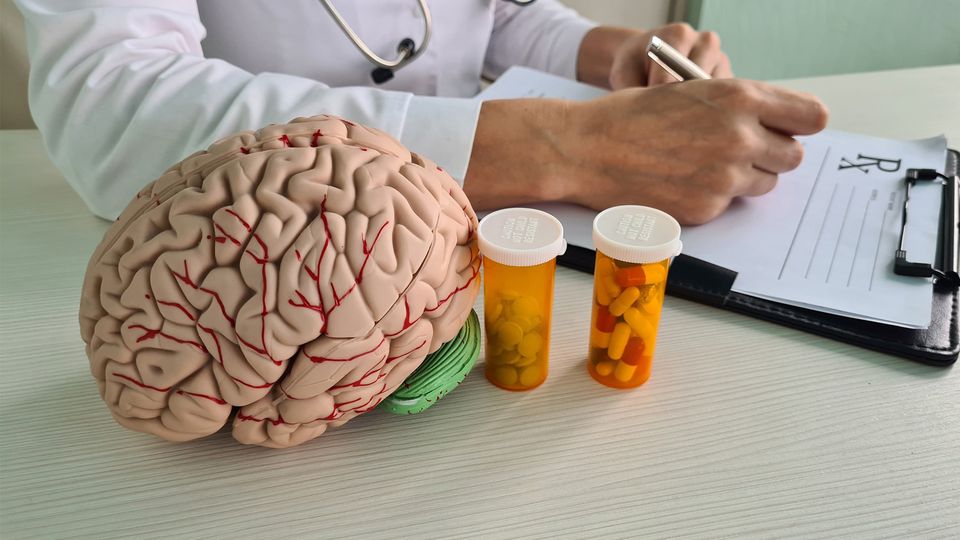
Obsessive-compulsive disorder (OCD) is a psychiatric condition that affects approximately 1–3% of the population globally. The disorder is a distressing and functional impairment that often goes undiagnosed. Current treatment approaches typically combine psychotherapy with medications such as selective serotonin reuptake inhibitors (SSRIs), which are often slow-acting, have limited efficacy and come with a host of adverse side effects.
By harnessing advances in imaging technology and precision medicine, Serenatis Bio is hoping to transform the landscape of OCD treatments by targeting the root neurological causes of the disorder.
Technology Networks caught up with Serenatis Bio CEO Dr. Nick Sireau at ELRIG Drug Discovery 2025 to learn more about his own experiences as an OCD patient, the importance of patient centricity in clinical trials of psychiatric disorders and how his learnings from the successful development of a rare disease therapy have shaped his approach to drug discovery.
What gaps in current OCD care are you most determined to address?
Nick Sireau, PhD (NS):
There are two main modalities of treatment for OCD. One is medication. Often, patients are prescribed very high doses of SSRIs. In approximately 50% of cases, these medicines don't work, and when they do, they often have limited efficacy.
The other modality of treatment is a form of cognitive behavioral therapy (CBT) called exposure and response prevention, where patients are exposed to their obsessions and anxieties, and then try to stop engaging in their compulsive behavior. When this therapy is delivered by someone with significant experience in an intensive manner, and if the patient has a good understanding of their condition, it can produce results. However, these conditions are very rarely met, and only 5% of patients in the UK and the US have access to that form of treatment.
The work we're doing stems from research completed by the University of Cambridge over the past few years. We work very closely with the university, particularly two professors there: Professor Trevor Robbins and Professor Amy Milton. Robbins has been studying OCD for many years and recently led a study where they put 30 patients with OCD into a super high-resolution 7 Tesla magnetic resonance spectroscopy scanner. They detected an imbalance of glutamate vs GABA in the anterior cingulate cortex and in the supplementary motor area, which are two key areas that get activated and overexcited in the OCD brain, driving symptoms.
What we've been working on is how to address the glutamate-GABA balance in those areas of the brain. Our first drug candidate targets a presynaptic receptor that influences glutamate release, and our second candidate acts on the AMPA receptor.
We also have a third candidate based on work from Professor John Grant, who has been studying an existing drug that increases dopamine in the prefrontal cortex. This enhances cognitive flexibility and helps patients detach from their obsessions. This drug, unfortunately, has some liver toxicity. We are now developing a new drug that does not have that liver toxicity, and that's in the discovery stage.
Central to our approach is precision psychiatry, utilizing biomarkers that the University of Cambridge has been developing. These biomarkers are exploratory, but we believe they could help us better understand who is likely to respond to the glutamatergic drugs.
BF:
NS:
I've tried a lot of different medications and none of them worked for my OCD. I also tried transcranial magnetic stimulation, which is now approved in the US for OCD and works on about a third of cases, but for me, that did nothing either. In the past six years, I've been nearly symptom-free due to an intensive mixture of CBT and other forms of psychotherapy. This mix of therapies is very difficult for the majority of people to access.
I lost a very good friend five years ago to OCD. He had tried every medication and spent six months in an OCD specialist psychiatric institution, and nothing had worked. His case is not uncommon.
These experiences led me to set up a foundation 10 years ago called Orchard OCD, which is a charity that has funded academic research into psychedelics, neuromodulation, the health economics of OCD and drug repurposing projects.
A year ago, I decided to set up Serenatis because the large amount of funding needed to bring a drug to the clinic is not achievable through grants or charitable donations. Previously, I spent 25 years developing a drug for alkaptonuria (AKU), a rare genetic disease affecting both my children. I set up a consortium with the Royal Liverpool Hospital and the University of Liverpool and raised around 30 million euros to repurpose nitisanone. We eventually got the drug approved by the European Medicines Agency (EMA) five years ago, and then, in a separate initiative led by the National Institutes of Health (NIH), got it approved this year by the US Food and Drug Administration. What I learned from that is that if you really want a drug to be widely available to patients, you need global regulatory approval. I’m now taking these learnings and applying them to OCD.
BF:
NS:
The better understanding you have of a disorder, the higher the chance you have of success. We've just embarked on a conceptual modeling project to get a better understanding of OCD. This will help us build the endpoints for subsequent trials. The good thing about OCD trials is that everyone agrees on the primary endpoint, which is the Yale-Brown Obsessive Compulsive Scale. That’s always the primary endpoint, but you also need to understand what the second endpoints might be.
Understanding the lived experiences of patients can also lead to better clinical studies. For instance, several OCD patients may have contamination obsessions. Some of those patients may have difficulties attending a medical environment. Therefore, the more decentralized you can make your assessments, the better.
BF:
NS:
What was really important was that the group I worked with had a deep understanding of AKU. We spent many years speaking to the patient community, key opinion leaders and the NIH. When it came to implementing the study protocol, we bounced ideas around with our industry partner to ensure it was the best possible protocol.
We also went for early scientific advice with the EMA. They demonstrated a good understanding of what is needed to develop a therapy for a rare genetic disorder, and the advice they provided was essential to our success.
BF:
NS:
A lot of big companies pulled out of neuroscience 15 years ago because they believed drug development for these conditions to be too difficult. That has radically changed in the past 10 years with advances in areas such as magnetic resonance imaging technology and neuromodulation. Precision psychiatry is also developing as a field. For me, what's exciting is not just what we're doing in therapeutics, but other areas also show promise.
OCD is one of the only psychiatric disorders where neurosurgery works exceptionally well. Studies using deep-brain stimulation have shown promise. Whilst this would only be applicable in extreme cases, these techniques target the same brain regions we are focused on. I think it’s a very exciting time for neuroscience.