The Complete Guide to Selecting the Right Microplate Reader
eBook
Published: October 28, 2025
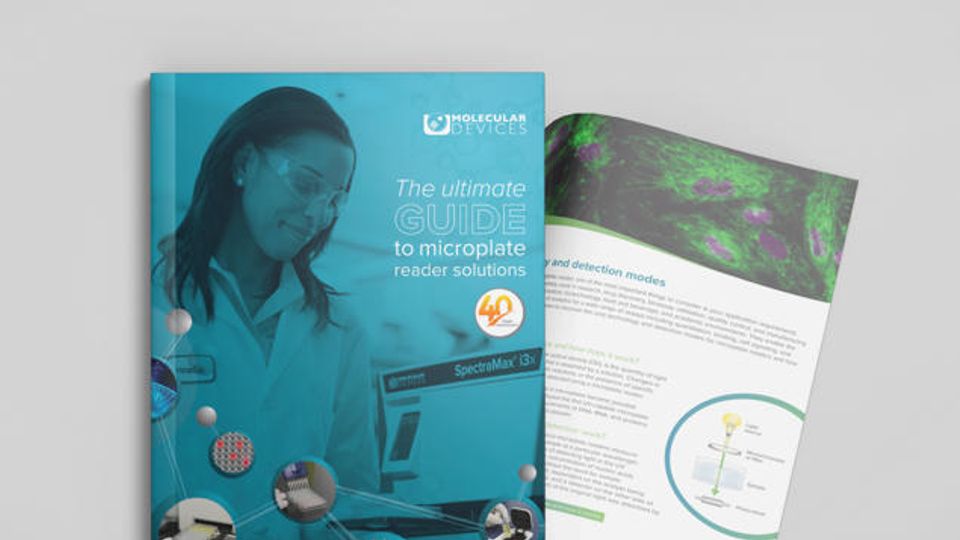
Credit: Molecular Devices
Modern life science research demands versatile, reliable instrumentation that can keep pace with evolving applications – from basic protein quantitation to complex cell-based assays.
Yet many laboratories struggle to identify which microplate reader technology best suits their current needs while remaining flexible enough to accommodate future research directions.
This eBook explores microplate reader selection by breaking down detection modes, application requirements and compliance considerations in an accessible format.
Download this eBook to learn:
- How different detection modes align with specific research applications
- Key factors to consider when choosing between single-mode and multi-mode microplate readers
- Essential compliance requirements and validation services for GMP/GLP regulated environments
The ultimate
GUIDE
to microplate
reader solutions
YEAR ANNIVERSARY
2
Contents
1. Introduction to microplate readers...............................3
2. Technology and detection modes................................6
a. Absorbance.................................................................. 7
b. Fluorescence ...............................................................8
c. Luminescence..............................................................9
d. TRF/TR-FRET.............................................................10
e. Fluorescence Polarization (FP)............................... 11
f. Western blot................................................................ 11
g. Injectors....................................................................... 12
h. Cuvette ports ............................................................. 12
i. Imaging cytometry.................................................... 13
3. Consider your application needs................................ 14
a. Cell viability................................................................. 15
b. Cell signaling.............................................................. 15
c. Cell migration............................................................. 15
d. ELISA............................................................................ 16
e. Microbiology and contaminant monitoring.........17
f. Nucleic acid (DNA/RNA) quantitation
& analysis .....................................................................17
g. Protein quantitation & analysis...............................17
Quick Overview
For 40 years, we have partnered with scientists to expand the boundaries of their
research. Our microplate readers and software are the industry’s most cited and have
empowered life science researchers to advance protein and cell biology―breaking
the barriers to novel, landmark discoveries. This guide will help you on your journey
towards turning your research into results.
4. GxP compliance solutions for GMP/GLP labs.......... 18
a. SoftMax Pro GxP Software ..................................... 19
b. Software installation and validation....................20
c. Validation plates & recertification services .......20
d. IQ/OQ/PM services..................................................20
e. FDA 21 CFR Part 11 and the importance of
regulatory compliance in GMP and GLP labs.... 21
f. Lab automation solutions for high
throughput workflows.............................................. 21
5. Bonus: Urban myths of microplate readers ............ 22
a. OD, RFU or RLU........................................................ 23
b. Which microplate reader?...................................... 23
c. Optimization? ............................................................ 23
d. Beyond the basics ................................................... 23
e. Read–Copy–Paste–Analyze. Repeat ................. 23
2
3
Introduction to
microplate readers
1
4
Introduction to microplate readers
Evaluating microplate readers doesn’t have to be overwhelming. First, consider your application needs. If your budget
is modest, a single-mode reader dedicated to your main application may be the most logical choice. If you are working
with—or anticipate exploring—a greater variety of applications, a multi-mode reader would be the better choice.
What is a single-mode microplate reader?
The three most common read modes in a single-mode microplate reader are absorbance, fluorescence, and
luminescence. A single-mode microplate reader is a good starting point. However, an upgradeable multi-mode
reader can address all your future lab needs. You may ask yourself, what’s the difference between an absorbance
spectrophotometer and a microplate reader? A standard spectrophotometer measures the absorbance of one sample
at a time. The sample is typically placed in a cuvette through which light is sent horizontally. An absorbance plate
reader offers higher throughput and can measure the absorbance of samples in microplates (typically 96-well or even
384-well) by sending light through each well vertically. Similarly, a luminescence or fluorescence microplate reader
increases your throughput manyfold over a single tube detection system.
ABSORBANCE MICROPLATE:
96 WELLS
WAVELENGTH:
340–850 NM
GXP
COMPLIANCE
AND VALIDATION
TEMPERATURE
CONTROL
ABS
PRECONFIGURED
METHODS
ELISA BRADFORD/BCA
NAD/NADP
CONVERSION
CELL
VIABILITY
AUTOMATION
READY
SPECTRADROP
MICRO-VOLUME
MICROPLATE
ABSORBANCE MICROPLATE:
96- AND
384-WELLS
ELISA
PATHCHECK
SENSOR
WAVELENGTH:
190–1000 NM
CUVETTE
PORT
BRADFORD/BCA DNA/RNA
NAD/NADP
CONVERSION
CELL
VIABILITY
ABS Plus
GXP
COMPLIANCE
AND VALIDATION
TEMPERATURE
CONTROL
PRECONFIGURED
METHODS
AUTOMATION
READY
SPECTRADROP
MICRO-VOLUME
MICROPLATE
PROTEIN A280
ABSORBANCE CUVETTE
PORT
DNA/RNA
PRECONFIGURED
METHODS
TOUCHSCREEN
BRADFORD/BCA PROTEIN A280
WAVELENGTH:
190–1100 NM
SpectraMax® ABS SpectraMax® ABS Plus
5
What is a multi-mode microplate reader?
A microplate reader with two or more detection modes, e.g. absorbance and fluorescence, is considered a multi-mode
reader. Multi-mode readers have many advantages for labs conducting applications ranging from ELISAs to nucleic acid
and protein quantitation to cell imaging. Combining multiple microplate technologies and detection modes into a single,
more versatile unit may be an ideal choice, especially if you have limited lab space. A multi-mode reader can detect
absorbance, luminescence, fluorescence, and more specialized measurements such as time-resolved fluorescence
(TRF), fluorescence polarization (FP), Time-Resolved Fluorescence Resonance Energy Transfer (TR-FRET), and
Homogeneous Time-Resolved Fluorescence (HTRF). Other technologies such as imaging, Alphascreen®/AlphaLisa®, or
western blot detection can be added to some multi-mode plate readers, increasing their flexibility. Consider a system
that has the ability to be upgraded if your current budget is a factor.
ABS FL LUMI
INJECTOR
SpectraMax® iD3 SpectraMax® iD5 SpectraMax® i3x
ABS FL LUMI
CELL
IMAGING
WESTERN
BLOT
INJECTOR
TRF/TR-FRET FP ALPHASCREEN
ABS FL LUMI
WESTERN
BLOT
INJECTOR
TRF/TR-FRET FP
ABS FL LUMI
INJECTOR
SpectraMax® iD3 SpectraMax® iD5 SpectraMax® i3x
ABS FL LUMI
CELL
IMAGING
WESTERN
BLOT
INJECTOR
TRF/TR-FRET FP ALPHASCREEN
ABS FL LUMI
WESTERN
BLOT
INJECTOR
TRF/TR-FRET FP
ABS FL LUMI
INJECTOR
SpectraMax® iD3 SpectraMax® iD5 SpectraMax® i3x
ABS FL LUMI
CELL
IMAGING
WESTERN
BLOT
INJECTOR
TRF/TR-FRET FP ALPHASCREEN
ABS FL LUMI
WESTERN
BLOT
INJECTOR
TRF/TR-FRET FP
SpectraMax® M5
ABS FL
TRF/TR-FRET FP
SpectraMax® M4
ABS FL
TRF
SpectraMax® M2 SpectraMax® M3
ABS FL ABS FL LUMI LUMI LUMI
SpectraMax® Mini
ABS FL LUMI
6
Technology and
detection modes
2
7
Technology and detection modes
When choosing a microplate reader, one of the most important things to consider is your application requirements.
Microplate readers are widely used in research, drug discovery, bioassay validation, quality control, and manufacturing
processes in the pharmaceutical, biotechnology, food and beverage, and academic environments. They enable the
measurement of a variety of analytes for a wide range of assays including quantitation, binding, cell signaling, and
more. Continue reading below to discover the core technology and detection modes for microplate readers and how
they work.
a. Absorbance
What is absorbance and how does it work?
Absorbance, also known as optical density (OD), is the quantity of light
or a particular wavelength that is absorbed by a solution. Changes in
absorbance due to enzymatic reactions, or the presence of specific
analytes in a sample, can be detected using a microplate reader.
Ultraviolet (UV) measurements in microplates became possible
when Molecular Devices introduced the first UV-capable microplate
reader. Since then, direct measurements of DNA, RNA, and proteins
in microplates have become very popular.
How does absorbance detection work?
Spectrophotometers and absorbance microplate readers measure
how much light is absorbed by a sample at a particular wavelength.
Microplate readers that are capable of detecting light in the UV
range can be used to determine the concentration of nucleic acids
(DNA and RNA) or protein directly, without the need for sample
labeling. Light of a certain wavelength, dependent on the analyte being
measured, is passed through a sample, and a detector on the other side of
the microplate well measures how much of the original light was absorbed by
the sample in the well.
Light
source
Filter
Sample
Filter
PMT
Light
source
Monochromator
or filter
Photo-diode
Sample Sample
Optional
monochromator
or filter
PMT
Learn more about absorbance detection and how it works
8
b. Fluorescence
What is fluorescence?
Fluorescence is the property of some substances to absorb
light at a particular wavelength (the excitation: (Ex), followed
by emission (Em) of light at a longer wavelength (Figure 2). The
distance between the excitation and emission peaks is known
as the Stokes shift and is fluorophore-dependent (Figure 1).
Fluorescence involves exciting a sample at a particular wavelength.
When excited at the appropriate wavelength, the molecule is
transformed from a ground to an excited state. As the molecule returns
to the ground state, energy is released in the form of heat and light at a
different longer wavelength of lower energy (Figure 3).
How does fluorescence detection work?
A microplate reader with fluorescence intensity (FI) detection uses a light source, usually a xenon flash lamp
or LED, to excite a fluorophore (fluorescent molecule) at a particular wavelength. The wavelength required to
excite the sample can be selected using either a filter for a specific wavelength or a monochromator tuned to the
required wavelength.
The fluorophore then emits light of a different (higher)
wavelength, which is selected by a second filter or
monochromator. This emitted fluorescence is detected
by a photomultiplier tube (PMT), and the fluorescence
intensity of the sample is expressed as relative
fluorescence units.
Light
source
Filter or
monochromator
Sample
PMT
Filter or
monochromator
Figure 3
Excited state
Ground state
Figure 2
E
Ex Em
Loss of
energy
400 500 600
Ex Em
Stokes shift
Figure 1 Figure 2 Figure 3
Figure 1
Light
source
Filter or
monochromator
Sample
PMT
Filter or
monochromator
Figure 3
Excited state
Ground state
Figure 2
E
Ex Em
Loss of
energy
400 500 600
Ex Em
Stokes shift
Figure 1
8
Learn more about fluorescence detection and how it works
9
+ ATP + O2 + AMP + PPi + CO2 + Light
Luciferin
Mg2+
Firefly
luciferase -O ON
S N
S
HO COOH
N
S N
S
Oxyluciferin
Luminescence detection is optically simpler than fluorescence detection as it does not require a light source or
specific optics for excitation.
c. Luminescence
What is luminescence?
Luminescence is the emission of light by a substance as a result of a chemical reaction (chemiluminescence) or
an enzymatic reaction (bioluminescence).
Luminescence can be either a ‘flash’ or a ‘glow’
reaction, depending on the kinetic profiles. Flash
luminescence gives a very bright signal for a short
amount of time, usually seconds. Glow luminescence
emits a more stable but usually less intense signal that
can last for several minutes or hours (Figure 1). Flash
luminescence generally requires a detection system
with injectors that can deliver substrate to the reaction
shortly before taking a measurement so that signal
is not missed. White opaque microplates are usually
recommended for luminescence, as they reflect light
and maximize the amount of signal detected.
Flash luminescence signal Glow luminescence signal
Time (seconds) Time (minutes)
RLU
RLU
Figure 1. Flash and glow reactions.
Learn more about luminescence detection and how it works
10
d. TRF/TR-FRET
Time-Resolved Fluorescence (TRF)
Fluorescence intensity (FI) measurements use standard fluorophores like fluorescein, whose emission is shortlived, on the order of nanoseconds. Excitation of the sample and measurement of emission occur simultaneously.
Although microplate readers are very good at screening out excitation light from the emission measurement, shortlived light emitted by materials in the well or sample often contributes to high background.
Time-resolved fluorescence (TRF) reduces
background by using a lanthanide fluorophore, such
as europium, terbium or samarium, which emits longlived fluorescence. This long-lived fluorescence lasts
for milliseconds, so excitation of the fluorophore by
a pulsed light source (e.g., a flash lamp), followed
by a delay and then signal measurement (counting
window), allows short-lived fluorescence (lasting only
for nanoseconds) to subside before a measurement
is made. Assays using time-resolved fluorescence
offer dramatically reduced signal-to-noise ratios.
Lanthanide fluorophores are commonly used as
chelate or cryptate complexes that enable good
signal intensity and stability.
Time-Resolved Fluorescence
Resonance Energy Transfer (TR-FRET)
TR-FRET combines the time-resolved (TR) measurement of fluorescence with fluorescence, or Förster, resonance
energy transfer (FRET) technology. In FRET assays, biomolecules (e.g., proteins) are labeled with donor and
acceptor fluorophores. When the biomolecules interact, donor and acceptor fluorophores are brought close
together. Now, when the donor is excited, it can transfer energy to the acceptor, which in turn emits fluorescence
at a specific wavelength. Acceptor and donor fluorescence emissions have different wavelengths that can
be distinguished from each other by a microplate reader, and the ratio of acceptor to donor emission is a
quantifiable indicator of biomolecular interaction.
Using lanthanide fluorophores, which have long-lived
fluorescence emission, as donors, TR-FRET assays
take advantage of the time-resolved measurement
of fluorescence to eliminate short-lived background
fluorescence. In a TR-FRET assay, thanks to the donor
fluorophore’s long-lived emission, excitation and
emission of both donor and acceptor fluorophores
can also be measured after short-lived background
fluorescence has abated.
Background Counting window
Emission of
long decay-time
Excitation pulses
Emission intensity
Time
Learn more about TRF/TR-FRET and how it works
11
e. Fluorescence Polarization (FP)
Fluorescence polarization (FP) is a detection mode that is widely used to monitor binding events in solution. It can
be used to assess biomolecular interactions, including protein-antibody binding and DNA hybridization, as well as
enzyme activity, and it has been adapted to basic research as well as high-throughput screening.
Unbound tracer
Tracer bound to a larger molecule
f. Western blot
What is western blotting?
Western blotting is a popular technique used for protein detection and quantitation. It enables the separation
and identification of a specific protein of interest from a complex mixture of proteins, for example a cell lysate.
With applications in diagnostics, biotechnology, molecular biology, proteomics, and much more, western
blots are widely relied upon to evaluate levels of protein expression in cells, as well as changes in size and
other properties.
Western blotting typically employs two antibodies, a primary antibody that binds to the protein of interest and
a secondary antibody that is conjugated to a detectable molecule. Depending upon the secondary antibody
used, detection of the target protein may be colorimetric, chemiluminescent, or fluorescent. These methods
require different instrumentation for detection. For example, chemiluminescence can be detected using x-ray
film or digital imaging equipment, while a fluorescent secondary antibody requires a fluorescence imager. Each
type of detection has advantages and disadvantages that need to be considered when selecting a method.
Western blot detection on a multi-mode microplate reader is made possible with the ScanLater™ Western Blot
Detection System.
The ScanLater system is a time-resolved fluorescence (TRF)-based western blot
detection assay, an optimal detection method that offers higher sensitivity, and
exceptional stability. The ScanLater system comprises the ScanLater Western Blot
Detection Cartridge, ScanLater Western Blot Kit, and image acquisition software
powered by SoftMax® Pro Software.
A small, fluorescently labeled molecule
(tracer) that is excited with plane-polarized
light emits mostly depolarized light
because the tracer tumbles rapidly during
the time between excitation and emission.
However, when the tracer binds a much
larger molecule, it rotates more slowly, and
the emitted light remains largely polarized.
Measurement of the light emitted in
parallel and perpendicular directions to the
excitation light is used to determine the
amount of binding.
Learn more about fluorescence polarization and how it works
Learn more about western blots using your plate reader
with ScanLater Western Blot Detection System
Polarized
Excitation
Light
Polarized
Excitation
Light
Polarized
Emission
Light
Depolarized
Emission
Light
12
g. Injectors
Expand your lab’s capabilities to include flash applications such as dual luciferase and ATP assays with on-board
injectors. Our injectors are completely integrated, and are engineered for high performance with SmartInject®
Technology and overflow protection. SmartInject technology ensures thorough reagent mixing for more
consistent results, and overflow protection prevents damage caused by reagent spillage.
h. Cuvette ports
A cuvette port offers easy single-sample measurements. A microplate reader equipped with a cuvette port can
be a great way to transition from low-throughput, single-tube assays to higher-throughput microplate-based
assays. Our built-in cuvette port adds convenience and flexibility. The SpectraMax M Series supports cuvette
reading in absorbance, fluorescence, and luminescence read modes with temperature control.
13
Simplified workflow
Add cellular imaging assays in a small
footprint
Stain-free analysis
Eliminate cell staining for cell counting
and confluence measurements using
StainFree Technology
More data
Multiparametric cell-based assays
with brightfield and green and red
fluorescent imaging
Familiar software
Set up, image, and analyze cells in a
snap using SoftMax Pro Software
Improved data
Normalize your plate reader assay data
to the number of cells in each well
i. Imaging cytometry
An imaging cytometer enables image-based analysis of cells and gives you a more detailed view of phenotypic
changes that accompany cytotoxicity, cell proliferation, and protein expression. StainFree™ Cell Detection
Technology, additional brightfield analysis features, and fluorescent green and red detection channels are
highlights of the SpectraMax MiniMax™ 300 Imaging Cytometer.
The SpectraMax MiniMax cytometer option is a field-upgradeable option for the SpectraMax i3/i3x Multi-Mode
Microplate Reader that offers cellular imaging capability.
GxP software compatible
Provides tools to achieve FDA 21 CFR
Part 11 compliance for data generated
by SpectraMax MiniMax cytometer
14
Consider your
application needs
3
15
Consider your application needs
a. Cell viability
What is cell viability?
Cell viability refers to the number of healthy cells in a population and can be evaluated using assays that measure
enzyme activity, cell membrane integrity, ATP production, and other indicators. These methods can employ
luminescent, fluorescent, or colorimetric readouts as indicators of general cell viability or even specific cellular
pathways. Cytotoxicity and cell viability assays are often used to assess a drug or other treatment’s effect, and
are valuable tools in the search for new therapeutics, as well as advancing our understanding of how normal
cells function.
b. Cell signaling
What is cellular signaling and cellular response?
Cellular signaling allows cells to respond to their environment as well as to communicate with other cells.
Proteins located on the cell surface can receive signals from the surroundings and transmit information into the
cell via a series of protein interactions and biochemical reactions that comprise a signaling pathway. Multicellular
organisms rely upon an extensive array of signaling pathways to coordinate the proper growth, regulation,
and functioning of cells and tissues. If signaling between or within cells is dysregulated, inappropriate cellular
responses may lead to cancer and other diseases.
c. Cell migration
What is cell migration?
The movement or migration of cells is often measured in vitro to elucidate the mechanisms of various
physiological activities such as wound healing or cancer cell metastasis. Cell migration assays may be conducted
in a controlled environment using live cell, time-lapse imaging. A “wound” in a confluent monolayer of cells growing
in a microplate is created, either by manually creating a scratch or by utilizing special microplates that provide
a uniform and reproducible cell-free zone. Monitor cell proliferation, migration, and spreading using transmitted
light or live cell-compatible fluorescence. These medium- to high-throughput assays may be used to study the
migration of cells treated with either inhibitory or stimulatory compounds.
Learn more about cell viability, cell proliferation, and cytotoxicity assays
Learn more about cell signaling
Learn more about cell migration
16
d. Enzyme-Linked Immunosorbent Assay (ELISA)
What is ELISA?
ELISA (enzyme-linked immunosorbent assay) is a method used to quantitatively detect an antigen within a
sample. An antigen is a toxin or other foreign substance, for example a flu virus or environmental contaminant,
that causes the vertebrate immune system to mount a defensive response. The range of potential antigens is
vast, so ELISAs are used in many areas of research and testing to detect and quantify antigens in a wide variety
of sample types. Cell lysates, blood samples, food items, and more can be analyzed for specific substances of
interest using ELISAs.
There are four major types of ELISAs: direct, indirect, competitive, and sandwich. Each type is described below
with a diagram illustrating how they work.
Antigen
Primary
antibody
conjugate
Direct ELISA
In a direct ELISA, the antigen is bound to the bottom of the
microplate well, and then it is bound by an antibody that is
specific to the antigen and also conjugated to an enzyme or
other molecule that enables detection.
Indirect ELISA
In an indirect ELISA, the antigen is bound to the bottom of
the microplate well, then an antibody specific to the antigen
is added. A secondary antibody, conjugated to an enzyme or
other detection molecule, is then bound to the first antibody.
Antigen
Primary
antibody
Secondary
antibody
conjugate
Antigen
Primary
antibody
Inhibitor conjugate
antigen
Competitive ELISA
In a competitive ELISA, a reference antigen is bound to the
bottom of microplate wells. Sample plus antibody are added
to the wells, and if there is antigen present in the sample, it
competes with reference antigen for binding to the antibody.
Unbound material is washed away. The more antigen is in the
sample, the less antibody ends up bound to the bottom of the
wells by the reference antigen, and the lower the signal.
Sandwich ELISA
For the sandwich ELISA, two antibodies specific to two
different epitopes on the target antigen are used. The
capture antibody is bound to the bottom of the microplate
well and binds one epitope of the antigen. The detection
antibody binds to the antigen at a different epitope and
is conjugated to an enzyme that enables detection. (If the
detection antibody is unconjugated, then a secondary
enzyme-conjugated detection antibody is required).
Antigen
Primary
antibody
Secondary
antibody
Learn more about ELISAs
17
e. Microbiology and contaminant monitoring
Monitoring microbial growth and contaminants
Microbes, including bacteria, have been estimated to make up about 15 percent of the earth’s biomass, and
microbes in the human body outnumber human cells by 10 to 1. These microorganisms provide great benefit
to us and are also vital to many fields of research from medicine to alternative energy production. On the other
hand, monitoring for microbes and the toxic substances they produce is necessary to ensure the safety of
pharmaceutical products. Scientists whose research relies on mammalian cells must carefully monitor these
cultures for unwanted microbial contaminants to ensure that their experimental results are reliable.
f. Nucleic acid (DNA/RNA) quantitation & analysis
What are nucleic acids?
Nucleic acids are large biomolecules common to all known life forms. Deoxyribonucleic acid (DNA) consists
of a double strand of pairs of nucleotides, while ribonucleic acid (RNA) is typically a single strand. In DNA, the
nucleotides are adenine, cytosine, guanine, and thymine, while RNA contains uracil instead of thymine. DNA
makes up the genetic material of most organisms, encoding the information cells need to synthesize proteins.
Nucleic acid is often purified from cells as part of an ever-growing array of molecular biology methods.
Before they are used in downstream applications, nucleic acids are quantitated using UV or fluorescence
spectrophotometry. Traditionally measured individually in cuvettes, sample analysis is now routinely performed
in microplates.
g. Protein quantitation & analysis
Detect, quantify, and analyze proteins
Detection, quantitation, and analysis of proteins are central to the investigation of a wide variety of biological
processes. Measuring the concentration of protein is necessary to processes ranging from protein purification
and labeling to sample preparation for electrophoresis. Protein can be quantitated directly via absorbance at 280
nm, or indirectly using colorimetric (BCA, Bradford, etc.) or fluorometric methods offering advantages such as
greater sensitivity.
Cellular signaling and other biological processes may be analyzed using fluorescent
proteins. For example, green fluorescent protein (GFP) can be expressed in living
cells and used to visualize protein localization and dynamics under experimental
conditions. Tryptophan, an amino acid whose fluorescence emission properties
are affected by its microenvironment, has also been used to monitor changes
in the conformational state of proteins.
Learn more about microbiology and contaminant monitoring
Learn more about nucleic acid (DNA/RNA) quantitation & analysis
Learn more about protein quantitation & analysis
18
GxP compliance
solutions for GMP/GLP labs
4
19
GxP compliance solutions for GMP/GLP labs
Laboratories operating under GMP (good manufacturing practice) and GLP (good laboratory practice) regulations must
follow FDA or regional regulatory guidelines to protect data integrity or demonstrate quality assurance of manufactured
products. To be GxP (good practice) compliant, regulated labs using microplate readers in their workflows need to verify
that they are functioning within operational specifications and that the data acquisition and analysis software complies
with regulations for electronic recordkeeping.
Molecular Devices is a leader in comprehensive compliance solutions with microplate detection systems and software.
Combined with validation services and support, our solutions assure data integrity.
a. SoftMax Pro GxP Software
Become compliant with FDA part 11 software validation
SoftMax® Pro 7.1.2 GxP Software is the latest, most secure software to achieve full FDA 21 CFR Part 11 compliance
with streamlined workflows to assure data integrity. Every step is optimized to simplify analysis and reporting to
support our microplate readers.
Our expert team will partner with you to set up singleor enterprise-level software, and provide installation
qualification (IQ) and operational qualification (OQ) services
using our validation package to establish full compliance
on your microplate readers. Major data privacy and
security improvements support the latest General Data
Protection Regulation regulations. See how SoftMax Pro
GxP Software helps you meet 21 CFR Part 11 and EU GMP
Annex/11 requirements.
Learn more about how our expert
team can help you become and remain
compliant to the latest GxP standards
20
b. Software installation and validation
Our software installation services verify and document that
required components are installed to operational specifications.
SoftMax Pro GxP Software can be installed on a single computer
or on a multi-computer networked environment by our expert
technical support or professional services team via remote
access, respectively.
Our on-site SoftMax Pro GxP Software validation service supports
FDA 21 CFR Part 11 guidelines and is conducted by our certified Field
Service Engineer (FSE). Each step in the process will be carefully planned
and executed.
c. Validation plates & recertification services
SpectraTest Validation Plates
Molecular Devices microplate readers are designed to provide consistent performance for many years. In
keeping with best practices, you must periodically validate and document the instrument performance to fulfill
regulatory requirements. Our SpectraTest® Validation Plates are valuable tools for verifying that microplate
readers are operating correctly in GMP and GLP laboratories. You can use photometric accuracy tests to verify
how close an absorbance measurement is to the true value, which is traceable to the National Institute of
Standards and Technology (NIST) and NMI (National Metrology Institutes). Additionally, you can determine the
accuracy and repeatability of the wavelength selection with the monochromator, including separate tests for
excitation and emission. Finally, you can qualify the kinetic noise that measures the stability of the optical system
at low and high signals, including separate tests for spikes and drift at low and high levels.
d. IQ/OQ/PM services
Installation qualification (IQ), operational qualification (OQ), preventive maintenance (PM), and repair coverage for
microplate readers and washers.
IQ/OQ services and PM/OQ service plans preserve instrument documentation in a digital and compliant
format. Assure ongoing compliance of your Molecular Devices microplate readers and be audit ready with
comprehensive validation, maintenance, and repair documentation.
Learn more about this and other GxP services
Learn more by watching our SpectraTest ABS2 Validation Plate overview video
Learn more about IQ/OQ/PM services, and how they can help your lab
21
e. FDA 21 CFR Part 11 and the importance of regulatory compliance in
GMP and GLP labs
The regulations for food and drug in the United States, described in the Title 21 of the Code of Federal
Regulations, are critical in ensuring safe and ethical drug administration. Whether you are an academic institution,
a government agency, or a pharmaceutical company, you have to adhere to these rules at each step of the drug
development process. Failure to do so could even cascade into a corporate shutdown in the long run.
f. Lab automation solutions for high-throughput workflows
Our automation and customization solutions involve scientists and engineers who can customize our instruments,
as well as automate entire workflows to meet the specific needs of your assay, method, or protocol. We take a
consultative approach to understand your application requirements and recommend labware, lab robotics, and
software solutions that best match the unique needs of your application.
ELISA Workflow
ELISA is one of the most popular quantitative methods to detect a target antigen such as toxin or foreign
substance within a sample. The assay is easy to set up and the range of potential analytes is vast, but the assay
procedure is time consuming and labor intensive.
Read our Lab Notes blog article for a detailed breakdown of the essential components of
Regulatory Compliance in GxP labs and our approach to achieving and maintaining these standards
1 2 3 4 5 6 7 8
Antibody
binds to well
SpectraMax®
Microplate Reader
SoftMax® Pro GxP
Software
Add detection
antibody
Add
substrate
Add
sample
Wash
microplate
Wash
microplate
Read
microplate
Calculate
results
AquaMax
Microplate Washer
COMPLIANCE
IQ/OQ & PM/OQ SERVICES
SoftMax®
Pro GxP
RECERTIFICATION SERVICES
INSTALLATION & VALIDATION SERVICES
96- and 384-well
Microplates Labware
Hotels
Automation
scheduling software
Automated liquid handler
Plate sealer Plate sealer remover
Robot arm
Automated shaker
Barcode reader
AUTOMATED
LAB COMPONENTS
Discover how laboratory automation workflows can help with providing walkaway time,
increasing throughput, effectiveness and efficiency of the assay procedure, and reproducibility
22
Bonus: Urban myths
of microplate readers
5
23
Bonus: Urban myths of microplate readers
a. OD, RFU or RLU
What exactly are they and why bigger is not always better!
In this first urban myths of microplate readers webinar, we’ll introduce you to the
presenters who hope to educate (and entertain) you throughout this five part series—
starting with a brief discussion of the three main read modes : absorbance, fluorescence
and luminescence.
b. Which microplate reader?
Decisions, decisions, and how to be less confused!
There is an enormous range of microplate readers and microplate technologies available
nowadays, so how do you know which is best for you? In this webinar, we will review the
various microplate reader options available for fluorescence and look at the impact they
may have on your data.
c. “Optimization? But the manual says I need to excite
at 490 nm!”
Everyone wants to get the best data they can from their assay, but sometimes it can be
difficult to know how to do this—especially, for example, when a reagent supplier provides
a perfect protocol with the ‘exact’ settings you should use. In this webinar, we discuss why
sometimes you should ignore this! We will also delve into some of the software settings in
SoftMax Pro Software that will enable you to generate textbook quality data!
d. Beyond the basics
Real time, resolving time and transferring energy
In this webinar, we move beyond absorbance, fluorescence, and luminescence to
look at time and energy. You will learn the basics of fluorescence polarization (FP) and
fluorescence lifetime, as well as how to interpret the acronyms TRF, FRET, and TR-FRET.
e. Read–Copy–Paste–Analyze. Repeat...
Sound familiar?
In this final part of the webinar series, we look at how you can reduce the number of
manual steps needed to get to your results, and remove operator error, by letting SoftMax
Pro Software do the hard work for you.
Most of us have Excel on our PC and it can be a powerful analysis tool, but with SoftMax
Pro Software you will have the most powerful, most published, and fully integrated
microplate reader control and microplate data analysis software package available. In
today’s world, integrity and compliance are key, so we discuss how we support adherence
to worldwide regulatory expectations and enable full FDA 21 CFR Part 11 compliance.
View webinar
View webinar
View webinar
View webinar
View webinar
The trademarks used herein are the property of Molecular Devices, LLC or their respective owners.
Specifications subject to change without notice. Patents: www.moleculardevices.com/productpatents
FOR RESEARCH USE ONLY. NOT FOR USE IN DIAGNOSTIC PROCEDURES.
©2023 Molecular Devices, LLC
11/23 2456B
Printed in USA
Phone: +1.800.635.5577
Web: www.moleculardevices.com
Email: info@moldev.com
Check our website for a current
listing of worldwide distributors. *Austria, Belgium, Denmark, Finland, France, Germany, Iceland, Ireland, Italy, Luxembourg, Netherlands, Portugal, Spain, Sweden, Switzerland and United Kingdom
Contact Us Regional Offices
USA and Canada +1.800.635.5577
United Kingdom +44.118.944.8000
Europe* 00800.665.32860
China +86.4008203586
Taiwan/Hong Kong +886.2.2656.7585
Japan +81.3.6362.9109
South Korea +82.2.3471.9531
India +91.73.8661.1198
Brought to you by

Download the eBook for FREE Now!
Information you provide will be shared with the sponsors for this content. Technology Networks or its sponsors may contact you to offer you content or products based on your interest in this topic. You may opt-out at any time.
Experiencing issues viewing the form? Click here to access an alternate version