Taking Aim at a Hard-To-Target Cancer Receptor
Researchers have identified small molecules that can influence the Frizzled 7 receptor.
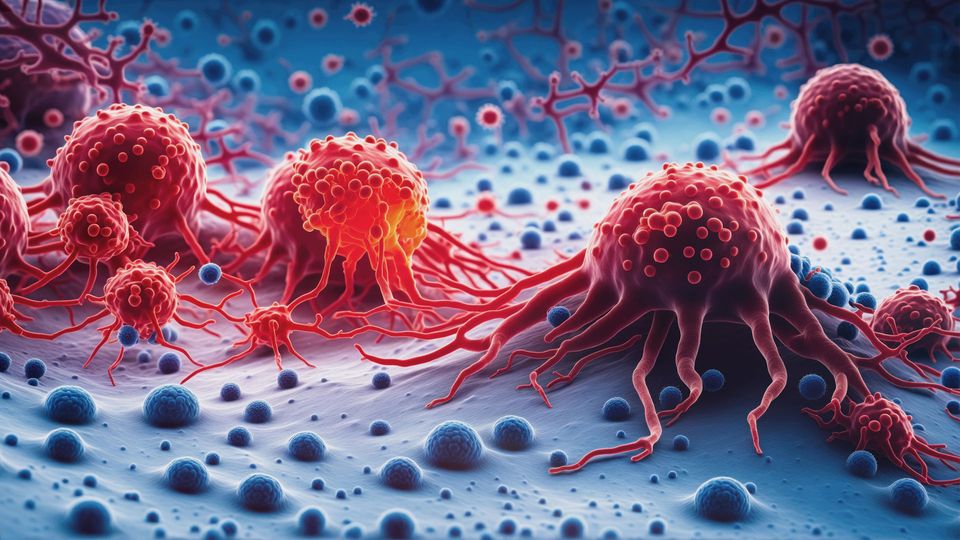
Researchers at Karolinska Institutet have identified small molecules capable of influencing a hard-to-target receptor family linked to cancer development. The findings have been published in Nature Communications and the Journal of Biological Chemistry.
The human body contains thousands of proteins that act as receivers of various signals. One particular group, the Frizzled receptors, enables cells to communicate and plays a crucial role in tissue growth and repair. However, when these receptors become overactive, they may contribute to the development of cancer.
Researchers have therefore long sought ways to modulate them pharmacologically – an endeavour that has proven highly challenging. Researchers at Karolinska Institutet have now investigated Frizzled 7 (FZD7), a receptor essential for intestinal cells and frequently overactive in tumours.
By combining large-scale virtual compound libraries, in silico screening and computer simulations with laboratory assays and cryogenic electron microscopy (CryoEM), the team has identified and characterised small molecules that can reduce receptor activity.
One such molecule, known as C407, binds to a pocket within the receptor and prevents it from changing shape as it normally does when activated by its natural signals, the WNT proteins.
"Using computational screening methods as a starting point enabled us to screen a huge number of molecules and to overcome the difficulty that we were not sure where a suitable binding site for drug-like compounds targeting FZDs was," says Magdalena Scharf, researcher at the Department of Physiology and Pharmacology, KI.
These types of molecules are known as negative allosteric modulators. This means that they do not block the conventional binding site; instead, they affect the receptor at a different location, reducing its activity.
"We demonstrate for the first time that the internal pocket of Frizzled receptors is accessible to small molecules, and that this can be used to modulate their function," says Gunnar Schulte, professor at the same department, KI.
He emphasises that this is an early stage:
"These molecules are not yet ready to be developed as drugs, but they open up new possibilities for treating cancer and other diseases involving disturbances in this signalling pathway. Our studies also provide clear proof-of-concept showing that FZD activation can indeed be reduced in this way – a breakthrough for the field."
Reference: Scharf MM, Kinsolving J, Grätz L, et al. In silico docking yields small molecule negative allosteric modulators targeting the core of Frizzled 7. Nat Commun. 2025;16(1):11138. doi:10.1038/s41467-025-67147-z
Grätz L, Turku A, Kozielewicz P, et al. SAG1.3-derived Frizzled-targeting small-molecule compounds. J Biol Chem. 2025;301(11):110751. doi:10.1016/j.jbc.2025.110751
This article has been republished from the following materials. Note: material may have been edited for length and content. For further information, please contact the cited source. Our press release publishing policy can be accessed here.