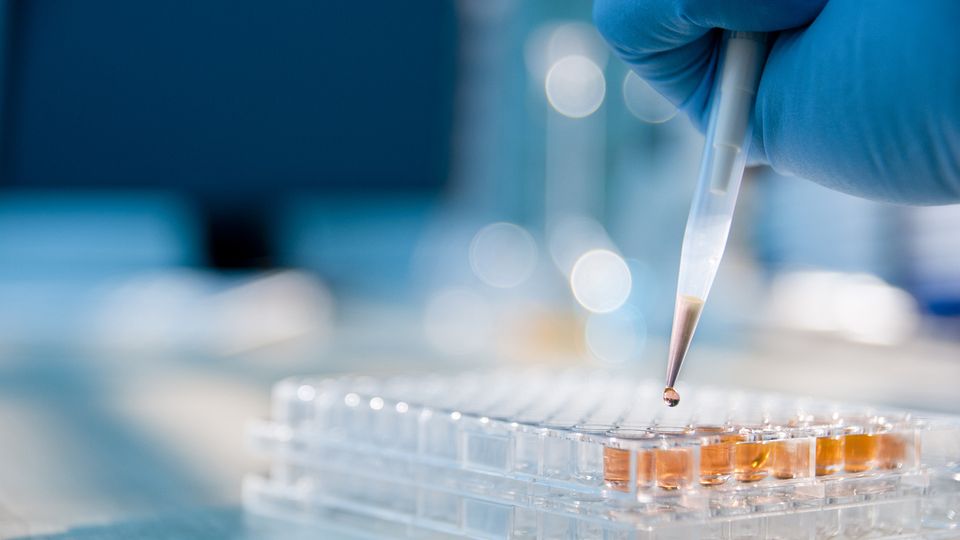
At this year’s ELRIG drug discovery conference, Technology Networks spoke with Paul Withers from Eppendorf about the company’s latest addition to its pipetting lineup – the Research Pro Neo.
Designed with direct input from scientists, the new model focuses on usability, ergonomics and precision, combining features that make manual pipetting more intuitive and comfortable.
Withers explained that the design process began by gathering feedback from researchers on their day-to-day challenges, leading to a pipette that supports faster adjustments, minimizes strain and improves consistency. Beyond the instrument itself, he noted that tools like the Research Pro Neo fit into a broader shift toward more accessible automation and digital connectivity in modern laboratories.
Blake Forman (BF):
Senior Science Writer
Technology Networks
Blake pens and edits breaking news, articles and features on a broad range of scientific topics with a focus on drug discovery and biopharma. He earned an honors degree in chemistry from the University of Surrey. Blake also holds an MSc in chemistry from the University of Southampton. His research project focused on the synthesis of novel fluorescent dyes often used as chemical/bio-sensors and as photosensitizers in photodynamic therapy.
To start off, could you tell me about the new features of the Research Pro Neo pipette?
Automation Product & Application Manager
Eppendorf
Paul Withers is a specialist in laboratory automation and scientific solutions, currently serving as the automation product & application manager at Eppendorf. In this role, he drives the strategic implementation and application support for cutting-edge automated systems, helping laboratories in the biotech and pharmaceutical sectors achieve greater efficiency, reproducibility and throughput.
The pipette is part of a long lineage – Eppendorf invented the original piston-stroke pipette decades ago. With this new model, we decided to start from the scientist’s perspective and design backwards from there. We gathered feedback from researchers about what they wanted in a pipette and prioritized those needs.
We combined the best features of two of our most popular models – the Reference and the Research Plus – and integrated them into a single design. The result is what we call an operator’s pipette, built around two key concepts: fast and easy. It allows quick one-handed volume adjustments, which users said was important, and includes a volume lock to prevent accidental changes.
Ergonomics was also a major focus to reduce repetitive strain injury. The travel distance is shorter than previous models, making it easier for those with smaller hands, while the enlarged button distributes pressure more evenly to minimize strain.
Senior Science Writer
Technology Networks
Blake pens and edits breaking news, articles and features on a broad range of scientific topics with a focus on drug discovery and biopharma. He earned an honors degree in chemistry from the University of Surrey. Blake also holds an MSc in chemistry from the University of Southampton. His research project focused on the synthesis of novel fluorescent dyes often used as chemical/bio-sensors and as photosensitizers in photodynamic therapy.
It sounds like a lot of thought went into the design. I imagine that’s been well received by scientists?
PW:
Automation Product & Application Manager
Eppendorf
Paul Withers is a specialist in laboratory automation and scientific solutions, currently serving as the automation product & application manager at Eppendorf. In this role, he drives the strategic implementation and application support for cutting-edge automated systems, helping laboratories in the biotech and pharmaceutical sectors achieve greater efficiency, reproducibility and throughput.
Definitely. We’ve had great feedback so far. Even small details like the addition of silicone color bands have been popular. These allow scientists to label their pipettes without resorting to tape or markers – so they can easily identify which pipettes belong to them or to specific labs.
BF:
Senior Science Writer
Technology Networks
Blake pens and edits breaking news, articles and features on a broad range of scientific topics with a focus on drug discovery and biopharma. He earned an honors degree in chemistry from the University of Surrey. Blake also holds an MSc in chemistry from the University of Southampton. His research project focused on the synthesis of novel fluorescent dyes often used as chemical/bio-sensors and as photosensitizers in photodynamic therapy.
How does the new pipette help improve accuracy and consistency in the lab?
PW:
Automation Product & Application Manager
Eppendorf
Paul Withers is a specialist in laboratory automation and scientific solutions, currently serving as the automation product & application manager at Eppendorf. In this role, he drives the strategic implementation and application support for cutting-edge automated systems, helping laboratories in the biotech and pharmaceutical sectors achieve greater efficiency, reproducibility and throughput.
The improvements really come from usability. Adjusting small volumes is much easier with the new “easy” function, allowing for fine-tuned volume changes and more precise measurements. The better ergonomics and intuitive design mean users can work more comfortably and accurately – important factors for maintaining consistent results over time.
Senior Science Writer
Technology Networks
Blake pens and edits breaking news, articles and features on a broad range of scientific topics with a focus on drug discovery and biopharma. He earned an honors degree in chemistry from the University of Surrey. Blake also holds an MSc in chemistry from the University of Southampton. His research project focused on the synthesis of novel fluorescent dyes often used as chemical/bio-sensors and as photosensitizers in photodynamic therapy.
We’re here at a drug discovery conference. How does this pipette fit into high-throughput or automated workflows?
PW:
Automation Product & Application Manager
Eppendorf
Paul Withers is a specialist in laboratory automation and scientific solutions, currently serving as the automation product & application manager at Eppendorf. In this role, he drives the strategic implementation and application support for cutting-edge automated systems, helping laboratories in the biotech and pharmaceutical sectors achieve greater efficiency, reproducibility and throughput.
While this pipette is a manual tool, it’s part of a broader Eppendorf ecosystem – from manual pipettes like this one to fully automated liquid handling systems. Manual pipetting will always have its place, but we’re now entering what I’d call the third wave of lab automation.
The first wave was electronic pipettes, the second was large-scale, high-throughput liquid handlers. The next phase focuses on making automation easier and more accessible – semi-automated systems that let scientists run simple, repetitive tasks on robots, freeing up time for more complex, value-added work.
Senior Science Writer
Technology Networks
Blake pens and edits breaking news, articles and features on a broad range of scientific topics with a focus on drug discovery and biopharma. He earned an honors degree in chemistry from the University of Surrey. Blake also holds an MSc in chemistry from the University of Southampton. His research project focused on the synthesis of novel fluorescent dyes often used as chemical/bio-sensors and as photosensitizers in photodynamic therapy.
You mentioned ergonomics earlier. What kind of feedback have you received from users in that area?
PW:
Automation Product & Application Manager
Eppendorf
Paul Withers is a specialist in laboratory automation and scientific solutions, currently serving as the automation product & application manager at Eppendorf. In this role, he drives the strategic implementation and application support for cutting-edge automated systems, helping laboratories in the biotech and pharmaceutical sectors achieve greater efficiency, reproducibility and throughput.
The feedback has been really positive. While the design isn’t specifically for small hands, the shorter travel distance and improved force distribution have made a noticeable difference. Users have said they can feel the difference compared to older models – there’s less strain and a smoother motion. Because we started the design process by asking scientists what they needed, the product truly reflects their input, and the feedback we’re getting confirms that approach worked.
BF:
Senior Science Writer
Technology Networks
Blake pens and edits breaking news, articles and features on a broad range of scientific topics with a focus on drug discovery and biopharma. He earned an honors degree in chemistry from the University of Surrey. Blake also holds an MSc in chemistry from the University of Southampton. His research project focused on the synthesis of novel fluorescent dyes often used as chemical/bio-sensors and as photosensitizers in photodynamic therapy.
How do you see pipetting technologies evolving to meet the growing demand for automation and digitalization in labs?
PW:
Automation Product & Application Manager
Eppendorf
Paul Withers is a specialist in laboratory automation and scientific solutions, currently serving as the automation product & application manager at Eppendorf. In this role, he drives the strategic implementation and application support for cutting-edge automated systems, helping laboratories in the biotech and pharmaceutical sectors achieve greater efficiency, reproducibility and throughput.
We’ve reached a point where lab work is becoming increasingly complex, and the next big leap will come from usability – making systems intuitive and accessible. Too often, labs have automated instruments that no one knows how to operate anymore, gathering dust in a corner.
Future systems need user-friendly interfaces that empower scientists. Imagine programming a serial dilution in under a minute, pressing start, taking a break and returning to completed plates. That’s the direction we’re heading – automation that’s approachable and efficient.
Senior Science Writer
Technology Networks
Blake pens and edits breaking news, articles and features on a broad range of scientific topics with a focus on drug discovery and biopharma. He earned an honors degree in chemistry from the University of Surrey. Blake also holds an MSc in chemistry from the University of Southampton. His research project focused on the synthesis of novel fluorescent dyes often used as chemical/bio-sensors and as photosensitizers in photodynamic therapy.
Building on that, how do you see digital technologies integrating with pipetting systems in the future?
PW:
Automation Product & Application Manager
Eppendorf
Paul Withers is a specialist in laboratory automation and scientific solutions, currently serving as the automation product & application manager at Eppendorf. In this role, he drives the strategic implementation and application support for cutting-edge automated systems, helping laboratories in the biotech and pharmaceutical sectors achieve greater efficiency, reproducibility and throughput.
Scientists want connected workflows – from manual pipettes to automated systems. In regulated environments, such as good manufacturing practice labs, for example, traceability is crucial. Being able to track who pipetted what, when and how much, and then link that data to an automated system, ensures full transparency.
Ultimately, the goal is a connected ecosystem where instruments communicate seamlessly. Instead of managing 10 different systems that don’t talk to each other, everything will integrate – improving efficiency, reproducibility and lab-wide data integrity.