Newborn Blood Drops Reveal Early Clues to SIDS Risk
Proteomic profiling of newborn dried blood spots reveals a three-protein panel that may help identify SIDS risk.
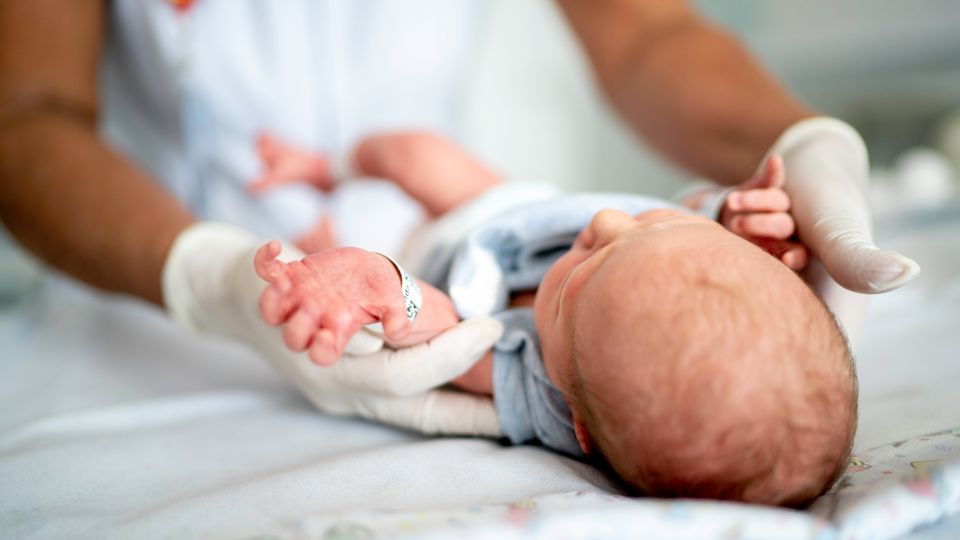
Sudden infant death syndrome (SIDS) is rare, but the impact on families and clinicians is severe.
However, now just a small drop of blood collected at birth could carry vital information about SIDS risk.
Why SIDS biomarkers matter
SIDS remains one of the leading causes of death in infants under 12 months. The condition refers to the unexplained death of an otherwise healthy infant, usually during sleep, which typically affects babies under one year of age and often occurs without warning – making it difficult to predict or prevent.
“SIDS is a heterogeneous pathology which results in the same endpoint: the sudden, unexpected death of a newborn,” Dr. Hanno Steen, a principal investigator and professor of pathology at Harvard Medical School and the director of proteomics at Boston Children's Hospital, told Technology Networks at HUPO 2025.
The mix of underlying causes for SIDS makes early risk assessment difficult, creating a need to study infants’ biology from birth to identify potential risk factors.
Many countries collect dried blood spots from newborns within the first days of life. These small samples are stable at room temperature, simple to store and are routinely archived for years, making them a useful source of information for looking back at early-life biology.
Steen and his team saw an opening here. They wanted to apply high-throughput proteomics to these dried blood spots to search for signals linked to later SIDS cases. By comparing the protein patterns in these early samples, they hoped to find markers that could help identify risk at birth, long before symptoms appear.
The findings discussed here are based on unpublished work that Steen presented at HUPO 2025.
Building a high-throughput proteomics workflow
To study dried blood spots at scale, Steen’s group needed a workflow that could run reliably day after day.
“I think the key to any kind of large-scale proteomic study is the robustness of the method; it's less about the peak performance. This means that a method that works great on 10 samples is less useful than a slightly less optimal process that works on hundreds of thousands of samples,” he explained.
The team built an automated pipeline using a liquid-handling robot for sample preparation and an Evosep One system coupled to a timsTOF Pro 2 mass spectrometer. The study analyzed 206 dried blood spot samples, including 111 from infants who later died of SIDS and 95 controls.
This setup processed ~60 dried blood spot samples per day. The robot removed the day-to-day variability that can creep into manual work and kept the measurements consistent across the full cohort.
The differences linked to SIDS risk in preterm infants were subtle, so the data needed to be as steady as possible before any biological interpretation could begin.
The three-protein biomarker panel
The first comparison in Steen’s study looked at dried blood spot proteomes from all SIDS cases and all controls.
Nothing separated the two groups. The profiles were broadly similar, and there was no clear signal to work with. This led the team to revisit a long-standing observation in the field: the higher SIDS risk in preterm infants.

Electrophoresis Explained: Principles and Applications
This infographic explores the fundamental principles of these three major electrophoresis techniques while showcasing their diverse applications from DNA profiling to protein characterization, quality control and beyond.View Infographic
When they divided the cohort by gestational age, the pattern changed. Proteomes from preterm infants who later died of SIDS showed differences in immune-related proteins when compared with gestational-age-matched controls.
“There are underlying causes for this [SIDS], and I think that in newborns there's a very different cause than in preterm babies. That's why the stratification into preterms and terms was incredibly important,” Steen explained.
These findings also support the idea that SIDS is a mixed group of conditions rather than a single disease.
“I think it's important to note in this context that prematurity has been known to be a risk factor for SIDS, and now with our analysis, we could actually provide or shed light on what might be the underlying pathologies or pathophysiological processes that are associated with the SIDS death in preterm babies,” he added.
Steen declined to specify the affected immune pathways because the team has a patent pending. But the shift was enough to guide the search for a measurable marker set.
“When it comes to a biomarker panel, it's important that you don't overfit. So, that means that you really want a panel with as few proteins as possible,” said Steen. The lab only considered panels with two or three proteins for this reason.
“We came up with a short list of proteins, and then we tested all the pairwise or triple-wise comparisons and saw which one performed best. Based on that, we went ahead with this one panel,” said Steen.
The final three-protein panel reached over 80% accuracy in the test set of preterm infants.

Advances in Proteomics & Metabolomics 2026
This event will explore advances in analytical tools, data integration and applications that are expanding what’s possible in systems biology and precision research.View Online Event
“Interestingly enough, they are all from biological processes that are interconnected, which gives them added credibility,” he added.
What comes next for the SIDS biomarker test
Steen’s group is now focused on testing the three-protein panel in a larger, independent cohort.
“To validate, we have to go into another independent cohort, and that's what we're working on right now,” said Steen.
The team is working with public health partners to access archived samples: “We're trying to get a much larger set of newborn screening cards, working together with the Department of Public Health in New York.”
The aim is to gather roughly a decade of dried blood spots from infants who later died of SIDS, along with matched controls, to check how well the panel performs outside the original dataset.
The project’s impact may extend past SIDS research. Steen sees dried blood spots as a practical tool for tracking the health of very premature infants in neonatal intensive care units (NICU).
“Dried blood spots are going to be instrumental for this kind of work, especially when it comes to preemies in the NICU because they don't have much blood,” he explained. “The total blood volume is ~30–50 ml of blood, so there's no way of collecting blood for research purposes.”
Five Key Advances Shaping Pharmacogenomics
This article explores five key advances driving pharmacogenomics, including long-read sequencing, AI, real-world data integration, polygenic risk scores and multiomics, all aiming to improve personalized medicine and drug response predictionsView Listicle
Dry blood spot sampling avoids that problem.
“It's an easy process to collect dry blood spots. It only needs, literally, a drop of blood, and that's something where ethics committees normally say, ‘that's okay to collect that,’” said Steen.
“More importantly, those are samples that you can collect much more frequently. You can do it daily, for instance,” he added.
“Those preemies in the NICU could be routinely tested, not only for one, two or three markers, but you can do proteomics on those samples. It’s very important that it's compatible with the clinical process,” explained Steen.
Steen believes this approach could reshape how early immune development is assessed in the NICU.
“I think that has the potential to really change the clinical practice,” he said.
He has already found clinical collaborators: “I should mention that I convinced at least one neonatologist in upstate New York of this idea. So, we're working together on that right now.”
If validated in larger cohorts, this proteomic approach could transform early SIDS risk assessment and neonatal care.
This article is based on research findings that are yet to be peer-reviewed. Results are therefore regarded as preliminary and should be interpreted as such. Find out about the role of the peer review process in research here. For further information, please contact the cited source.