Multiplex ddPCR Offers New Precision for Gene Expression Analysis
At ASHG 2025, researchers shared insights into how multiplex ddPCR enhances sensitivity and precision in studies.
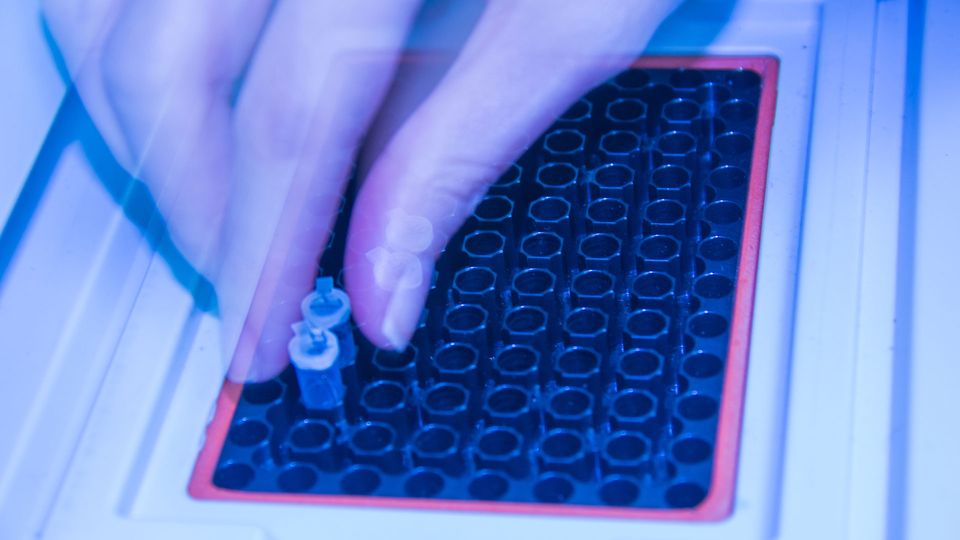
At this year’s American Society of Human Genetics annual meeting, Technology Networks caught up with Dr. Chelsea Pratt, biopharma segment manager at Bio-Rad Laboratories, who was exploring advances in digital polymerase chain reaction (PCR) technology and its potential to enhance gene expression analysis.
In this Q&A, Pratt discusses a recent study comparing multiplex droplet digital PCR (ddPCR) with traditional quantitative PCR (qPCR), highlighting key methodological differences, assay validation strategies and the advantages of ddPCR for detecting subtle changes in low-abundance targets. The discussion also explores practical considerations for labs adopting multiplex ddPCR and the areas of research where this technology could have the greatest impact.
What key gaps in current standardized methods for ddPCR did this study aim to address?
Chelsea Pratt, PhD (CP):
To provide an example of data analysis and comparison to qPCR, highlighting the differences in data acquisition and analysis. The results were similar, with digital providing higher statistical significance.
IE:
Can you walk us through the experimental design and why HeLa cells treated with cisplatin were chosen as the model system?
CP:
This model was chosen for its ease of implementation and thorough publication history. The genes chosen had previously been shown to have differential regulation in several publications, giving us an established protocol to use for technology comparisons.
IE:
Multiplexing can sometimes lead to assay interference. What strategies did you use to minimize cross-reactivity and ensure robust results?
CP:
We used Bio-Rad PrimePCR assays, which have been tested for optimum performance at the same temperatures and protocols for each respective technology.
We validated the results by comparing single-plex results to multiplex results and had no difference in either technology.
Assay interference is a common concern with qPCR; however, we found that the robustness of the PrimePCR assays did not need any additional optimization in this experiment. Still, validation of multiplex results should always be confirmed before proceeding to complex experiments.
IE:
What were the biggest differences you observed between qPCR and ddPCR in terms of sensitivity and precision for low-abundance targets?
CP:
ddPCR was able to measure low-abundance targets with higher precision and provide statistical significance of change in expression, where qPCR was not.
IE:
In what types of studies or clinical applications do you see multiplex ddPCR having the greatest impact?
CP:
Multiplex ddPCR will be able to provide researchers with more reliable data for limited samples and genes that are only modestly elevated or reduced.
I see this having a large impact in neuroscience studies in research, as samples are extremely precious. It could also affect monitoring disease recurrence in patients with known and common mutations.
IE:
What advice would you give to labs deciding between qPCR and ddPCR for multiplex gene expression analysis?
CP:
Each technology can measure changes in gene expression, although ddPCR is capable of detecting less than two-fold changes, while qPCR cannot. Multiplexing with both technologies needs to be validated, comparing singleplex to multiplex results. Due to the partitioning done in ddPCR, amplification efficiency is less of a concern than with qPCR. However, optimized and validated PrimePCR assays showed that a robust design can reduce, and in this case, eliminate, additional assay optimization.