Mosquito Blood Reveals Nearly All Local Wildlife
Scientists used mosquito blood to detect 86 vertebrate species, revealing nearly all local wildlife in one preserve.
Jurassic Park — and its never-ending sequels and spinoffs — starts with a basic premise: extracting the DNA of long-dead dinosaurs from mosquitoes frozen in amber.
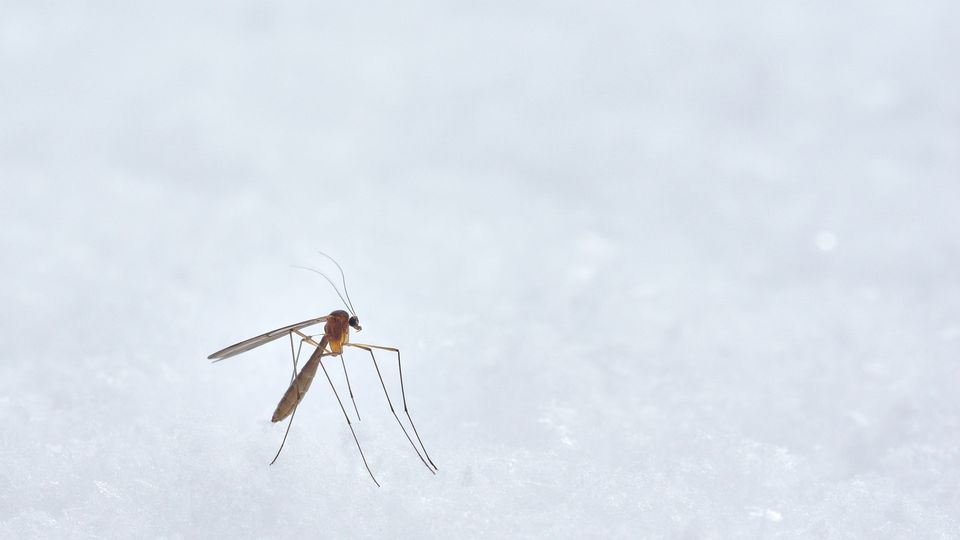
It turns out mosquitoes really are as voracious as Michael Crichton imagined. A new study reveals that, within a small area in central Florida, mosquitoes fed on a whopping 86 different species of animals, capturing nearly all the vertebrate biodiversity in the area.
“They say Jurassic Park inspired a new generation of paleontologists, but it inspired me to study mosquitoes,” said Lawrence Reeves, Ph.D., a University of Florida entomologist and senior author of the new study, published last month in Scientific Reports.
“Using mosquitoes, we captured vertebrates that ranged from the smallest frogs to the largest animals like deer and cows,” he said. “And animals with very diverse life histories: arboreal, migratory, resident, amphibious, and those that are native, invasive or endangered.”
The study started as a simple idea, dating back to Reeves’ days as a graduate student. Can we use mosquitoes to capture a sample of the animals that live in an area? It seemed like it could be a big improvement over labor-intensive traditional methods, like manual counting or trapping, which require highly trained biologists and countless hours of fieldwork.
So, over eight months, Reeves’ team, led by graduate student Hannah Atsma, collected tens of thousands of mosquitoes from the DeLuca Preserve, a protected area operated by UF 80 miles south of Orlando. In total, they analyzed more than 2,000 blood meals for the DNA of mammals, birds, reptiles and amphibians.
The mosquitoes had a wide-ranging diet. Rattlesnakes, bald eagles and coyotes were all on the menu. Amphibious animals like otters, toads and alligators weren’t safe. Even shells couldn’t help: Mosquitoes slurped up the blood of gopher tortoises just fine. Among the large mammals known to wander the preserve, only the endangered Florida panther escaped detection through mosquitoes. They may simply be so rare that it’s challenging to collect the few mosquitoes that feed on them.
In a companion paper led by UF’s Samantha Wisely, Ph.D., researchers found that mosquitoes compared favorably with conventional survey efforts during the wet season, when the blood-feeding insects are most abundant.
“I am acutely aware of the disdain humans have for mosquitoes. It’s pretty warranted. Mosquitoes don’t do much to give the impression they’re an important element of ecosystems,” Reeves said. “But in their ecosystems, they play important roles, and we show here they can help monitor other animals to help conserve them or to inform how we manage ecosystems.”
Whether mosquitoes harbor enough DNA to recreate an extinct species remains an open question. But perhaps one that’s better left alone.
Reference: Atsma H, Burkett-Cadena ND, Wisely SM, Urlaub A, Botero-Cañola S, Reeves LE. Monitoring biodiversity and detection of diverse vertebrate species with mosquito blood meal analysis at the DeLuca Preserve, Florida, USA. Sci Rep. 2025. doi: 10.1038/s41598-025-28062-x
This article has been republished from the following materials. Note: material may have been edited for length and content. For further information, please contact the cited source. Our press release publishing policy can be accessed here.