Modernize Your Pharmaceutical Methods With Confidence
eBook
Published: December 4, 2025
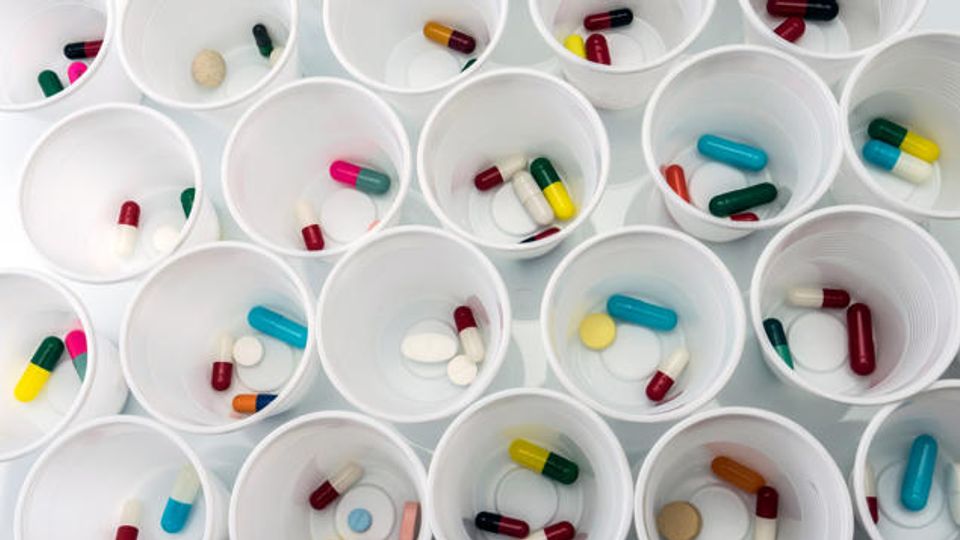
Credit: iStock.
The pharmaceutical industry is evolving, driven by the need for more efficient, sustainable analytical workflows and by shifting regulatory expectations.
To enhance accuracy, reliability, and patient safety, the U.S. Pharmacopeia is updating its monographs and general chapters to align with the latest scientific standards. As these revisions are introduced, laboratories worldwide have the opportunity to modernize their methods – viewing compliance not only as a requirement but also as a chance to strengthen and future proof their workflows.
This compendium showcases eight application notes that explore innovative strategies for method modernization in pharmaceutical processes.
Download this compendium to discover how to:
- Modernize chromatography workflows with future-ready technology
- Improve throughput and cost savings
- Ensure accuracy in excipient and API impurities analysis
Useful Strategies for
Modernizing USP Methods
Application Compendium
2
The pharmaceutical industry is undergoing a transformative shift, driven not only by
the demand for more efficient and sustainable analytical methodologies but also by
evolving regulatory expectations. Central to this evolution is the U.S. Pharmacopeia
(USP), which, in collaboration with the United States Food and Drug Administration,
European Pharmacopoeia, and British Pharmacopoeia, is leading a global initiative to
modernize monographs and general chapters to reflect current scientific standards.
This modernization effort aims to replace outdated, nonspecific tests with advanced
techniques such as high-performance liquid chromatography (HPLC) and ion
chromatography (IC), enhancing the accuracy, safety, and reliability of pharmaceutical
testing. As these standards become enforceable and increasingly adopted worldwide,
laboratories must align with these changes to maintain compliance and ensure product
quality. In this complex regulatory landscape, organizations are seeking reliable partners
who can provide both technical expertise and strategic guidance to help navigate
modernization requirements and uphold the integrity of their analytical practices.
Foreword
Modernization of USP Methods
Application Compendium
USP monograph
for an analytical
method
adjustment
USP <621>
Allowed
adjustments
Make one
change
Make multiple
changes
Make assessment
of the method
followed by
verification
Do a protocol
based risk
assessment
Additional
verifications
Non-allowed
adjustments
Revalidation is
required
Assessment of Analytical Methods
3
Introduction 4
LC method modernization 5
Sustainability and cost-saving enhancements 6
Revisions to USP General Chapter <621> 7
Excipient and API impurities analysis 8
Modernize your methods with confidence 9
Contents
This application compendium showcases Agilent's commitment to supporting the modernization of small-molecule analytical methods. Each application note demonstrates practical, real-world strategies for improving method performance, sustainability, and regulatory compliance, utilizing our innovative portfolio of instruments, columns, and software.
Agilent is your partner in progress. Bring your scientific vision to life with our expert support and cutting-edge solutions. Together, we can work to streamline and elevate your method modernization, achieving the precision, robustness, and reliability your laboratory demands.
4
As the pharmaceutical industry continues to evolve, so to must the analytical techniques
that support the development, quality, and safety of small-molecule therapeutics. This
application note compendium presents eight application notes that exemplify Agilent's
innovative approaches to updating and enhancing analytical methods, serving as a
practical guide for laboratories seeking to align with USP modernization efforts while
embracing sustainability, efficiency, cost-savings, and analytical excellence.
Explore our range of modernization strategies, including: optimizing LC methods to
superficially porous particle (SPP)-based columns for improved throughput and cost
savings; updating the use of legacy instrumentation to more future-ready technology;
adopting greener practices like reduced solvent consumption and the use of helium as a
carrier gas in GC; and many more. For more information on USPs modernization initiatives
and resources, visit Agilent's Revisions per USP 621.
Introduction
Return to contents
5
LC method modernization
LC remains a cornerstone of pharmaceutical analysis, yet many small-molecule testing methods still
rely on outdated column technologies, legacy instrumentation, and environmentally or LC-damaging
mobile phases. Not only does this impact accuracy and reproducibility of testing results but also
leads to workflow inefficiencies, higher costs, and lack of sustainability.
Modern LC technologies—such as SPP columns and UHPLC systems—enable scientists to
significantly reduce analysis time, solvent consumption, and operational costs while achieving robust
analytical performance, data quality, and regulatory compliance.
The following application notes illustrate practical solutions for implementing LC method modernization.
The examples presented here include:
Combining the analysis of two APIs into a single, efficient testing method with
LC-friendly mobile phases and smaller modernized particle column technology
Read application note
Seamlessly transferring a USP monograph method from a legacy LC to a new,
future-ready UHPLC system
Read application note
Application Note
Biopharma/Pharma
Authors
Monique Paré Speirs, PhD
and Megan K. Bean
Rhyz Analytical Labs
Rongjie FU
Agilent Technologies
(Shanghai) Co., Ltd, China
Abstract
Phenylephrine HCl and pramoxine HCl are active pharmaceutical ingredients
(APIs) used independently or combined in a broad range of multisymptom relief
over the counter (OTC) products. These APIs are generally tested separately using
different extraction techniques, HPLC methods with outdated column technologies,
and LC‑damaging salt buffers. Combining the separate techniques into a single
extraction and acquisition method with LC‑friendly mobile phases and smaller
modernized particle technology is critical to improve the efficiency and sustainability
of product quality control (QC) testing. An LC method to determine both compounds
from a single, simple sample extraction was developed. This method was performed
with a gradient of 0.05% trifluoroacetic acid (TFA) and methanol in lieu of traditional
salt buffers. The analysis was conducted on an Agilent 1260 Infinity II LC system
with an Agilent InfinityLab Poroshell 120 EC‑C8 (3.0 × 150 mm, 2.7 μm) column and
diode array detection at 224 nm.
Modernizing LC Methods for USP
Phenylephrine HCl and Pramoxine HCl
in OTC Products
Return to contents
6
Sustainability and cost-saving
enhancements
The first step in enhancing sustainability and cost-savings is through reduction of time,
resources, and waste. By adopting streamlined workflows with shorter run times, laboratories
can use significantly less mobile phase per analysis. This not only cuts down the volume
of costly and often environmentally hazardous organic solvents but also reduces energy
consumption and instrument wear. In turn, this leads to lower operational costs, less
hazardous waste, and more efficient use of staff time—delivering both environmental and
economic benefits without compromising performance.
The following application notes illustrate practical solutions for:
Improving gradient separations by transferring to smaller columns to reduce
solvent use and analysis time
Read application note
Simplifying GC method transfer of residual solvent analysis from using helium to
the more sustainable and cost-effective hydrogen carrier gas
Read application note
Application Note
Pharma/Biopharma
Author
Rongjie Fu
Agilent Technologies
(Shanghai) Co., Ltd
Abstract
The original USP monograph HPLC method of related-compounds analysis for
iohexol was transferred to smaller particle size 3.5 and 1.8 μm Agilent ZORBAX
columns following the newly revised U.S. Pharmacopeia (USP) General Chapter
<621> guidelines. The original method uses a gradient separation with a
4.6 × 250 mm, 5 μm column and requires 60 minutes for the analysis. The analysis
time was reduced from 60 to 25 minutes when the method was transferred to the
Agilent ZORBAX SB-C18, 3.0 × 150 mm, 3.5 μm column (58% reduction in analysis
time and 75% reduction in solvent consumption). Furthermore, analysis time was
reduced from 60 to 8.6 minutes when the method was transferred to the Agilent
ZORBAX RRHD SB-C18 column, 2.1 × 100 mm, 1.8 μm (86% reduction in analysis
time and 92% reduction in solvent consumption), without method revalidation. All
system suitability requirements were met while achieving significant reductions in
both analysis time and solvent consumption.
Gradient Method Transfer of the
Iohexol USP Monograph HPLC Method
for Related Compounds to Smaller
Particle Size ZORBAX Columns
Application Note
Pharma and Biopharma
Author
Jie Zhang
Agilent Technologies
(Shanghai) Co. Ltd.
Abstract
The manufacturing process for active pharmaceutical ingredients (APIs) may
contribute to residual solvents remaining in the final product. Due to regulatory
requirements, producers need to monitor and control the levels of residual solvents.
In this work, an Agilent 8850 gas chromatography (GC) system coupled with an
Agilent 8697 headspace sampler was applied to the residual solvents analysis
following the USP Method <467>. The system performance was verified in terms of
detectability, resolution, qualification accuracy, and quantitation precision using both
helium and hydrogen carrier gas.
Residual Solvents Analysis for the
Pharmaceutical Industry Using the
Agilent 8697 Headspace Sampler and
8850 GC-FID System
Return to contents
7
Revisions to USP General Chapter <621>
Historically, strict method parameters limited the ability of laboratories to optimize efficiency,
sustainability, or newer instrumentation. The revision of USP <621> Chromatography now allows for
greater flexibility in method adjustments, including changes to column dimensions, particle sizes,
flow rates, and gradient conditions, as long as system suitability is maintained. With this new revision,
laboratories are empowered to modernize their legacy methods without the need for full revalidation,
helping them adopt more efficient and environmentally conscious techniques without compromising
on performance or compliance.
The following application notes illustrate how these new revisions can be applied in practice, including:
Refining a compendial method for an API with modern LC equipment, reduced
analysis time, and less solvent consumption
Read application note
Applying USP <621> revisions to modernize the acetaminophen and
caffeine tablets HPLC assay with smaller particle size columns for improved
performance without revalidation
Read application note
Application Note
Pharmaceutical
Author
Rongjie Fu
Agilent Technologies
(Shanghai) Co. Ltd.
Abstract
The original United States Pharmacopeia (USP) Acetaminophen and Caffeine
Tablets HPLC assay was modernized to take advantage of smaller particle columns,
including totally porous particle (TPP) and superficially porous particle (SPP)
columns, following the newly revised USP <621> guidelines. The updated methods
replaced conventional 5 μm TTP columns with 3.5 μm Agilent ZORBAX Eclipse Plus
C18 columns and 4 μm Agilent InfinityLab Poroshell 120 EC-C18 columns without
revalidation. All system suitability requirements were met and significant reductions
in both analysis time and solvent consumption were achieved.
Modernizing the USP Acetaminophen
and Caffeine Tablets HPLC
Method Following the Revised USP
<621> Guidelines
Realizing the benefits of smaller particle size
columns without revalidation
Return to contents
8
Excipient and API impurities analysis
Excipients and impurities play a critical role in influencing the safety, stability, and performance of
pharmaceutical products. Therefore, their accurate analysis is essential throughout drug development
and quality control processes. As formulations become increasingly complex and regulatory standards
continue to evolve, traditional analytical strategies—particularly those involving LC—often lack the
ruggedness, speed, and sensitivity required to meet modern expectations.
Modernization of LC methodologies enables analysts to detect and quantify excipients and impurities with
significantly improved precision. In addition to enhanced analytical performance, these updated methods
offer benefits such as reduced analysis time, improved sustainability, and cost savings, making them highly
valuable in today’s regulatory and operational landscape.
The following application notes present practical solutions for:
Modernizing a USP assay for an API by replacing outdated 10 μm columns
with smaller particle columns without revalidation, enabling significant
improvements in efficiency.
Read application note
Easily converting a USP impurity analysis to SPP columns with faster analysis
and higher resolution
Read application note
Application Note
Pharmaceutical
Author
Rongjie Fu
Agilent Technologies
(Shanghai) Co. Ltd.
Abstract
The original United States Pharmacopeia (USP) Ceftizoxime Sodium HPLC assay
was modernized to take advantage of smaller particle columns, including totally
porous particle (TPP) and superficially porous particle (SPP) columns, following the
newly revised USP <621> guidelines. The updated methods replaced conventional
10 μm TTP columns with 5 and 3.5 μm Agilent ZORBAX Eclipse Plus C18 columns
and Agilent InfinityLab Poroshell 120 EC-C18 columns without revalidation. All
system suitability requirements were met and significant reductions in both analysis
time and solvent consumption were achieved.
Modernizing the USP Ceftizoxime
Sodium HPLC Method Following the
Revised USP <621> Guidelines
Realizing the benefits of smaller particle size
columns without revalidation
Application Note
Pharma & Biopharma
Author
William J. Long
Agilent Technologies, Inc.
Abstract
The transfer of the USP Impurities method for diphenhydramine hydrochloride
is demonstrated using Agilent ZORBAX Eclipse Plus C8 and Agilent InfinityLab
Poroshell 120 EC-C8 columns. The initial method uses a 5 μm 4.6 × 250 mm column
and requires 40 minutes for the analysis. When InfinityLab Poroshell 120 EC-C8
columns (4.6 × 100 mm, 2.7 μm) are used, analysis time is reduced from 40 to
33% of the original method time, without need for revalidation using the InfinityLab
Poroshell 120 EC-C8 column. Pressure is monitored and considered a factor in
instrument transfer. This transfer is consistent with allowed adjustments under
USP37-NF32S1 (official August 1, 2014), and USP Stage 4 Harmonization, to be
official December 1, 2022.
A Simple Conversion of the USP
Method for Diphenhydramine HCl
Impurities to the Agilent InfinityLab
Poroshell 120 EC-C8 Column
Return to contents
DE-009808
This information is subject to change without notice.
© Agilent Technologies, Inc. 2025
Published in the USA, October 1, 2025
5994-8682EN
For more information, visit:
www.agilent.com/en/solutions/biopharma-pharma/pharmaceutical-small-molecules
www.agilent.com/en/solutions/biopharma-pharma/pharmaceutical-small-molecules/pharmaceutical-method-development/usp-621-chromatography
Modernize your methods with confidence
The USP’s initiative to modernize monographs and the revised USP Chapter <621> provides greater flexibility for method adjustments, empowering scientists to adopt these innovations while remaining within compendial guidelines. By modernizing your current USP methods, you can not only prepare your laboratory for evolving regulatory requirements but also enhance operational efficiency—saving you time, money, and resources.
Providing easy access to real-world strategies for method modernization, Agilent offers a roadmap for transforming outdated methods into high-performance, sustainable, and future-ready workflows. As your reliable partner, we can provide the expertise, technologies, and solutions to update your small-molecule analytical methods with confidence.
Return to contents
Brought to you by

Download the eBook for FREE Now!
Information you provide will be shared with the sponsors for this content. Technology Networks or its sponsors may contact you to offer you content or products based on your interest in this topic. You may opt-out at any time.
Experiencing issues viewing the form? Click here to access an alternate version