Mass Spectrometry for Proteomics: Techniques, Tools and Tips
A comprehensive overview of MS-based proteomics.
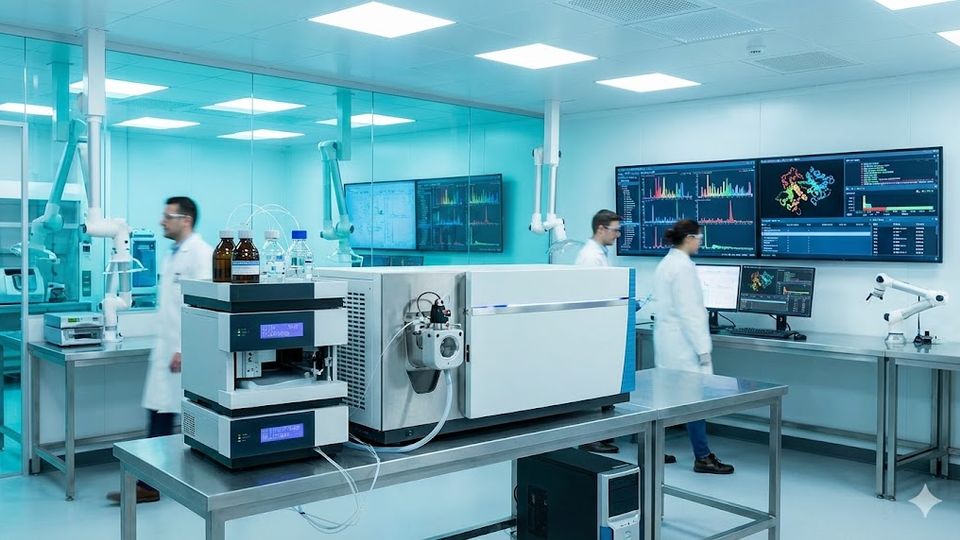
Mass spectrometry serves as the analytical cornerstone for modern proteomics, enabling precise identification and quantification of proteins in complex biological samples. As laboratory professionals face increasing demands for higher throughput and sensitivity, understanding the integration of mass spectrometry within proteomic workflows becomes essential for generating robust data. This article explores the critical components of MS-based proteomics, ranging from sample preparation and ionization techniques to advanced data acquisition strategies, ensuring laboratories maintain the highest standards of analytical performance.
Mastering ionization: MALDI and LC-MS/MS in proteomics
The initial critical step in any mass spectrometry workflow involves converting analyte molecules into gas-phase ions. For proteomics, two soft ionization techniques dominate the landscape: Matrix-Assisted Laser Desorption/Ionization (MALDI) and Electrospray Ionization (ESI), the latter being the interface for LC-MS/MS.
The role of MALDI in high-throughput screening
MALDI remains a powerful tool for analyzing large biomolecules with minimal fragmentation. In this process, peptides or proteins are co-crystallized with a matrix on a metal plate. A laser pulse strikes the matrix, absorbing energy and facilitating the desorption and ionization of the analyte. MALDI is particularly favored in clinical microbiology and specific proteomic applications, such as mass spectrometry imaging (MSI), due to its speed and tolerance for salts and buffers. It produces predominantly singly charged ions, making spectrum interpretation straightforward for peptide mass fingerprinting.
LC-MS/MS: The gold standard for complex mixtures
While MALDI offers speed, LC-MS/MS (Liquid Chromatography coupled with Tandem Mass Spectrometry) provides the depth required for comprehensive proteomics. ESI allows the continuous introduction of liquid samples from an LC column directly into the mass spectrometer. As the effluent exits the capillary, high voltage creates an aerosol of charged droplets, which eventually desolvate to release gas-phase ions.
LC-MS/MS excels in bottom-up proteomics, where complex protein mixtures are digested into peptides before analysis. The chromatographic separation reduces sample complexity prior to ionization, reducing ion suppression and allowing the mass spectrometry system to detect low-abundance proteins. This setup is indispensable for biomarker discovery and post-translational modification (PTM) analysis.
Key advantage of LC-MS/MS: Facilitates online separation and sequencing of peptides.
Key advantage of MALDI: High throughput and spatial distribution analysis (Imaging MS).
Navigating acquisition modes: DIA vs DDA strategies
Once ions are generated, the mass spectrometer must select, fragment, and detect them. The strategy chosen for this process significantly impacts the depth of coverage and quantitative accuracy. The debate between Data-Dependent Acquisition (DDA) and Data-Independent Acquisition (DIA) represents a central decision point in MS-based proteomics.
Data-dependent acquisition (DDA)
Historically, DDA has been the default mode for discovery proteomics. In a DDA cycle, the instrument performs a survey scan (MS1) to detect precursor ions. Based on intensity, the top N most abundant precursors are selected for fragmentation (MS2). After fragmentation, these precursors are dynamically excluded for a set duration to allow the instrument to sample lower-abundance ions.
While DDA is excellent for library generation and identifying high-abundance proteins, it suffers from the "stochasticity problem." Low-abundance peptides may be missed if they co-elute with high-abundance species, leading to missing values across replicate runs.
Data-independent acquisition (DIA)
DIA addresses the stochastic nature of DDA by fragmenting all precursor ions within a specific mass-to-charge (m/z) window, regardless of intensity. The instrument steps through the entire mass range in wide isolation windows, effectively fragmenting everything. This results in a comprehensive digital map of the sample.
However, DIA produces highly complex chimeric spectra, requiring sophisticated spectral libraries and deconvolution algorithms for analysis. Despite the computational overhead, DIA is increasingly preferred for quantitative proteomics due to its reproducibility and superior data completeness.
Table 1. Comparison of DDA and DIA in mass spectrometry.
| Feature | Data-dependent acquisition (DDA) | Data-independent acquisition (DIA) |
| Precursor selection | Intensity-based (Top N) | Systematic (All ions in windows) |
| Data completeness | Stochastic (missing values common) | Comprehensive (fewer missing values) |
| Quantification | MS1-based (usually) | MS2-based (primarily; some hybrid workflows leverage MS1) |
| Library dependency | Low (can perform de novo sequencing) | High (often requires spectral libraries) |
| Best application | Library building, unknown identification | Reproducible quantitation, clinical studies |
High-resolution mass spectrometry platforms and analyzers
The resolution and mass accuracy of the instrument define the quality of proteomics data. High-resolution mass spectrometry is essential for distinguishing between isobaric peptides and accurately assigning molecular formulas.
Orbital ion trap technology
Orbital ion trap analyzers capture ions in an electrostatic field, where they oscillate around a central spindle. The frequency of oscillation is directly proportional to the m/z ratio. These instruments deliver ultra-high resolution (up to 500,000+ FWHM, depending on model and experimental conditions) and exceptional mass accuracy. These instruments are workhorses in academic and industrial laboratories for both DDA vs DIA workflows.
Time-of-flight (TOF) instruments
TOF analyzers measure the time it takes for ions to travel through a flight tube to a detector. Lighter ions travel faster than heavier ones. Quadrupole-Time-of-Flight (Q-TOF) instruments combine the selection capability of quadrupoles with the speed and sensitivity of TOF detection. Q-TOFs are particularly advantageous for rapid scanning, making them suitable for coupling with fast LC gradients in high-throughput proteomics.
Hybrid systems
Modern mass spectrometry often utilizes hybrid geometries, such as the Quadrupole-Orbital Trap or multi-analyzer hybrid systems (e.g., Quadrupole-Ion Trap-Orbital Trap). These configurations allow for complex experiments, such as synchronous precursor selection (SPS) for improving the accuracy of isobaric tagging quantification.
Optimizing sample preparation and data analysis pipelines
Even the most advanced mass spectrometry hardware cannot compensate for poor sample preparation. In proteomics, the upstream processing of samples dictates the success of the downstream analysis.
Rigorous sample preparation
Consistency is paramount. Protein extraction buffers must be compatible with downstream enzymatic digestion or removed prior to analysis. Common contaminants like detergents (SDS) or polymers (PEG) can suppress ionization and contaminate the mass spectrometry system.
Protein extraction: Use chaotropic agents (urea, guanidine) to solubilize proteins, followed by reduction and alkylation of cysteine residues.
Digestion: Trypsin remains the gold standard protease, cleaving at the C-terminus of lysine and arginine, generating peptides ideal for LC-MS/MS.
Peptide clean-up: Solid Phase Extraction (SPE), typically using C18 tips or columns, is mandatory to remove salts and buffers that could foul the instrument source.
Bioinformatics and data interpretation
The data generated by MS-based proteomics requires robust bioinformatics pipelines. For DDA, various database search engines correlate experimental spectra against theoretical spectra generated from protein sequence databases.
Analytical Workflows To Ensure the Safety of GLP-1 Receptor Agonists
This eBook offers a comprehensive overview of analytical workflows for GLP-1 receptor agonists, highlighting the central role of liquid chromatography and mass spectrometry techniques.View eBook
For DIA, specialized data processing software suites are utilized to extract quantitative information from the complex multiplexed spectra. Statistical validation using False Discovery Rate (FDR) control—typically set at 1% for both peptide and protein levels—is a critical quality standard mandated by journals and guidelines such as those from the Human Proteome Organization (HUPO).
Essential instrument maintenance and quality control procedures
To maintain high sensitivity and reproducibility, laboratory professionals must implement a strict instrument maintenance schedule. Mass spectrometry systems are sensitive to contamination, and performance degradation can lead to costly downtime.
Routine maintenance
The electrospray source is the most frequent point of contamination. The front-end optics, including the ion transfer tube and skimmer cones, require regular cleaning to remove charged debris that hampers ion transmission.
Daily: Check vacuum levels, nitrogen gas supply, and solvent levels.
Weekly: Flush LC lines with high organic solvent to prevent microbial growth; calibrate the mass axis if drift is observed.
Monthly/Quarterly: Clean the ion source and front-end optics; replace LC column filters and guard columns.
System suitability testing (SST)
Running a standard Quality Control (QC) sample, such as a mammalian cell lysate digest or a predigested BSA standard, is mandatory before starting any sample queue. This ensures the LC-MS/MS system is performing within specifications regarding retention time stability, peak width, and intensity. Monitoring these parameters longitudinally allows labs to predict when instrument maintenance is required before data quality suffers.
Guidelines from regulatory bodies like the FDA regarding bioanalytical method validation emphasize the necessity of system suitability tests to ensure the reliability of analytical data in regulated environments.
Future horizons in mass spectrometry for proteomics
The field of mass spectrometry for proteomics continues to evolve rapidly. The integration of ion mobility spectrometry (IMS) adds a fourth dimension of separation based on the shape and cross-section of ions (Collisional Cross Section, CCS), further enhancing the specificity of DIA vs DDA methods. Furthermore, the push toward single-cell proteomics is challenging the sensitivity limits of current hardware, necessitating more efficient ionization and lower-flow chromatography.
For laboratory professionals, staying abreast of these advancements is not merely academic; it is a requirement for maintaining competitive analytical capabilities. By mastering the fundamental techniques of LC-MS/MS and MALDI, selecting the appropriate acquisition modes, and adhering to rigorous maintenance and QC protocols, laboratories can ensure they deliver high-quality, reproducible proteomic data.
This content includes text that has been created with the assistance of generative AI and has undergone editorial review before publishing. Technology Networks’ AI policy can be found here.