Mapping 768 Tau Proteoforms Could Advance Alzheimer’s Research
A new Q&A explores how scientists are mapping tau proteoforms to uncover hidden Alzheimer’s biology.
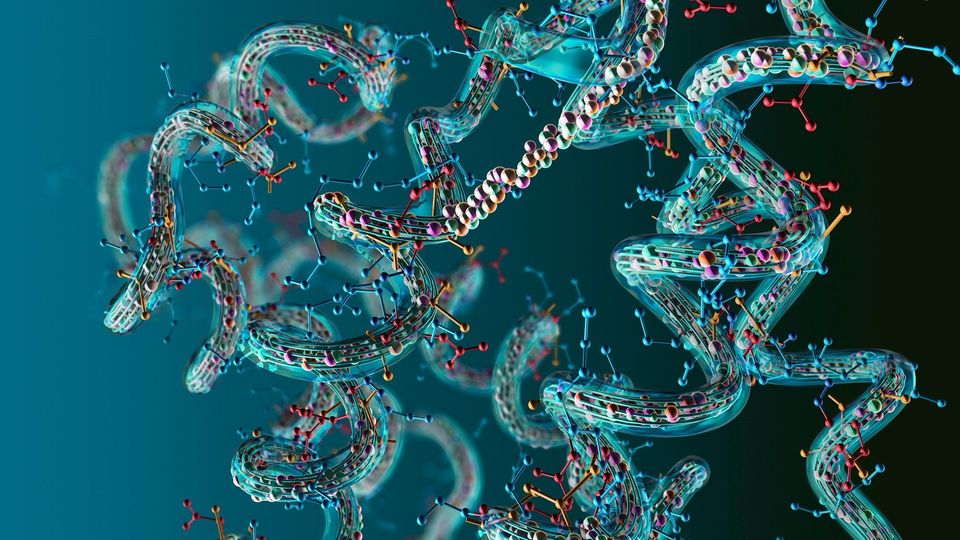
Alzheimer’s disease (AD) remains one of the most complex and devastating neurodegenerative disorders, challenging researchers to understand its underlying molecular mechanisms and identify reliable biomarkers for early detection and therapeutic intervention.
Scientists are now turning to the world of proteoforms – the distinct molecular variants of proteins that can influence cellular function and disease progression.
Technology Networks recently spoke with Dr. Birgit Schilling, a professor and the director of the Mass Spectrometry Core at the Buck Institute for Research on Aging, and Dr. Parag Mallick, an associate professor at Stanford University and co-founder of Nautilus Biotechnology, to discuss their latest collaboration.
Schilling’s lab is leveraging Nautilus’ single-molecule proteomics platform to map proteoforms of tau, a key protein implicated in AD, across multiple brain regions. By capturing the full complexity of tau isoforms and their dynamic modifications, their work aims to illuminate previously hidden aspects of disease biology and identify potential biomarkers for disease progression and therapeutic response.
What biological insights do your preliminary findings provide, and how might they advance our understanding of Alzheimer’s disease?
Birgit Schilling, PhD (BS):
We are so excited that we were able to perform these first experiments using the Nautilus platform here at the Buck Institute for Research on Aging.
With my long-term colleague, neuroscientist Dr. Lisa Ellerby, our two laboratories investigated the pathogenic AD protein tau, applying novel assays to map and currently quantify up to 768 different full-length tau proteoforms across different brain regions of the AD humanized mouse model 3xTg-AD. We monitored different splice variants of tau (tau isoforms) and phosphorylated tau proteoforms, observing clear regional differences in the hippocampus, cortex and cerebellum. For example, we observed significantly higher levels of the pT181-4R tau proteoform (an early AD marker) in the hippocampus compared to cerebellum and cortex in 3xTg-AD mice. Deep mapping of tau proteoforms across functionally distinct brain regions provided novel insights into the complexity of tau biology during AD and related dementias’ progression.
Parag Mallick, PhD (PM):
While our recent preprint provided some hints about the biological significance of tau proteoforms in terms of their potential to differentiate different stages of Alzheimer’s disease, everyone at Nautilus is incredibly excited to see what Birgit and her team at the Buck uncover.
We’ve worked with other fantastic collaborators in the neuroscience space, but Birgit is the first to have an instrument in her lab, and the fact that her team is already gaining insights into the previously hidden complexity of tau biology is deeply encouraging. Complexity can be daunting when you don’t have the tools necessary to map or understand it, but with Iterative Mapping and the Nautilus Platform, we hope researchers will have a facile means to navigate that complexity and identify new research paths – just as Birgit and her team are already doing.
RLS:
Could these tau proteoform patterns serve as potential biomarkers for disease progression or therapeutic response?
PM:
Proteoforms are the forms of proteins that actually exist in our body. Prof. Neil Kelleher and colleagues have estimated that there may be millions of different forms of proteins that are defined by different combinations of modifications. Each form potentially has a functional consequence on how the protein folds, where it localizes, how it interacts with other proteins and how it catalyzes chemical reactions.
Ultimately, the mixture of proteoforms found in any given biological system governs how that system behaves. Standard protein assays may suggest that a protein’s abundance is fixed. However, with proteoform resolution, it may become apparent that the proteoform levels are highly dynamic and specific to particular disease stages or trajectories.
Thus, as a disease progresses, we can map how the proteoform landscape changes and identify which landscapes are consistently associated with different stages of disease, providing highly specific biomarkers for disease detection, staging and prognosis.
Conversely, we can use these proteoform patterns to measure therapeutic response. We anticipate that some treatments may return a proteoform landscape to a “normal” composition while also abrogating other impacts of the disease. If they do, the proteoform landscapes may also make good biomarkers of therapeutic effectiveness that may even manifest before other phenotypes are abrogated. If a treatment does not effectively return proteoform landscapes to normal for some patients, that might be a sign that different treatments should be used for those patients.
Of course, getting to that point requires us to map proteoform landscapes across many patients in different conditions, but that’s what we think is needed for next-generation precision medicines and the Nautilus Platform makes it practical for the first time.
RLS:
How does single-molecule analysis improve our ability to detect subtle proteoform variations that traditional proteomics might miss?
PM:
Traditional proteomics platforms can usually determine if a protein’s total abundance has changed or quantify the relative abundance of particular modification sites. However, traditional methods typically can’t identify the combinations of modifications found on proteins or how those combinations of modifications relate to splice-variation. In other words, they can’t usually quantify proteoforms.
On top of that, the one technology specifically capable of proteoform analysis, top-down mass spectrometry, has thus far been limited to a small number of expert labs. Top-down proteomics is an excellent tool for discovering novel proteoforms, but it hasn’t yet transitioned towards being ready for biological researchers to use to sensitively quantify large numbers of proteoforms, at scale, across thousands of samples.
With Iterative Mapping on the Nautilus Platform, as long as we have probes that target specific modifications, we can independently probe single protein molecules for those targeted modifications and determine how they combine to generate many, many different proteoforms at once. Furthermore, we can quantify these proteoforms with single-molecule sensitivity, accuracy, precision and high reproducibility.
While other technologies can’t usually even identify proteoforms, we can quantify many of them at once and rapidly determine how different mixtures of proteoforms associate with biological functions and diseases.
BS:
I think the single-molecule analysis that is now enabling us to identify many different proteoforms for the tau protein shows great potential to become a paradigm-changing novel tool to analyze AD and AD-related dementias in AD mouse models, human cerebral models and human AD tissue samples. Quantifying individual proteoforms of a specific protein is not typically possible with traditional bottom-up proteomic workflows that proteolytically digest proteins into peptides covering small sequence sections of the entire protein; thus, information of multiple phosphorylation sites per protein or the specific splice variant distributions often gets “lost” during traditional workflows.
With Nautilus, we are excited to be able to measure individual tau proteoforms that contain several different tau phosphorylation sites, as each proteoform may show different functions and biomarker indications. Specifically, as phosphorylation is highly dynamic, the single-molecule platform from Nautilus provides a unique tool to assay these fast and dynamic phosphorylation changes during disease progression or during therapeutic interventions.
RLS:
In the context of aging and longevity research, how might this technology help uncover mechanisms that extend healthspan or resilience to neurodegeneration?
BS:
The Buck Institute’s mission is to extend the healthspan for people. What that means is that we aim for people to enjoy the healthy years of their lives and to reduce time of suffering from age-related diseases during their lifespan.
My lab has a focus on developing novel biomarkers for early detection of age-related diseases and also for developing tools and biomarkers to monitor if a therapeutic disease intervention (e.g., for AD) may be successful. We think there is a large potential in the single-molecule and proteoform analysis enabled by the Nautilus platform to gain deeper knowledge about mechanisms of Alzheimer’s disease and to develop AD-specific biomarkers.
RLS:
What makes the Buck Institute’s research focus on aging and neurodegeneration particularly well-suited to testing Nautilus’ platform?
PM:
First, I’d just like to point out that Birgit and the Buck have been amazing partners, and we are incredibly grateful to them first and foremost.
In terms of why aging and neurodegeneration are particularly well-suited to testing Iterative Mapping and the Nautilus Platform, I would say that’s because both are quintessentially protein-associated processes. This is true of the vast majority of processes occurring in the body at any given time, but unlike diseases such as cancer that have traditionally been thought of as diseases of the genome, aging and neurodegenerative diseases like AD have been strongly associated with proteins for many years.
For example, researchers have known the tau protein is involved in AD since the mid ’80s, and aberrant protein aggregation has been associated with many other neurodegenerative diseases for many years. Beyond that, the tau protein itself is a particularly powerful test case for Iterative Mapping because it’s known to come in six different isoforms in the central nervous system that are modified in many different ways. Researchers have known that the tau proteoform landscape is incredibly complex and that tau modifications change over the course of AD for years, but they have not been able to effectively map the tau proteoform landscape with any other technologies.
Iterative Mapping and the Nautilus Platform are uniquely able to map this landscape so there is great alignment between a key problem in the field and the proteomics solution we’ve developed.
BS:
The collaboration with Nautilus was a natural and perfect fit with my research portfolio (together also with Ellerby and other Buck faculty), and this new technology perfectly complements the other research tools that we have in my lab (various modern mass spectrometers).
At the Buck Institute, we have many projects investigating neurodegenerative diseases, particularly the progression from healthy aging to AD and translationally oriented research efforts that test therapeutic interventions in humanized mouse models or in cerebral organoids.
In addition, the Buck Institute has direct connections to research centers that have access to precious human AD samples, such as the Memory and Aging Center at the University of California, San Francisco. I feel that by connecting with Nautilus we brought innovative new research tools to the Buck Institute to learn as much as possible about AD and to provide translationally impactful research results.
RLS:
With the first field unit now validated, how do you envision this transforming access to proteoform-level data across academia and industry?
PM:
As Birgit shared during our lunch seminar at HUPO 2025, even the preliminary tau proteoform data she’s generated is spurring the development of many hypotheses. This shows that proteoform analyses on the Nautilus platform uncover previously hidden research paths – and that first-time researchers, not just the experts who developed the technology, can make these discoveries. This demonstrated the platform’s impact and accessibility, and we cannot wait for more researchers to begin using it through our Early Access Program in the first half of 2026.
The feedback from many who attended our HUPO lunch seminar was highly positive – they recognized our progress and were very excited to see we’re generating impactful, real-world data. We’re excited to keep this momentum going as we enter 2026 and share more data demonstrating the importance of single-molecule proteome analysis. We’re confident this data will convince researchers across various research areas to incorporate Iterative Mapping into their workflows. Of course, if you’re reading this and would like to work with us, please don’t hesitate to reach out.
RLS:
What message would you like the scientific community to take away from this milestone in Nautilus’ journey and the Buck Institute’s research mission?
BS:
PM:
While we believe our tau assay will be highly impactful, tau is just the tip of the iceberg for Iterative Mapping and the Nautilus Platform. It is easy to adapt Iterative Mapping to new proteins and proteoforms, and we’ve shown that even first-time researchers can easily understand and use our platform. As more researchers adopt Iterative Mapping, I suspect it will rapidly become clear that we should have been studying all biological processes and diseases from a single-molecule perspective all along.
Eventually, Iterative Mapping may even advance our understanding of “genomic” diseases.
We’ve designed the Nautilus Platform to democratize single-molecule proteome and proteoform analysis, and we cannot wait to see how researchers use it to revolutionize biomedicine and positively improve health outcomes around the world.