Key Trends and Technologies in Food Analysis

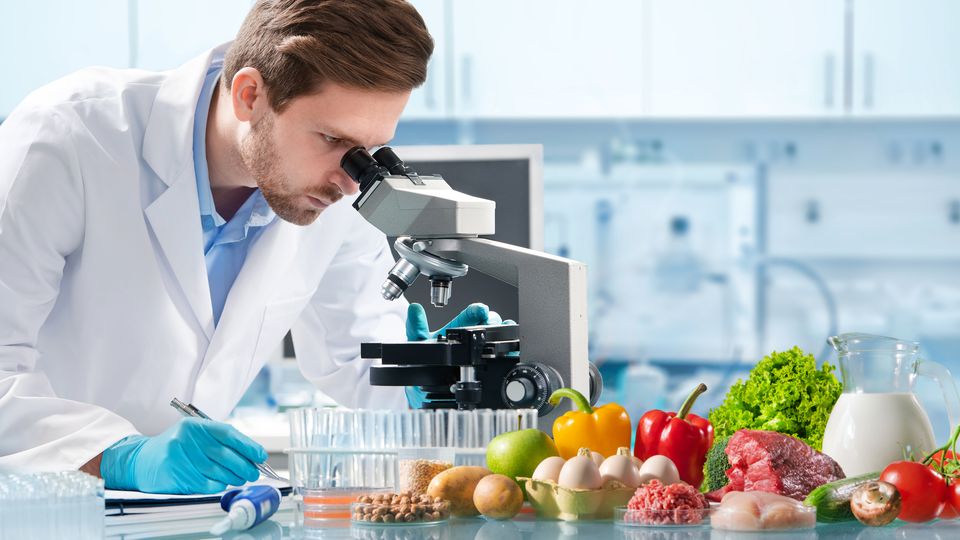
Food analysis is a fundamental discipline that underlies a host of public health concerns. The process by which we ensure the safety and authenticity of our food is evolving rapidly, driven by consumer expectations, regulatory changes, emerging threats and advances in analytical technology.
In this interview, Dr. Lorna De Leoz, global food segment director at Agilent, provides unique perspectives on the trends that are shaping, and will continue to shape, the food analysis landscape.
Certain topics, such as PFAS, contaminants and issues of authenticity or adulteration, frequently arise in food analysis. What do you see as the biggest current and emerging areas of interest?
Lorna De Leoz, PhD (LDL):
In food analysis, several persistent and emerging topics continue to shape the landscape. Longstanding concerns on contaminants in food, such as pesticide residues, mycotoxins and veterinary drugs, remain central to food safety discussions due to their widespread presence in grains, produce and animal-derived products.
One of the most pressing and rapidly evolving areas is the assessment of per and polyfluorinated alkyl substances (PFAS) – both in food and in food contact materials like packaging. PFAS make products more resistant to stains, grease and water and thus are widely used in our everyday products, but studies have shown that exposure to certain levels of certain PFAS may lead to health risks.
Food is a major exposure pathway. Seafood from contaminated waters can accumulate PFAS in their tissues. Crops and animals grown from farms with contaminated water, soil and fertilizer can absorb PFAS, affecting our produce, meat and eggs.
The list of PFAS compounds and food matrices under scrutiny is growing and regulatory and standard bodies are intensifying their focus. We are also seeing litigations and product recalls/detention in food due to food contamination by these stable 'forever chemicals'. This is driving innovations in sample preparation, detection methodologies, and analytical hardware to meet increasingly stringent guidelines.
Food authenticity and adulteration are critically important to address for economic, health-related, ethical and regulatory reasons. For example, honey is one of the most frequently adulterated foods due to the high market value of certain kinds of honey, and the complex supply chains. Traditional authentication methods, such as pollen analysis, have limitations that can be manipulated by fraudsters. Professor Stephane Bayen of McGill University is developing methods for non-targeted analysis of honey via liquid chromatography–mass spectrometry (LC-MS) to provide a chemical fingerprint of honey based on thousands of molecular features.
KS:
LDL:
New technologies and methodologies are being brought online at an unprecedented pace. Advanced sample cleanup methods, for example, are transforming sample preparation workflows, delivering faster and cleaner extractions across a wide range of sample types, from seafood to infant nutrition.
These innovations are increasingly recognized by food laboratories and are playing a key role in improving the accuracy and efficiency of contaminant analysis, including emerging challenges like PFAS and mycotoxins. For example, the use of enhanced matrix removal (EMR) as a QuEChERS cleanup method achieved approximately 80% time savings and 50% cost savings compared to conventional sample preparation methods for EPA 1633 analysis of PFAS in fish tissue samples, while maintaining similar levels of accuracy and precision. Based on this success, the authors went on to extend the method to other meats such as beef, turkey and canned tuna.
Lab automation solutions are having a measurable impact on transferring labor-intensive manual tasks – such as calibration, sample extraction and analysis – to robotic systems. These benefits are especially evident in routine workflows, such as PFAS analysis in seafood, where the method integrates QuEChERS sample preparation and automated calibration preparation, while enabling sample preparation and instrument analysis to run in parallel.
Innovations in instruments are helping with lower-level detection and analysis of contaminants that pose health risks. Intelligent instrument features like guided maintenance, scheduled tuning, solvent level sensing and automatic sample reinjection due to carryover all help with minimizing unplanned downtimes.
KS:
LDL:
Functional foods – those fortified with vitamins, adaptogens and omega-3s – are a booming market, but there are concerns about over-fortification that will likely intensify interest in their regulation and analysis.
The rise of personalized nutrition is pushing food analysis into the realm of nutraceuticals and lifestyle health. Consumer interest in GLP-1 agonists, adaptogens like ashwagandha, and perimenopausal support is already influencing product development. As these trends accelerate, testing protocols must evolve to ensure consumer safety and support detailed profiling of nutrients and flavor compounds.
PFAS contamination in water sources has led to increased scrutiny on their presence in wine, spirits and other beverages, which in turn is driving new testing protocols for PFAS in these products.
KS:
LDL:
Regulatory forces are playing a pivotal role in shaping where food analysis laboratories should concentrate their resources, especially as global food safety standards evolve rapidly. Agencies like the FDA, EFSA and WHO are driving stricter requirements around traceability, chemical contaminants and labeling transparency.
For example, the FDA’s Laboratory Accreditation for Analyses of Foods (LAAF) Rule mandates that certain food testing be conducted by accredited labs, pushing labs to invest in method validation, quality management systems and data integrity protocols. Similarly, the Food Safety Modernization Act (FSMA) and its updates emphasize preventive controls, supplier verification and real-time documentation, encouraging labs to adopt digital tools, automated workflows and AI-driven analytics. The recent Make America Healthy Again (MAHA) Strategy Report touches on numerous topics, including food additives, heavy metals, nutrition labeling, ultra-processed foods, microplastics, PFAS, pesticides and allergens.
The European Commission enacts regulations that are enforceable in all member states. For example, EU 2023/915 lists maximum levels for contaminants in various foods, including mycotoxins, plant toxins, metals and other elements, halogenated persistent organic pollutants, PFAS and processing contaminants.
Internationally, the WHO Global Strategy for Food Safety (2022–2030) urges countries to build evidence-based, cost-effective food safety systems, which includes strengthening laboratory infrastructure and harmonizing testing protocols.
Meanwhile, state-level regulations, such as California’s bans on certain additives and mandatory heavy metal testing in baby food, are creating a patchwork of compliance requirements that labs must navigate carefully.
In response, labs are reallocating resources toward:
- Accreditation and compliance readiness
- Rapid and multi-residue testing capabilities
- Staff training and certification
- Investment in automation and digital traceability systems
- Adaptation to sustainability-linked testing (e.g., packaging safety)
KS:
LDL:
Food and beverage laboratories are under growing pressure to adopt sustainable practices, driven not only by the need for environmental stewardship but also to enhance operational resilience, meet regulatory expectations and build consumer trust.
Labs are traditionally resource-intensive; key considerations to adopt sustainability include reducing energy and solvent consumption, minimizing waste, using compact and efficient instruments, and tracking metrics like emissions and resource consumption. Vendors play a vital role by providing eco-labeled products, refurbishing and recycling equipment and sharing best practices. Continued innovation, cross-industry collaboration and regulatory support are essential to accelerate progress.