Hidden Gatekeeper of Cell Death Revealed
Scientists reveal how a hidden mitochondrial switch decides cell fate.
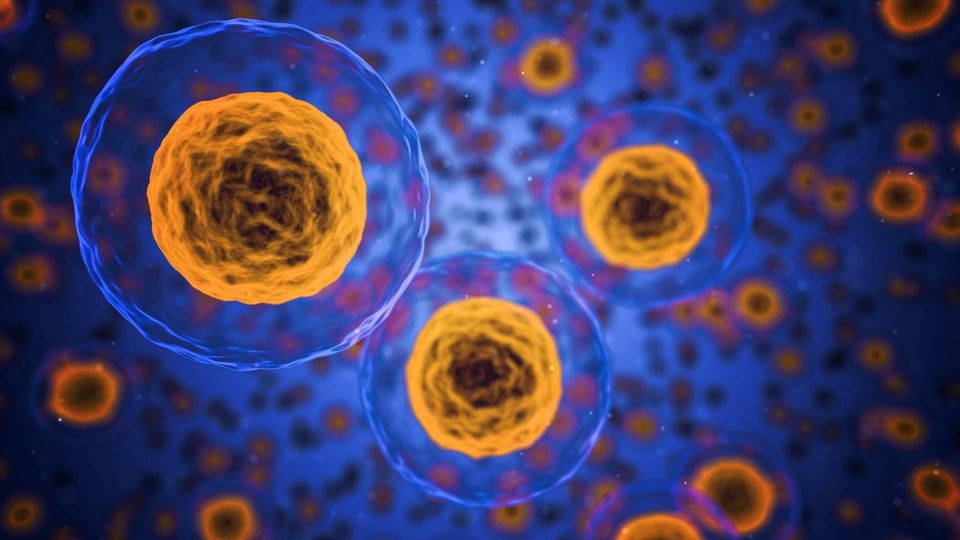
Credit: Arek Socha / Pixabay.
Read time: 2 minutes
A new Dartmouth study opens new avenues for understanding—and potentially manipulating—how cells decide to live or die.
Scientists have long known that mitochondria—a cell’s tiny power plants—pull double duty. They help decide when a cell should self-destruct, a process known as apoptosis that removes damaged or dangerous cells and keeps our bodies healthy. Immune disorders arise when cells die too easily, while cancers result, and persist, when cells refuse to die when they should.
“Understanding how cells make that life or death choice has been one of biology’s central puzzles,” says Sukrut Kamerkar, a postdoctoral researcher in The Higgs Lab at the Geisel School of Medicine, whose recent work uncovers the role of a surprising player in the process—a mitochondrial protein called LACTB.
For decades, researchers believed they had mapped the essential script: in apoptosis, the mitochondria release proteins that set off a chain reaction, dismantling the cell from within. Key proteins form pores in the mitochondria’s outer membrane, letting these death-promoting factors escape into the cell’s interior.
Yet this tidy narrative glossed over a deeper puzzle. Mitochondria are built like nested chambers, and the inner membrane—densely folded and chemically active—holds many of the very molecules that set off the demolition sequence.
Research by Kamerkar, Henry Higgs, professor of biochemistry and cell biology, and their collaborators, recently published in Science Advances, shines light on how those molecules break their anchors and move outward, a longstanding question that remained stubbornly unanswered until now. The work was also supported by Dartmouth Cancer Center.
In their study, the researchers showed that LACTB, a protein previously recognized as a tumor suppressor, helps loosen or reshape the inner membrane of mitochondria, enabling the release of “death-inducing” molecules. In the lab, purified LACTB even “cut” synthetic membranes that mimic the inner mitochondrial wall.
When LACTB levels in cells were reduced, cells resisted apoptosis. Boosting LACTB had the opposite effect, accelerating the cell-death program.
“This discovery reframes a long-standing assumption in cell biology,” says Kamerkar. “The inner membrane isn’t just a passive bystander but an active gatekeeper in the decision to die.”
The study suggests that life-and-death control inside the cell involves not only the familiar pore-forming proteins on the outer membrane but also a second layer of regulation buried deeper within.
“The implications reach far beyond mitochondria,” Kamerkar says. New insights into the functions of biological structures shed light on what happens when they fail and hold clues for how to repair them.
Many cancer cells are known to avoid apoptosis, making them resistant to treatment. By targeting LACTB or its lipid environment with drugs, the self-destruct switch could potentially be restored and make cancer cells more vulnerable, Kamerkar says. Conversely, dialing LACTB activity down could help in diseases where cells die too quickly, such as certain neurodegenerative disorders.
Follow-up work by Kamerkar and Higgs is examining variations in LACTB’s effects on apoptosis and metabolic processes in diverse cancer types to understand, among other things, whether certain cancers might be particularly amenable to manipulating LACTB activity.
“Ultimately, every cell’s life depends on balance—the power to live and the ability to die at the right time,” Kamerkar says. “By uncovering LACTB’s role in this balance, we open not just a new chapter in cell biology but a fresh opportunity to understand, and perhaps someday influence, the quiet choreography of life and death within us.”
Reference: Kamerkar SC, Kang T, Stan RV, Usherwood EJ, Higgs HN. The tumor suppressor LACTB remodels mitochondria to promote cytochrome c release and apoptosis. Sci Adv. 2025;11(46):eadx7809. doi: 10.1126/sciadv.adx7809
This article has been republished from the following materials. Note: material may have been edited for length and content. For further information, please contact the cited source. Our press release publishing policy can be accessed here.