Guardians of the Immune System
Explore the immune system’s paradox: defending without self-destructing.
At the turn of the 20th century, the German physician Paul Ehrlich, often regarded as the father of modern immunology and chemotherapy, was deeply aware of the immune system’s paradox.1 Our immune system is very potent in defending our bodies against pathogens. Ehrlich had demonstrated this through his Nobel Prize-winning work on antitoxins – powerful antibodies used to treat infections like diphtheria and tetanus. But if the immune system was so powerful and so diverse in its targeting, what prevented it from turning its fury on the very tissues it was meant to protect?
Ehrlich concluded that the immune system must act selectively, sparing our own tissues and cells. In the late 19th century, he postulated a simple, yet profound, rule to explain this self-tolerance and coined the term horror autotoxicus – literally, the “dread of self-poisoning.” However, his assumption that self-reactive cells and antibodies were simply never made was revised only decades later, when scientists revealed an active mechanism that suppresses autoimmune reactions.
Keeping our defenses in check
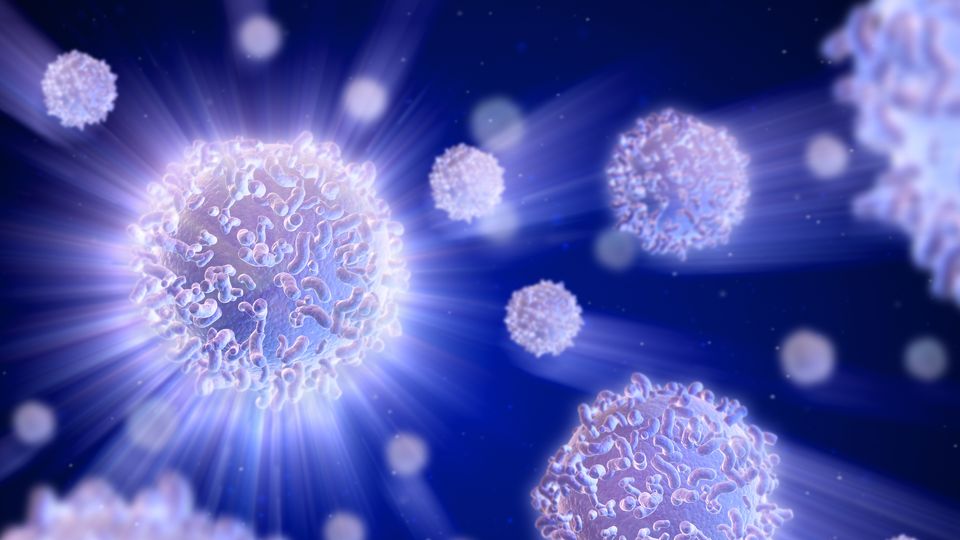
Regulatory T cells, or Tregs, are specialized immune cells that control the immune system and keep harmful inflammation in check. They prevent excessive reactions against beneficial commensal microbes that live in and on our bodies, harmless environmental allergens, and even against the developing fetus in pregnancy. Without them, our defense system would not only attack invading pathogens but also our own cells.
As Paul Ehrlich reasoned more than a century ago, the immune system must recognize self and refrain from attacking it, a principle later known as immunological self-tolerance. Tregs are one mechanism by how this tolerance is enforced. Given the central role of Tregs in the proper functioning of our immune system, it is not surprising that the discoveries underpinning peripheral immune tolerance were honored with the Nobel Prize in Physiology or Medicine 2025. Yet, the road to the scientific acceptance of these cells as functional guardians of the immune system was anything but straightforward.
From skepticism to evidence
Several studies from the late 1960s and early 1970s provided the first evidence that T cells play a crucial role in regulating immunological self-tolerance.2,3 Over the following decade, researchers attempted to characterize these “suppressor T cells,” culminating in the proposal that their identity was linked to a genetic region termed I-J. However, when advances in DNA sequencing failed to detect any of the proposed genes in the mid-80s, the field largely abandoned the suppressor T-cell concept, instead of questioning the postulated genetic identity itself. Coupled with stagnation in molecular characterization and a lack of clinical evidence of suppressor T cells, many scientists dismissed the entire discovery.4
The pendulum began to swing back in 1995, when Shimon Sakaguchi at the Tsukuba Life Science Center, Japan, succeeded in identifying this specific class of T cells which they now termed regulatory T cells. In their landmark 1995 publication,5 Sakaguchi and his team demonstrated that depleting a tiny CD25-positive T-cell population, only about 1–5% of blood cells, led to uncontrolled autoimmunity in mice. Crucially, administration of these cells to sick animals halted the disease, demonstrating that Tregs actively control immune responses against self-tissue. In 2025, Shimon Sakaguchi, Fred Ramsdell and Mary Brunkow were awarded the Nobel Prize in Physiology or Medicine for their work on immune tolerance and regulatory T cells.6
The master regulator of Tregs
The excitement about suppressor T cells reignited in the mid-90s, and researchers were eager to identify the molecular switches that control the development and function of these cells. The discovery of FOXP3, the gene that acts as a master regulator in Tregs emerged from a collaborative chain of findings.
Li-Fan Lu, now a professor in the Department of Molecular Biology at University of California San Diego, worked in the mid-2000s in the lab of another Treg pioneer, Alexander "Sasha" Rudensky, and maintains a personal connection with Nobel laureate Shimon Sakaguchi. He described how scientific exchange helped connect the dots: “Sasha was chatting with his good friend Fred Ramsdell over lunch when he heard about their findings on FOXP3.” Ramsdell and his colleague Mary Brunkow had been studying a lab mouse strain that spontaneously arose in the 1950s and suffers from severe autoimmunity.
They finally made a breakthrough discovery, identifying the cause of its fatal disease in a damaging mutation of the Foxp3 gene.7 While Brunkow and Ramsdell initially believed FOXP3 acted as a general brake for T cells, “Sasha suggested that this might be the missing link to Treg identity he and Sakaguchi had sought for years,” Lu recalled. The puzzle pieces snapped into place, and all three labs independently showed that Foxp3 encodes the molecular program that turns a T cell into a regulatory one.8–10
The importance of FOXP3 was confirmed in humans by the discovery that mutations in this gene cause a life-threatening X-linked immune deficiency syndrome, known as IPEX syndrome. Infants with IPEX lack functional Tregs and suffer from severe and uncontrolled autoimmunity, providing undeniable and tragic proof that the FOXP3 master switch is essential for enforcing self-tolerance in humans, too.
Tregs on the clinical frontier
To date, no therapies have been approved to either eliminate or activate Tregs for treating immune-related diseases. Yet, researchers are focused on a broad range of applications,11 from autoimmune diseases and organ transplantations to conditions where inflammation is uncontrolled, including neurodegenerative diseases. “By just targeting that kind of inflammation, we maybe delay the disease progression,” reasoned Nobel laureate Sakaguchi about Alzheimer’s and Parkinson’s in a previous interview.12
While the FOXP3 discovery confirmed the identity of Tregs, the latest research, driven by single-cell technology, reveals they are not a uniform army but a diverse population of specialized cells. This is the challenge scientists like Li-Fan Lu try to address. In cancer, Tregs have been described to suppress an anti-tumor immune response. However, as Lu warns, uniform depletion of Tregs will result in overwhelming autoimmunity and may harm the patient more than it benefits. The challenge, therefore, is to “specifically silence Tregs that suppress immune cells that attack cancer cells without touching their function to control autoimmunity.”
Tregs are also being engineered to improve transplant outcomes. The development of CAR-Tregs (chimeric antigen receptor Tregs) to prevent rejection of organ donations holds great promise. Without treatment, “foreign” HLA proteins of the donated organ will be attacked by the recipient’s T cells, resulting in organ rejection. Engineered CAR-Tregs may be used to silence these T cells and establish a graft-specific tolerance. First-in-human clinical trials are currently evaluating the safety, tolerability and initial efficacy in living donor kidney and liver transplant recipients.
The immune system’s paradox – the ability to defend without self-destructing – was once an unsolved mystery. The discovery of regulatory T cells revealed the mechanism behind this balance, transforming immunology and eventually earning the Nobel Prize. The continuous effort to precisely define the biology of Tregs is both the central challenge and the ultimate path toward turning Nobel-winning discoveries into life-saving therapies.