From Platform Engineering to Next-Generation Therapies: The ReiThera Story
ReiThera’s leaders discuss its evolving role as a CDMO partner in the advanced therapies landscape.

In the space of just over a decade, ReiThera has evolved from a research-driven biotech to one of Europe’s most scientifically rooted CDMOs, leveraging proprietary viral vector platforms to deliver advanced therapies and vaccines. For senior scientists working at the interface of biotherapeutics discovery and development, ReiThera’s journey offers lessons in platform engineering, GMP scale-up, regulatory navigation and global health responsiveness.
Earlier this year, Technology Networks visited ReiThera’s headquarters in Rome, where we heard from several of its scientific and operational leaders. Discussions covered ReiThera’s proprietary platforms, process development strategy and its evolving role as a CDMO partner in the advanced therapies landscape.
Origins in adenoviral science
ReiThera’s founding team emerged from the scientific group behind Okairos, a company that pioneered chimpanzee adenovirus vectors before being acquired by GSK. When ReiThera was formed in 2014, the founders identified a major bottleneck in accessing high-quality GMP material for their research programs. By building internal development and manufacturing capabilities, ReiThera set out not only to advance its own platform technologies but also to provide services for a growing ecosystem of academic groups and biotech firms.
Central to ReiThera’s offering is its portfolio of proprietary viral platforms. The GRAd platform, based on a replication-deficient gorilla adenovirus, was engineered for low pre-existing human immunity and potent induction of CD8+ T cells. This makes it attractive for infectious disease and oncology applications where cellular immunity is paramount. Complementing GRAd are the company’s MVA (Modified Vaccinia Ankara) platform and a novel AAV system that avoids transfection, promising higher yields and lower costs.
These platforms are supported by a set of proprietary cell lines – ReiCell-35S for adenoviruses, ReiCell-AAV for adeno-associated virus production and DEF-1 for MVA. Collectively, these vectors and substrates provide a foundation for a CDMO offering that combines flexibility with scientific depth.
Pandemic pressure and facility expansion
The COVID-19 pandemic forced ReiThera into an accelerated test of its capabilities. As CEO Stefano Colloca explained, “The COVID-19 pandemic represented a major challenge for ReiThera. We were called upon by the Italian Government to rapidly initiate a vaccine development program and prepare for large-scale production. Although the expected financial backing did not materialize, we continued independently — an experience that tested our strength and determination as an organization.”
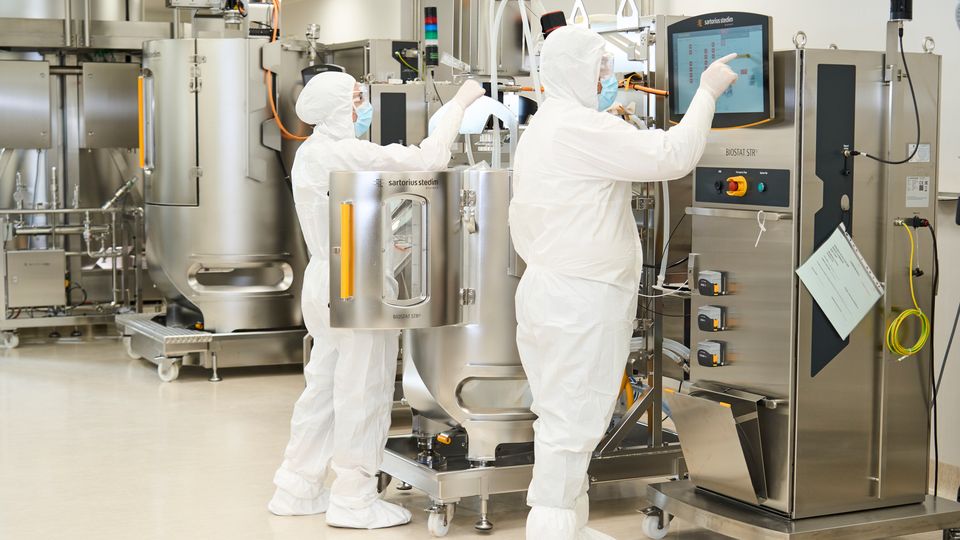
Despite these financial constraints, the company expanded its facility footprint rapidly, completing a major installation of large-scale bioreactors in just six months in 2020. These facilities were deliberately designed to balance pandemic-scale flexibility with the mid-scale runs most common in client projects. Today, ReiThera operates stirred-tank bioreactors up to 3,000 liters, complemented by fixed-bed systems for adherent cells, enabling it to span early-stage development through to commercial manufacturing.
The rapid scale-up achieved during the pandemic laid the groundwork for ReiThera’s ongoing investments in process innovation and manufacturing maturity.
Process development and GMP capabilities
At the heart of ReiThera’s CDMO offering is an integrated process development and GMP manufacturing capability. Upstream, the company can design and optimize scalable processes in both suspension and adherent cell lines, using stirred-tank and fixed-bed bioreactors. Downstream, a modular purification strategy incorporates depth filtration, tangential flow filtration and multiple chromatography steps tailored to vector type.
These processes are designed with scalability in mind. Federico Napolitano, GMP director and head of PD, emphasized their ability to adapt cell lines: “We can move from adherent to suspension for better scale-up, bringing the product from early development to commercial manufacturing.”

Credit: ReiThera.
On the GMP side, ReiThera’s facilities are structured to mitigate risk. Separate “clean” and “red” corridors maintain strict segregation of raw materials, seed stocks and waste flows, reducing cross-contamination risk in multiproduct suites. Notably, ReiThera has established dedicated suites for personalized medicine, allowing parallel GMP runs for multiple patient-specific lots – a rare capability in Europe, validated through rigorous regulatory risk assessments.
Fill-finish is equally flexible: automated filling lines handle up to 3,500 vials per batch (expandable to 10,000), while semi-automated and manual processes enable very small runs of ~200 vials for personalized cancer vaccines or customized volume.
With robust production processes established, ReiThera has also strengthened the systems that safeguard quality and compliance across its manufacturing network.
Quality systems: From paper to digital
ReiThera’s quality assurance (QA) and quality control (QC) systems reflect both European regulatory rigor and an internal culture of continuous improvement. As Maria Ambrosio, qualified person – quality assurance operations manager noted, “In Europe, we are regularly inspected by AIFA, and GMP is always a learning process – they have observations, and we need to constantly improve our system in order to be ready.”
A major ongoing transition is the digitalization of quality documentation. “More than half of our documentation is now managed in a digital way, and we are continuing to be fully digitalized in the next few years,” said Ambrosio. 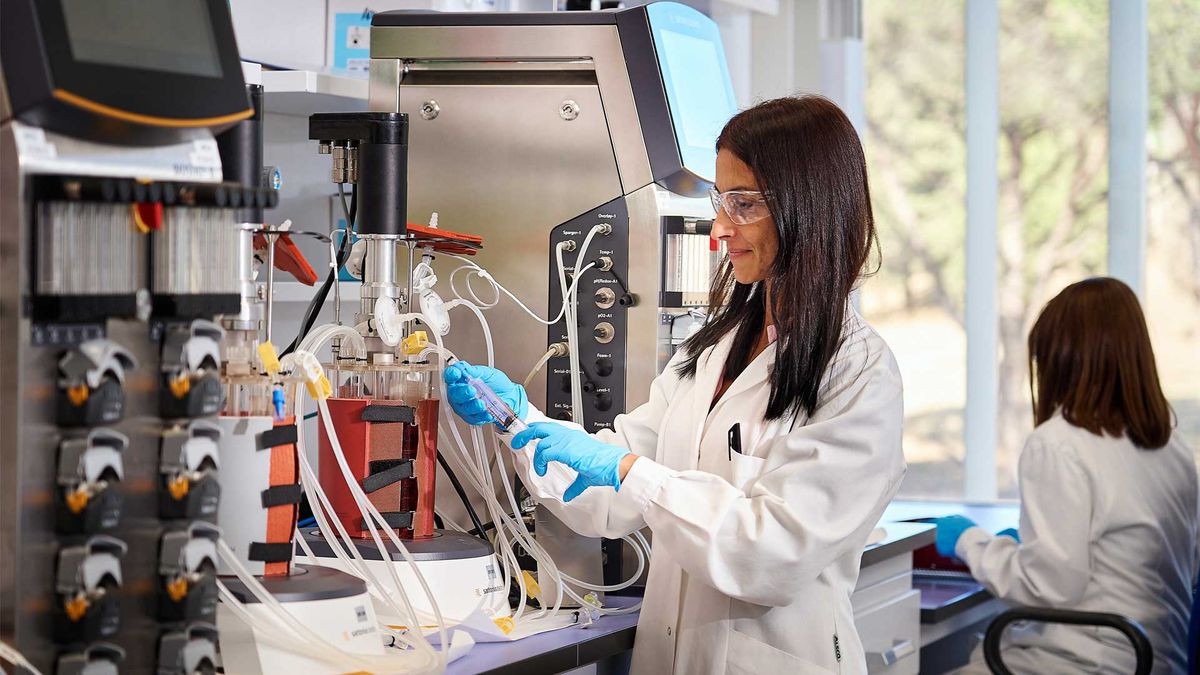
Credit: ReiThera.
On the QC side, Fabiana Grazioli emphasized the department’s breadth: “It is very important that we have internal quality control, with not only technicians but also PhD scientists. We can start from method development up to validation and release testing.”QC handles in-process monitoring, stability studies including accelerated conditions and device compatibility studies to guide clinical handling. The majority of assays are run in-house, with the remainder conducted by audited GMP labs.

Achieving High-Throughput CE-SDS While Preserving Data Integrity
This case study outlines a validated approach for implementing high-throughput CE-SDS while maintaining existing SOPs and regulatory compliance across a global organization.View App Note / Case Study
These internal capabilities have supported multiple external collaborations, translating ReiThera’s platforms into clinical-stage candidates.
Case study: HIV vaccine enters first-in-human trials
One of ReiThera’s most significant recent milestones is the launch of a first-in-human trial of its GRAdHIVNE1 vaccine in South Africa and Zimbabwe. The vaccine, designed with the Ragon Institute and manufactured by ReiThera, uses the GRAd platform to deliver “networked epitopes” of HIV that are less prone to mutation.
The trial, announced in August 2025 and sponsored by IAVI with Gates Foundation funding, is enrolling 120 participants – both HIV-negative individuals and people living with HIV who are virally suppressed on therapy. It is the first trial of its kind in Africa, with African principal investigators leading sites in Harare, Cape Town and Durban.
“This candidate HIV vaccine, built on our GRAd platform, holds great promise to trigger a strong CD8 response targeting vulnerable viral regions,” said Colloca in the announcement.
The scientific goal is twofold: to explore prophylactic efficacy and to assess whether boosting T-cell immunity could extend the treatment-free period for people living with HIV.
Case study: Outbreak response
ReiThera’s agility has also been demonstrated in outbreak settings. Collaborating with the Sabin Vaccine Institute, the company supported development and stockpiling of Ebola Sudan vaccines and delivered doses during the Uganda outbreak of 2022. More recently, ReiThera shipped Marburg virus vaccines to Rwanda in just 10 days after an outbreak was detected in 2024, enabling ring vaccination of ~1,000 frontline workers.
These rapid deployments showcase ReiThera’s ability to meet CEPI’s “100 Days Mission,” which envisions a vaccine delivered from sequence to clinical material within three months. As Napolitano put it, “It was a way to demonstrate that it’s possible to intervene.”
Viral vectors vs RNA: Complementary modalities
In the post-COVID landscape, debate continues about whether lipid nanoparticle (LNP)-delivered mRNA vaccines are supplanting viral vectors. ReiThera’s view is nuanced. “Somebody objected to me that a viral vector is an obsolete technology. I consider this objection really weird,” said Colloca. “Considering a viral vector that is clearly the most potent way to use a T-cell response, obsolete, I think is wrong.”
He added that while mRNA excels at inducing antibody responses, viral vectors remain unmatched in driving strong CD8 T-cell immunity – critical both in oncology and in preventing severe disease during pandemics. ReiThera envisions a future of combination regimens where humoral and cellular arms of the immune system are engaged in concert.

Modernize Your Pharmaceutical Methods With Confidence
This compendium showcases eight application notes that explore innovative strategies for method modernization in pharmaceutical processes.View eBook
Commercial horizons
Looking ahead, ReiThera’s near-term priority is to achieve commercial manufacturing validation, targeted for 2026. This milestone is pivotal for client confidence: “If you work only with clinical-stage companies, you are dealing with a very volatile business,” Colloca explained. “Commercial production is much more predictable… this is the most important reason why I see the commercial stage as a must.”
To diversify further, ReiThera is planning entry into RNA manufacturing, aiming to build a track record by offering competitive services to smaller academic or biotech groups. Longer-term, the company may consider a US presence, but only if anchored by a committed commercial partnership. “We are not currently interested in speculative expansion,” Thomas De Maria, head of business development US, stressed.
Achieving these goals requires not only technical excellence but also regulatory agility and public trust – areas where ReiThera’s leadership remains deeply engaged.
Regulatory and societal challenges
ReiThera scientists argue that regulators should adapt lessons from COVID to accelerate future responses. “One challenge in the future, in case of new outbreak, is to set up a new regulatory environment that allows release of the vaccine very rapidly in response to the emergency,” Colloca emphasized. Acceptance of platform technologies could reduce redundant toxicology or adventitious agent testing, provided risk assessments and clean processes are in place.
The team also reflected on societal headwinds, particularly antivaccine sentiment and lack of education. As Claudio Panzarella, head of business development noted, “If a country does not trust its scientists, its most brilliant minds, then the road ahead is complicated for everyone.”
Bridging science and manufacturing
From gorilla adenovirus engineering to outbreak response and now to commercial-scale readiness, ReiThera exemplifies how scientific innovation and manufacturing excellence can be fused in a CDMO model. Its GRAd platform continues to push the frontier in HIV and cancer, while its GMP infrastructure and quality systems underpin global collaborations.
The company’s mission is succinctly captured by Colloca: “Our mission is to advance as much as possible cures for people who need them.” As the company moves toward commercial validation and explores complementary RNA manufacturing capabilities, ReiThera’s evolution underscores the strategic importance of scientific depth within a contract manufacturing framework. Its journey illustrates how rigorous platform engineering, adaptive regulation and sustained investment in quality can accelerate the delivery of advanced therapies worldwide.
This content includes text that has been generated with the assistance of AI. Technology Networks' AI policy can be found here.