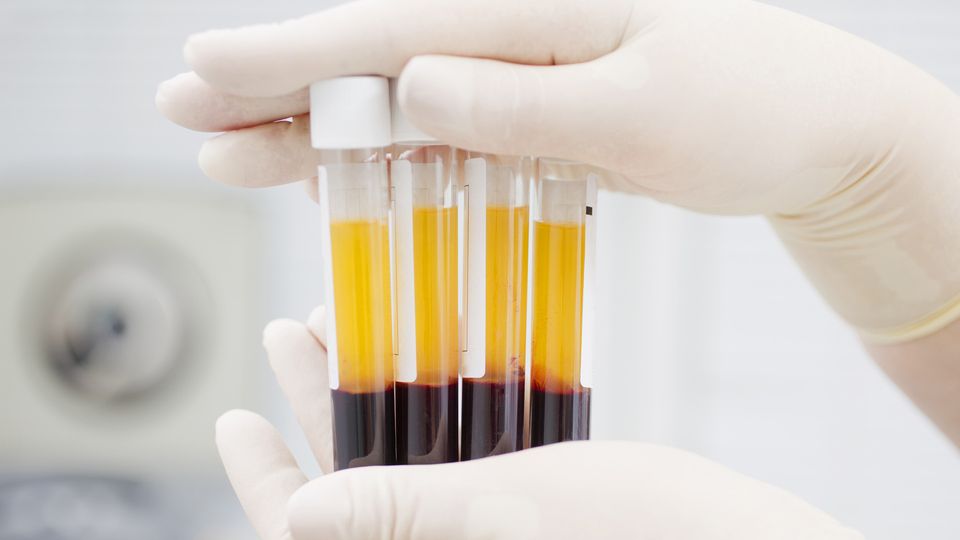
Plasma proteomics has become a vital tool for discovering biomarkers tied to disease risk, progression and treatment response. Cutting-edge technologies now allow researchers to analyze protein signatures in blood with incredible depth, but technical advances mean little without high-quality, reliable samples.
Variation introduced during blood collection, handling or storage can distort results and reduce reproducibility. Addressing these preanalytical challenges is essential for confident biomarker discovery and clinical translation.
This listicle highlights five key sources of error in plasma proteomics and offers guidance on how to mitigate them through standardized practices.
Download this listicle to explore:
- How common handling practices introduce variability into plasma protein profiles
- Which collection and processing factors are most likely to distort proteomic data
- Practical steps to protect sample quality and improve reproducibility across studies
- How innovations in tube design can address key preanalytical challenges
1
Five Common Preanalytical
Challenges in Plasma Proteomics
Alison Halliday, PhD
Next-generation proteomics is revolutionizing our ability to study the proteome with unprecedented depth
and resolution, offering powerful insights into human health and disease. Recent advances in technology,
particularly in mass spectrometry (MS)-based techniques and multiplex affinity-based assays, now
enable researchers to profile proteins in complex biological samples with remarkable precision.1,2 These
powerful tools are accelerating research into identifying novel biomarkers for early disease detection and
for predicting and monitoring treatment responses.
Plasma, the cell-free liquid part of blood, is a widely used and readily accessible biofluid in biomarker
research. It is minimally invasive to collect and contains a rich array of circulating proteins (or protein
fragments) that may be associated with disease susceptibility, activity or treatment response. Additionally,
plasma samples can be cryopreserved for extended periods, supporting large-scale retrospective studies
aimed at discovering and validating clinically relevant biomarkers.
However, obtaining sufficient sample numbers often requires plasma collection across multiple sites,
introducing the challenge of preanalytical variability. Standard operating procedures for blood collection
and processing may not be harmonized between laboratories. Even subtle inconsistencies in sample
collection, handling, processing and storage have the potential to alter plasma protein profiles, which can
compromise data quality, reproducibility and comparability across different studies. This issue is particularly
problematic in case-control studies, where systematic differences between groups may introduce
bias and undermine the validity of findings.3 Alarmingly, a recent literature review estimated that around
half of all published plasma proteomics studies may be affected by preanalytical limitations, highlighting
the urgent need for adherence to standardized protocols and rigorous quality control measures.3
Recognizing and minimizing sources of potential variability is essential for generating robust, reproducible
data and accelerating the translation of blood-based biomarkers into clinical practice. In this listicle, we
explore some of the most common preanalytical challenges in plasma proteomics.
1. Blood collection
The process of collecting blood samples from patients is a critical first step in plasma proteomics, which
could introduce variability if not standardized. Key factors to consider include the phlebotomy technique,
needle gauge and the number of venipunctures.4 Improper technique or repeated sampling could cause
hemolysis or activate platelets, both of which could alter the plasma protein profile. To minimize these
risks, it is important to implement consistent blood collection protocols across all sites and personnel.
Listicle
FIVE COMMON PREANALYTICAL CHALLENGES IN PLASMA PROTEOMICS 2
2. Anticoagulant type
Plasma is typically isolated from whole blood samples by centrifugation in the presence of an anticoagulant
(commonly EDTA, heparin or sodium citrate) to prevent clot formation. This process separates the
cellular components from the liquid fraction, leaving a cell-free plasma matrix rich in circulating proteins
ready for in-depth proteomic analysis.
However, the choice of anticoagulant can influence plasma proteome profiles, as each agent acts differently
on the coagulation cascade. For example, EDTA and sodium citrate work by chelating calcium ions,
which are essential for clot formation, while heparin inhibits specific enzymes involved in coagulation.
A recent study reported notable differences in the abundances of multiple proteins between EDTA- and
heparin-derived plasma, with most of these proteins showing reduced levels in heparin samples.5 Such
anticoagulant-dependent shifts can introduce unwanted variability, potentially confounding the identification
and validation of biomarkers. To minimize this risk, the same type of anticoagulant should be used
consistently across all samples in a study.
3. Centrifugation conditions
Variability in centrifugation conditions such as speed, duration, number of spins and the application of
the centrifuge break may influence the quality and composition of plasma samples. Inadequate or inconsistent
centrifugation may result in incomplete separation of cellular components, leaving residual blood
cells that could release intracellular proteins into the plasma.
While some studies have found that single- and double-spin protocols, centrifugation speeds and the use
of the centrifuge brake do not significantly affect overall plasma protein composition, these findings do
not eliminate the risk of variability.5,6 Therefore, adopting and adhering to a standardized centrifugation
protocol in which force, duration and handling procedures are clearly defined is essential to minimize
preanalytical variation and maintain the reliability and reproducibility of proteomic data.
4. Time and temperature before processing
The time and temperature between blood collection and plasma separation are critical preanalytical factors
that can influence the quality of proteomic data.5 Delays in processing allow ongoing cellular metabolism
and enzymatic activity, which may lead to protein degradation or the leakage of intracellular proteins
into the plasma. Similarly, storing whole blood at room temperature – or fluctuating temperatures – before
centrifugation can activate endogenous proteases and phosphatases, potentially resulting in additional
proteolytic degradation or unwanted post-translational modifications. These alterations can distort the
plasma proteome, masking biologically meaningful signals and compromising downstream analyses. This
concern is supported by two recent studies, which found that both the duration and temperature of storage
before centrifugation can significantly contribute to plasma proteomic variability, including elevated
levels of intracellular proteins.5,6
To mitigate these effects, the Early Detection Research Network (EDRN), an initiative of the US National
Cancer Institute (NCI), has published a detailed protocol for plasma collection and processing.7 According
to these guidelines, blood samples should ideally be centrifuged immediately following collection or
stored at 4 °C for no more than four hours before processing. Adhering to these guidelines will help to
preserve protein integrity and minimize preanalytical variability.
Listicle
FIVE COMMON PREANALYTICAL CHALLENGES IN PLASMA PROTEOMICS 3
5. Storage conditions and freeze-thaw cycles
Long-term storage at -80 °C is widely regarded as the standard practice for preserving plasma samples.7
However, several studies have indicated that repeated freeze-thaw cycles can negatively affect protein
stability, potentially introducing artefacts that compromise downstream proteomic analysis.7 To mitigate
this risk, it is recommended that plasma samples are aliquoted into smaller volumes during the initial
processing phase. This approach avoids the need to thaw and refreeze the same sample, reducing the
likelihood of protein degradation or aggregation.
Additionally, thawing should be performed rapidly and uniformly to minimize the risk of detrimental effects.
Beyond proper handling, maintaining consistent storage histories – such as duration, temperature
conditions and number of freeze-thaw cycles – is essential. This is particularly important in large-scale
biomarker discovery studies, where batch effects arising from inconsistent storage protocols could lead
to inaccurate findings.
6. Conclusion
Plasma proteomics is increasingly recognized as a powerful platform for clinical translation, offering
immense potential to identify minimally invasive, protein-based biomarkers for early disease detection,
patient stratification and therapeutic monitoring. Unlike tissue biopsies, plasma samples can be collected
with minimal discomfort and at multiple time points, making them well-suited for tracking disease progression
and evaluating treatment response over time. Advances in high-throughput proteomic technologies,
including MS- and affinity-based assays, have opened new avenues for identifying complex protein
signatures associated with a wide range of illnesses, including cancer, cardiovascular diseases, neurodegenerative
disorders and inflammatory conditions.
Despite its promise, translating plasma proteomics into clinical practice requires overcoming several key
challenges. These include standardizing workflows, validating potential biomarkers in large and diverse
patient populations, and demonstrating clinical utility. For a proteomic biomarker to be integrated into
clinical decision-making, it must deliver actionable insights that improve diagnosis, prognosis or therapeutic
outcomes beyond existing methods. Furthermore, regulatory approval and clinical adoption require
robust reproducibility, scalability and cost-effectiveness. Collaborative efforts, such as the Human Plasma
Proteome Project and other large-scale biomarker initiatives, are playing a critical role in bridging the gap
between discovery and clinical application by promoting harmonized protocols, multi-center validation
and open data sharing.
However, the clinical utility of plasma proteomics is critically dependent on the quality of the samples
analyzed. Preanalytical variables – introduced during blood collection, processing, handling or storage
– can potentially alter the plasma proteome, compromising data integrity and reproducibility. To ensure
meaningful and reliable results, it is essential to proactively identify, control and minimize these sources
of variability. Ultimately, such efforts will accelerate the successful translation of plasma proteomics into
clinically impactful tools, driving forward the implementation of precision medicine.
Sponsored by
Listicle
FIVE COMMON PREANALYTICAL CHALLENGES IN PLASMA PROTEOMICS 4
References
1. Shuken SR. An introduction to mass spectrometry-based proteomics. J Proteome Res. 2023;22(7):2151-2171. doi: 10.1021/
acs.jproteome.2c00838
2. Smith JG, Gerszten RE. Emerging affinity-based proteomic technologies for large-scale plasma profiling in cardiovascular
disease. Circulation. 2017;135(17):1651-1664. doi: 10.1161/CIRCULATIONAHA.116.025446
3. Geyer PE, Voytik E, Treit PV, et al. Plasma proteome profiling to detect and avoid sample-related biases in biomarker
studies. EMBO Mol Med. 2019;11(11):e10427. doi: 10.15252/emmm.201910427
4. Ignjatovic V, Geyer PE, Palaniappan KK, et al. Mass spectrometry-based plasma proteomics: Considerations from sample
collection to achieving translational data. J Proteome Res. 2019;18(12):4085-4097. doi: 10.1021/acs.jproteome.9b00503
5. Halvey P, Farutin V, Koppes L, et al. Variable blood processing procedures contribute to plasma proteomic variability. Clin
Proteomics. 2021;18(1):5. doi: 10.1186/s12014-021-09311-3
6. Hassis ME, Niles RK, Braten MN, et al. Evaluating the effects of preanalytical variables on the stability of the human plasma
proteome. Anal Biochem. 2015;478:14-22. doi: 10.1016/j.ab.2015.03.003
7. Tuck MK, Chan DW, Chia D, et al. Standard operating procedures for serum and plasma collection: early detection
research network consensus statement standard operating procedure integration working group. J Proteome Res.
2009;8(1):113-7. doi: 10.1021/pr800545q
About the author:
Alison Halliday holds a PhD in molecular genetics from the University of Newcastle. As an award-winning freelance science communications
specialist, she has 20+ years of experience across academia and industry.
Listicle