FC Barcelona Study Finds Menstrual-Phase Injuries Heal More Slowly
Injuries during menstruation don’t happen more often, but they take much longer to heal.
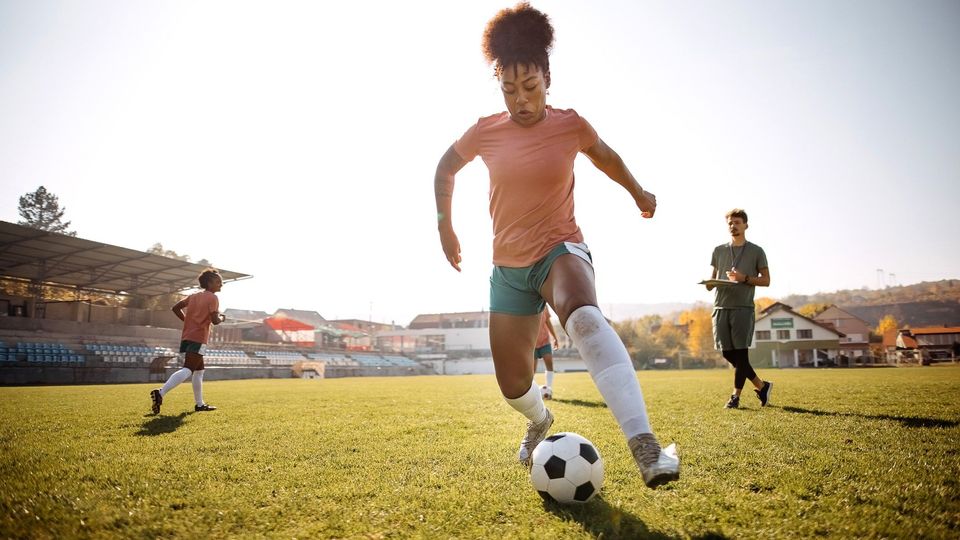
For elite athletes, a missed match can change a season, making injury prevention a top priority.
A new study from FC Barcelona reveals that injuries sustained during menstruation take significantly longer to heal, despite occurring at the same rate as during other cycle phases.
The menstrual cycle and injury risk
Fluctuations in estrogen and progesterone can impact the musculoskeletal system, influencing muscle stiffness, metabolism and neuromuscular control. For elite athletes pushing their bodies to the limit, these shifts raise an important question: Does the phase of your cycle make you more fragile?
Some studies suggest the risk of injury peaks during ovulation or the luteal phase, while others point to the follicular phase.
However, without blood samples to confirm hormone levels, researchers are often forced to speculate based on self-reported dates, which can be unreliable.
The new study focused on the one variable that can be identified with certainty: menstruation. By analyzing injury data from elite female football players over four competitive seasons, the team aimed to determine if the bleeding phase itself correlates with higher rates of time-loss injuries.
Menstruation injury rates in elite female football
The study monitored 33 elite players from FC Barcelona from 2019–2023. This high-performance cohort provided a rare, standardized dataset where training loads and medical care were consistent. Using a calendar-based method, players logged their cycles daily, categorizing days as “bleeding” or “non-bleeding”. Any musculoskeletal issue that stopped a player from joining the next training session or match was recorded as a “time-loss” injury.
Being on their period did not make a player more likely to get hurt. The injury incidence rate was statistically similar between phases, sitting at 5.46 injuries per 1,000 hours during bleeding compared to 6.60 during non-bleeding days.
However, the data revealed a major difference in the aftermath.
“Although athletes were not injured more often during their period, the injuries that happened during menstruation caused three times more days lost than injuries occurring at other times of the cycle,” said lead author Dr. Eva Ferrer, a specialist in sports medicine at the Sports Medicine Unit of the Hospital Clínic de Barcelona.
The “injury burden” (total days lost to recovery) was significantly higher for injuries sustained during menstruation, jumping from 206 days lost per 1,000 hours in non-bleeding phases to 684 days during bleeding.
Ligament injuries proved the most costly, accounting for 30% of cases and resulting in the longest recovery times.
Adapting training for the menstrual cycle
These findings shift the focus from prevention to management.
“We show that menstruation itself does not increase how often injuries happen,” said Ferrer, but the physiological environment during this phase appears to complicate recovery.

Electrophoresis Explained: Principles and Applications
This infographic explores the fundamental principles of these three major electrophoresis techniques while showcasing their diverse applications from DNA profiling to protein characterization, quality control and beyond.View Infographic
“Hormonal levels may not cause the injury, but they may influence how severe the injury becomes and how long recovery takes,” she explained. Low estrogen or iron loss during bleeding might impair the body's ability to repair tissue efficiently.
Practically, this suggests athletes shouldn't stop training but should adjust their approach. “You do not necessarily need to avoid training during your period, but you may need to adapt it,” Ferrer said. “Tracking your cycle and symptoms can help guide training intensity and recovery strategies.” She added that “small modifications such as longer warm-ups, adjusted high-speed workload or added recovery support may help reduce the severity of injuries if they occur.”
However, it is important to note that the “higher severity” conclusion hinges on a small sample size of 11 injuries during the bleeding phase, two of which were anterior cruciate ligament (ACL) tears. Since ACL injuries require massive recovery time regardless of when they happen, these two events likely skewed the burden data significantly.
Grouping all non-bleeding days into one phase may potentially also mask risks specific to ovulation or the luteal window. The disparity in cycle length, averaging 4 bleeding days vs 27 non-bleeding days, may have limited the ability to detect subtle differences in injury rates.
Despite this, the study underscores that physiology matters. “It supports a growing movement toward female-specific sports science instead of applying male-based research models to women,” concluded Ferrer.
Future research needs actual hormonal verification to confirm if these trends hold true.
Reference: Ferrer E, Keay N, Balagué-Dobón L, et al. Menstruation and injury occurrence; a four season observational study in elite female football players. Front Sports Active Living. 2025. doi: 10.3389/fspor.2025.1665482
This article is a rework of a press release issued by Frontiers. Material has been edited for length and content.