Embracing Environmentally Friendly Practices in the Research Lab
How can research labs reduce their environmental impact? Technology Networks asked two sustainability experts to find out.
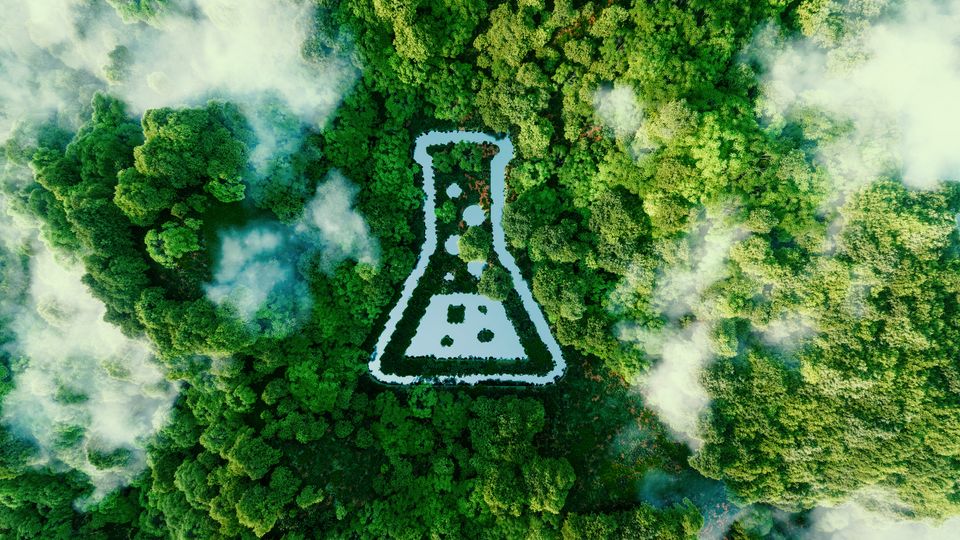
Scientific research is playing a key role in driving society towards a more sustainable future – powering advancements in renewable energy, clean water, food security and more eco-friendly infrastructure.
But lab-based research also comes with its own concerning environmental footprint; analytical instruments and controlled-environment storage apparatus can be remarkably energy-intensive, single-use plastics are a common sight and improper recycling practices can result in extra waste treatment costs and carbon emissions.
An increased recognition of these circumstances has led to widespread efforts to improve the sustainability credentials of research labs, to ensure that scientific progress does not come at the expense of the environment.
To learn more about lab sustainability and the types of actions that labs can take to reduce their environmental impact, Technology Networks spoke with Andrew Arnott and Siôn Pickering from the University of Edinburgh’s Department for Social Responsibility and Sustainability.
What are the biggest focus areas for a sustainable laboratory?
Andrew Arnott (AA):
We originally had a strong focus on energy, but as grid decarbonization has progressed and as energy-saving actions have become mainstream, we have moved more towards a focus on materials. This can take the form of looking at whole life-cycle carbon emissions, including embodied carbon, and investigating lower-impact alternatives in our supply chains.
We can also pivot our practices towards circular economy principles – for example, critically evaluating the use of “single-use” lab plastics and identifying reusable alternatives. In addition, we work with our lab community to raise awareness of the 12 principles of green chemistry.
What are the 12 principles of green chemistry?
The 12 principles of green chemistry, as set out by Dr. John Warner and Dr. Paul Anastas in their foundational text, Green Chemistry: Theory and Practice are as follows:
- Waste prevention
- Atom economy
- Less hazardous chemical synthesis
- Designing safer chemicals
- Safer solvents and auxiliaries
- Design for energy efficiency
- Use of renewable feedstocks
- Reduce derivatives
- Catalysis
- Design for degradation
- Real-time pollution prevention
- Safer chemistry for accident prevention
Siôn Pickering (SP):
As Andrew mentions, when we think about how to reduce the need to buy new equipment, we should be looking to circular principles. This tackles a number of key concerns, such as reducing the need to mine raw materials for making the equipment, less impact to transport and package safely and reduced waste from the item at the end of its useful life. We should be looking at how to extend the life of existing items through better maintenance and servicing, and also consider how to best manage areas such as data and samples that may be required in the future.
Single-use plastics are also a significant challenge, especially when we think of the volume of each item we buy in and then dispose of within a single lab – and then scale this across an institution the size of the University of Edinburgh.
Finally, we need to be concerned about the use and disposal of chemicals. While individual chemicals may be safe to dispose of, the interactions between these are often less certain, especially when we consider anything that makes its way into the environment.
AB:
AA:
Many, many actions! We run a training session webinar on this topic (it takes just 90 minutes to cover everything) but some key examples might be:
- To pivot away from single-use lab plastics and instead use reusable items that you decontaminate between uses.
- Don’t keep fume cupboards switched on purely to act as ventilated chemical stores – instead, use a specific ventilated chemical store that can save up to 90% of the energy.
- Have good practices for sample/material storage management in ultra-low temperature (ULT) cold storage, as well as good housekeeping and maintenance of ULT freezers. And adjust the set point temperature to -70 °C instead of -80 °C.
- Avoid cross-contaminating waste streams.
- Use good chemical/reagent management systems that prevent the over-purchasing or wastage of expired items.
- Implement good practices for decontamination to ensure reliable sterilization (this avoids the need to decontaminate a whole lab when looking for the source of a problem) while ensuring energy efficiency.
SP:
Other low-hanging fruit might be changing behaviors to turn off equipment when it’s not in use or asking suppliers about take-back schemes for packaging. More challenging actions could include setting up a maintenance schedule for equipment and suitably training staff on sustainable research practices.
The biggest impacts come when we change cultures across the institution. For me, this starts with how the research is designed, making sure that it is efficient both in terms of the consumables used, and also in the avoidance of purchasing new equipment through investigating sharing or leasing options.
AB:
AA:
This market has expanded substantially since I joined the sector in 2015. At the University of Edinburgh, we have run our own in-house accreditation scheme since 2014, which has been approved by our funders as being equivalent to the Laboratory Efficiency Assessment Framework (LEAF) – a predominantly UK-based scheme designed by colleagues at University College London, which has become the default brand name for lab sustainability in UK higher education.
The other big player at the moment is My Green Lab – a USA-based group who do a lot of work with the private sector, as well as in higher education, and who are putting a lot of effort into international expansion. There is a student-run scheme called Green Impact from the National Union of Students too.
SP:
AB:
AA:
Numerous ways!
Make it clear through the words and actions of senior leadership that sustainability is a core part of the mission of the institution, and that poor sustainability performance puts the institution at risk. This justifies staff spending time on looking into sustainability improvements rather than it being seen as something which is “not your job” and might only be tolerated if you do it on your own time, on top of your day job.
Invest in a few staff roles to facilitate and project manage the program. Time is required to make change, and it won’t happen without an investment in staff time. Volunteering only gets you so far.
Educate and enable the lab community through high-quality training on best practices. And enable and facilitate the necessary changes in equipment or practices by setting aside some strategic, ring-fenced funding so that when a lab user spots something that needs to change, they have a clear and timely process to enact it. Delay leads to frustration and inaction.
AB:
AA:
The first steps are to understand good practice, and then to take a critical look around your workspace and your practices and protocols and see where the gaps are. You can get an understanding of good practice in a few ways – you could:
- Look for good practice webinars or other web resources, such as our website.
- Engage a consultant — there are a small number of individual consultants specializing in green labs.
- Enroll in an awards/accreditation scheme where the criteria list will spell out what good practice looks like.
- Join a community of practice, such as the Lab Efficiency Action Network in the UK.
Labs are very heterogeneous, so one-size-fits-all advice isn’t going to work – although there are broad principles and hot spots that apply to almost all labs. Once lab users have become familiar with the principles underlying good practice and understand where their most impactful actions should be focused, they will be in a better position than anyone to understand what actions they should prioritize.
SP:
Start small and look for “quick wins”. Celebrate these when you achieve them and share these achievements with others outside of the core group. Building momentum is key to tackling the larger challenges on your list!
If you’re not sure how to address some of the challenges you’ve noted down, talk to other institutions or look online to see how others have approached these. Often, people are happy to share their learnings to give others a head start and avoid the pitfalls they encountered.