Electrophoresis Explained: Principles and Applications

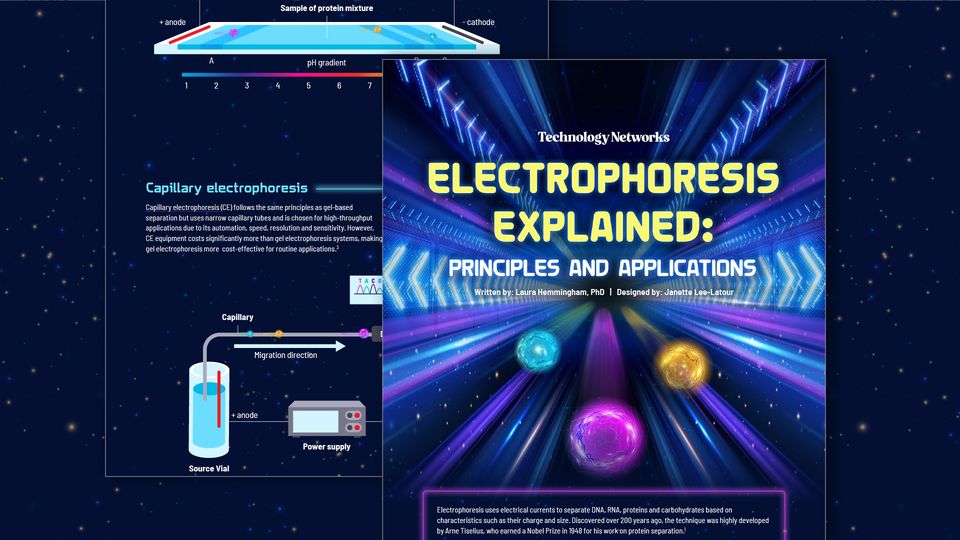
Electrophoresis uses electrical currents to separate DNA, RNA, proteins and carbohydrates based on their charge and size. Since its discovery over 200 years ago, this technique has evolved into an essential tool across molecular biology, forensics, clinical diagnostics and pharmaceutical research. While gel electrophoresis, capillary electrophoresis and isoelectric focusing each offer distinct advantages for different applications, challenges such as resolution requirements and throughput needs influence method selection.
This infographic explores the fundamental principles of these three major electrophoresis techniques while showcasing their diverse applications from DNA profiling to protein characterization, quality control and beyond.
Download this infographic to explore:
- The core principles of gel electrophoresis and isoelectric focusing
- Key applications spanning forensics, diagnostics, pharmaceutical quality control and refresh
- Strengths and limitations that guide technique selection for optimal results