Drone-Mounted Lab Can Monitor Fertilizer Runoff in Real Time
Monitoring agricultural runoff has historically been very challenging due to the remote nature of most farmland.
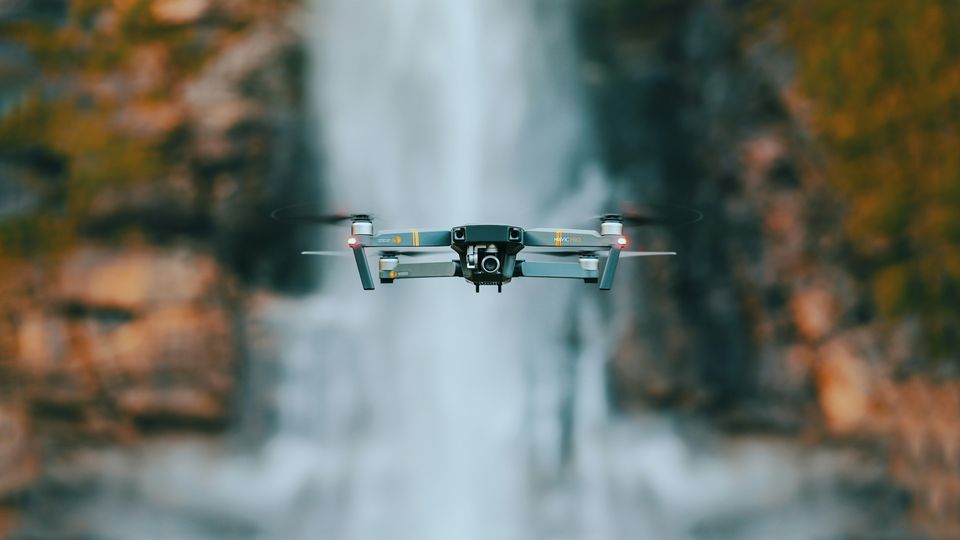
What if instead of taking a water or soil sample to the lab, you could take the lab to the sample? That’s what a team of researchers reporting in ACS Sensors did with a new nitrate-monitoring “lab-on-a-drone” system. The drone allows for easy, real-time water sampling and analysis in hard-to-reach areas like steep ditches or swampy lowlands. The technology could help farmers optimize their fertilizer use and prevent waterway pollution from excess nitrate runoff.
Nitrogen-containing fertilizer is an important component of modern agriculture, but most of it gets carried away from fields by water drainage systems. A good portion of this leftover nitrogen gets turned into nitrate, which can cause algal blooms and low-oxygen “dead zones” in waterways or contaminate drinking water. However, monitoring nitrate concentrations is not always easy because much of the agricultural runoff is in remote farmland or in muddy ditches, and samples must be sent to a lab for processing. So, researchers are developing ways to do this with remote-controlled devices. Jonathan Claussen and colleagues wanted to make one such lab-on-a-drone for monitoring nutrient pollution that was less expensive and more efficient than the existing options.
The researchers designed a custom pump, low-cost electrochemical nitrate sensors, and a potentiometric device to quantify nitrate concentrations quickly and easily. Then they mounted the equipment on a commercially available drone. A long tube under the drone pulled water into the mini lab, where it was analyzed mid-air in about seven minutes. The drone saved all results to an onboard memory card for later readout and analysis, and it was able to process multiple samples before landing.
In tests, the researchers’ sensor system detected nitrate concentrations down to 2.5 parts per million (ppm) and was 95% as accurate as a typical laboratory-based electrochemical nitrate detection system. In a drainage ditch at an agricultural site in Iowa, the lab-on-a-drone found average nitrate concentrations of 5.39 ppm, which is consistent with previous measurements made in the area and below the 10-ppm maximum level for drinking water set by the U.S. Environmental Protection Agency.
The team explains that its new system makes monitoring for nitrate pollution easier than before and presents the basis for future lab-on-a-drone applications in agriculture, such as monitoring bacteria or pesticide contamination in waterways.
The authors have filed a U.S. patent related to this work.
The authors acknowledge funding from the National Science Foundation, the National Institute of Food and Agriculture of the U.S. Department of Agriculture, and the Digital and Precision Agriculture Applications Funding Opportunity at Iowa State University.
Reference: Jared NM, Ellis G, Gshash M, et al. Lab-on-a-drone: real-time electrochemical sensing of nitrate in agricultural watersheds. ACS Sens. 2025:acssensors.5c02620. doi: 10.1021/acssensors.5c02620
This article has been republished from the following materials. Note: material may have been edited for length and content. For further information, please contact the cited source. Our press release publishing policy can be accessed here.