Accelerate Your IVD Success With Antibody Development Experts
Whitepaper
Published: October 17, 2025
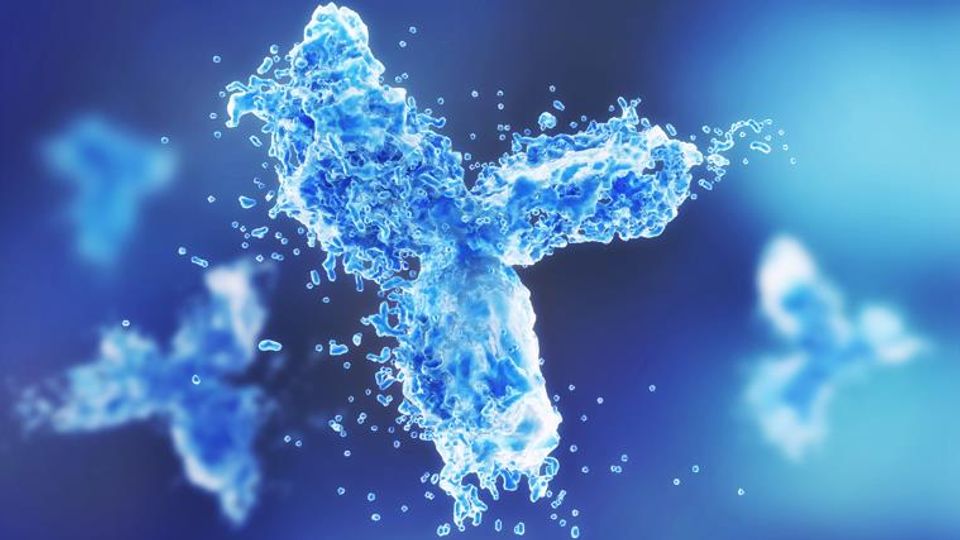
Credit: iStock
Antibody-based diagnostics are vital, but development and scale-up can strain internal resources. From immunogen design to GMP-compliant manufacturing, each stage requires specialized expertise.
Partnering with experienced antibody developers can streamline cell line development, optimize production and accelerate your in vitro diagnostics (IVD) launch without compromising quality.
Download this whitepaper to learn:
- How recombinant antibody technology improves scalability, consistency and sustainability
- Key steps for stable cell line creation, fermentation and commercial-scale tech transfer
- Strategies for process optimization, cost reduction and regulatory readiness
Contract Antibody Development, Manufacturing, Purification, and Cell Banking for Immunoassays How partnering with an antibody production expert can improve your assay, accelerate launch, and maintain your manufacturing. Antibody development for diagnostic immunoassays Antibody & Immunoassay Development Antibody-based disease biomarker detection powers many of the diagnostic tests in use today. Despite its venerable 40+ year history in diagnostics, antibody development, scale-up and mass manufacturing for assays remains a complex process with many pitfalls and restarts. Part of the challenge is that the skill sets needed for each of the three main steps: Antibody Development, scale up, and manufacturing are considerable and different, requiring the assay commercialization team to master diverse technologies and techniques. Further, the commercialization team is faced with decisions on outsourcing parts of the process or investing in in-house expertise and capital expenditures. Often, when the immunoassay project has narrow performance specifications or tight launch deadlines, seeking out experienced development support is prudent. Fortunately, advanced technologies in the hands of antibody and assay development experts are improving the immunodiagnostic process. In this paper, we take you through key steps in the modern antibody development process for diagnostic assays using advanced technology. By simplifying cell line development, scale up and antibody manufacturing with a partner who understands diagnostic immunoassay development we can supplement your IVD capabilities and shorten your time to commercialization. The Life Science business of Merck operates as MilliporeSigma in the U.S. and Canada. SLS_DX_WW_51628_Custom Antibody White Paper_MRK.indd 1 The sensitivity, consistency, and reliability of immunoassays, as well as their manufacturing cost, is heavily dependent on the quality of the antibodies used. Despite the use of antibodies to identify disease antigens since the 1890’s, the production of antibodies, from immunogen design to immunoglobulin purification remains a formidable process requiring significant expertise from the beginning. For many antigen targets, care must be taken to design linear or 3D immunogens for optimal antibody avidity against natural epitope structures. Polyclonal & monoclonal antibody development Until the recent development of recombinant technologies, the classical methods to produce polyclonal and monoclonal antibodies relied on an animal's immune response when exposed to a selected antigen. For polyclonal antibodies, a given antigen is introduced into an animal to elicit it's immune response. The collected plasma will contain a blend of antibodies produced from several clones. All antibodies are directed toward the same antigen but will recognize different epitopes. Monoclonal antibodies take this process further by isolating a single B cell that is then merged with a human myeloma cell line, to create a hybridoma cell line, which will consistently produce the exact same antibody using in vitro or in vivo production vector. 10/11/23 1:42 PMBoth techniques have challenges: Recombinant antibody development • Scalability: Milligram quantities are accessible, but gram or kilogram amounts become difficult because too many animals could be needed. • Responsiveness: Both methods rely on immune system response, which needs time. When a quick turnaround is needed (i.e., for rapid development of assays) this is not the best option for robust antibody production. • Biological variability: Lot-to-lot inconsistency for polyclonals is common due to considerable variability in each animals' immune response. • Even monoclonals are not always 100% monoclonal: The clone selection process is imperfect science and can sometimes lead to multiple clone selection, resulting in manufacturing of antibodies able to recognize several epitopes. This can be a problem when a high level of specificity is required from the antibody. • AG drift: Shift in antigen recognition after too many clone cell culture productions could result in changes to the antibody's specificity. • Production efficiency: There are limitations in scale but also in animal species. • Animal welfare constraints: Polyclonal and monoclonal production requires considerable animal usage through animal immunization and subsequent sera collection or the use of fetal bovine serum (FBS) in cell culture media, respectively. 2 The emergence of recombinant protein technologies has provided an efficient and sustainable approach to antibody development. Although the approach requires considerable expertise, from a technical standpoint, recombinant antibodies production present many advantages: • Scalability: By scaling the size of a bioreactor, antibody quantity requirements can be met more easily. • Efficiency: Optimizing the recombinant protein expression system increases the cell line production efficiency. • Reproducibility: By controlling the genetic code it is easier to ensure the antibody's consistency. • Species flexibility: Antibodies can be created in species that are not able to be used as a host in traditional methods. • 100% monoclonality: By engineering the DNA, there is much tighter control of the antibody's specificity. • Sustainability: Recombinant antibody production utilizes an animal free media to produce large quantities of antibodies for commercial applications. Support from Us Partnering with a comprehensive expert in antibody design, development, and manufacturing is an increasingly viable business decision in creating a firm foundation for your immunoassay commercialization. Merck has been providing the research and diagnostics community with precision antibodies since the 1980’s. With a 90K+ Product Portfolio and 400 new products developed per year, their experienced and dedicated R&D team has developed an extensive range of custom antibody. In recent years, we have been using Recombinant Antibody technology to create the next generation of research antibodies and engineered custom antibody development for commercial partners. With dedicated ISO certified, GMP-guided IVD Antibody Innovation Centers in Rocklin, CA, USA and Livingston, Scotland we have the expertise to support your antibody development at any stage. SLS_DX_WW_51628_Custom Antibody White Paper_MRK.indd 2 10/11/23 1:42 PMScale-up / Engineering / Tech Transfer Transfer to Production The scale-up of antibody production needed for commercial assays consists of several key steps, each with their own technical considerations and required expertise. The chosen cell line must be stabilized for scale-up and long-term consistency, followed by fermentation & purification optimization, and finally transfer of the process to routine production. Stable cell line generation Converting an antibody producing B-Cell clone to a stable cell line is critical for producing, consistent, reliable supplies of antibodies for commercialization. Ideally, stable cell line generation is achieved by cloning the underlying genes coding for the antibody heavy and light chains into robust, high yielding CHO cell lines. The process includes first isolating the IgG producing PBMC cells from a blood sample of the unharmed animal. Then RTPCR and PCR are completed to amplify the heavy chain and light chain. The amplified DNA sequences are cloned into expression vectors that are then introduced to the CHO expressing cells. During this process, IgG can be produced and tested transiently to confirm that the antibody is preforming as expected. Fermentation & purification optimization Scale-up of antibody production requires the use of cell banking, fermentation, and purification processes. Robust cell banking transfers the cell line to (preferably) animal serum-free media and then through development of pre seed stocks (PSS), followed by master cell bank (MCB) and production cell bank (PCB). The stable pre seed stock should undergo adventitious virus testing and mycoplasma testing is carried out at each stage of the cell line development. Stability studies are completed on the cell banks to ensure cell line stability and suitability for cell banking and robust manufacturing. Fermentation conditions for the new stable cell lines can be optimized to identify ideal growth conditions for higher yields. The use of small scale stirred tank Reactors allow the ability to robustly optimize and test our processes in a small-scale cost-effective manner before scaling to provide large scale production. Working out the culture inoculum and media conditions in scale-up not only saves on reagent costs but provides more consistent batches from the start. At this stage, cell lines can be scaled up from a 2 L Mobius to a 200 L Mobius fermenter at production scale. Once fermentation conditions are set, purification processes are optimized to meet the necessary purity requirements for the project. Depending on the antibody, purification can be by any method depending on the customer requirements. Examples include size exclusion, ion exchange or, most commonly, affinity purification. For affinity purification a range of different. Different buffers, pH and salt concentrations are screened and the binding conditions are optimized. These optimization steps cannot be understated because by optimizing the purification conditions the number of runs required, and volume of consumables can be reduced, thereby making the manufacturing process more sustainable and cost effective. Support from Us For antibody scale-up assistance, your partner should be not only technically competent but also have the quality systems to support and validate the product development. Our Livingston, Scotland facility has extensive experience in developing, banking, scaling, and manufacturing IVD antibodies for diagnostic partners. Under ISO certifications 13485, ISO 9001, and ISO 14001, the manufacturing team has access to a large variety of different bio reactors ranging from 2 L Mobius fermenters to 200 L single use Mobius and stainless steel airlift fermenters. The site also has the capability to manufacture antibodies through continuous fermentation systems. Their purification expertise (over 10 years) can reduce optimization times and provides complete validation and supporting documentation. Continuous process improvement and innovation initiatives translates to improved methodologies that save reagent resources, reduce waste, improve sustainability, and lower costs for customers. 3 SLS_DX_WW_51628_Custom Antibody White Paper_MRK.indd 3 10/11/23 1:42 PMOptimization & Manufacturing Support from Us Process optimization from the beginning of a new product or the introduction of a new cell line is a useful tool and important step before the introduction of a product to full scale manufacture. Inconsistency within batches can lead to variability in product quality and can result in unplanned batch failures, increases in manufacturing time and an increase in cost due to the need to remanufacture and reprocess the product. Manufacturing optimization in vitro can lead the way to consistent and reproducible processes and therefore consistent product quality. Ideally, manufacturing process optimization is performed for all new cell lines for upstream and downstream processes. Typical parameters that need optimization include: • pH • Dissolved oxygen tension • Temperature • Feeding strategy • Agitation • Media and feed components For example, a critical step for developing a fedbatch process is selecting an appropriate medium and feed. Optimizing the feeding strategies of a cell line can prevent nutrient limitation and limit the production of toxic by-products. By optimizing each cell line individually one can find the best in vitro running parameters to increase the productivity on a per cell line basis. Considering the generic cell culture parameters listed can provide a process that minimizes lot-to-lot inconsistency, potentially saving production time/cost and reducing risk of failures. At Livingston we strive to optimize all new cell lines that come through our site using small scale in vitro batches which can then be scaled up into large scale manufacturing bioreactors in a GMP environment. Using a range of design of experiment (DOE) techniques we can optimize product quality and yield before scaling up. Some of the DOE techniques we use on site are: • Using multifactorial screening for important factors such as pH and DOT, we can manipulate multiple inputs to determine their effect on process/product output and can reveal critical interactions that are often missed when performing single or fractional factorial experiments. • Split plot designs can be integrated to look at challenging factors to capture any significant effects on productivity such as temperature or agitation. • After deciding the important factors during the initial screening designs a response surface design can then be created for final process optimization. Conclusions on Custom Antibody Development & Manufacturing Reliable, consistent, and robust antibody manufacturing for tissue diagnostics or IVD assays requires diverse expertise that may not all reside in-house. Whether your outsourcing need is for just one step, or the entire process, you have a partner available with end-to-end capabilities and expertise. Our custom antibody development service relies on collaboration between our customer and multiple entities from our side including R&D, Quality, Regulatory, Process engineering, and Manufacturing. Contact us to discuss your antibody development needs. To place an order or receive technical assistance In Europe, please call Customer Service: France: 0825 045 645 Germany: 069 86798021 Italy: 848 845 645 Spain: 901 516 645 Option 1 Switzerland: 0848 645 645 United Kingdom: 0870 900 4645 For other countries across Europe, please call: +44 (0) 115 943 0840 Or visit: MerckMillipore.com/offices For Technical Service visit: MerckMillipore.com/techservice MerckMillipore.com Merck KGaA Frankfurter Strasse 250 64293 Darmstadt, Germany © 2023 Merck KGaA, Darmstadt, Germany and/or its affiliates. All Rights Reserved. Merck and the vibrant M are trademarks of Merck KGaA, Darmstadt, Germany or its affiliates. All other trademarks are the property of their respective owners. Detailed information on trademarks is available via publicly accessible resources. MK_WP12877EN Ver. 1.0 51628 11/2023
Brought to you by

Download the Whitepaper for FREE Now!
Information you provide will be shared with the sponsors for this content. Technology Networks or its sponsors may contact you to offer you content or products based on your interest in this topic. You may opt-out at any time.
Experiencing issues viewing the form? Click here to access an alternate version