
Trending News

News

News
Key Enzyme Identified in Pneumonia-Related Heart Damage
Researchers identified a bacterial enzyme that enables Streptococcus pneumoniae to invade heart cells and cause damage, explaining why some pneumonia patients suffer cardiac complications.
News
How Flu Viruses Slip Past Cellular Defences
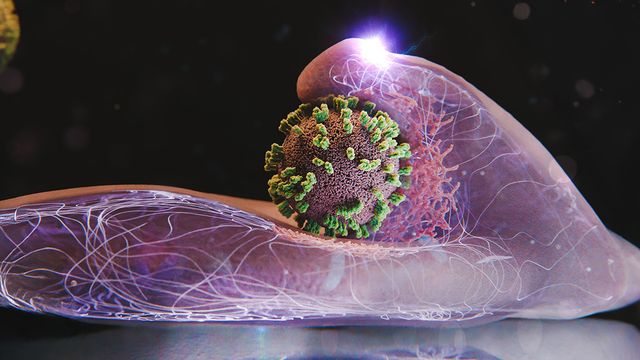
A new imaging approach combining AFM and fluorescence microscopy allowed researchers to observe influenza entry at high resolution. They discovered that cells recruit clathrin and reshape their membrane to capture viruses.
News
Cells Save Messages When Under Stress
A new study shows that cells actively pull older RNA molecules into condensates during stress, saving them while prioritizing newly made, stress-relevant RNA. Using yeast, researchers found that nearly all pre-stress mRNAs enter condensates.
News
Zapping Stem Cells Could Boost Growth of New Tissues and Organs
Scientists have discovered how tiny electrical pulses can steer stem cells as they grow, opening the door to improved ways of creating new tissues, organs, nerves and bones.
News
The Earliest Stage of Embryos Show Specialized Asymmetry
A new study examining mouse embryos when they are composed of just two cells, right after undergoing their very first cellular division, has shown that these two cells differ significantly.
News
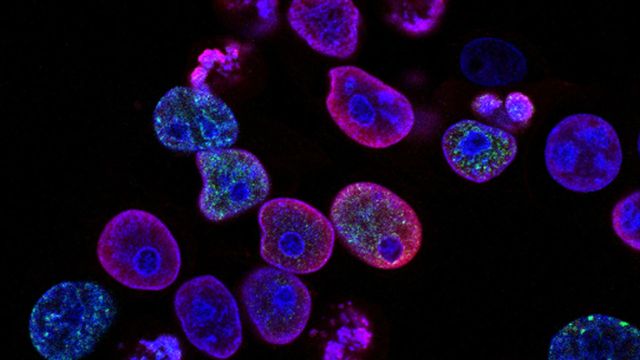
Cancer Cell Nucleus Shape Influences Treatment Success
New research finds that cancer cells with a more easily deformed nucleus are more sensitive to DNA-damaging drugs.
News
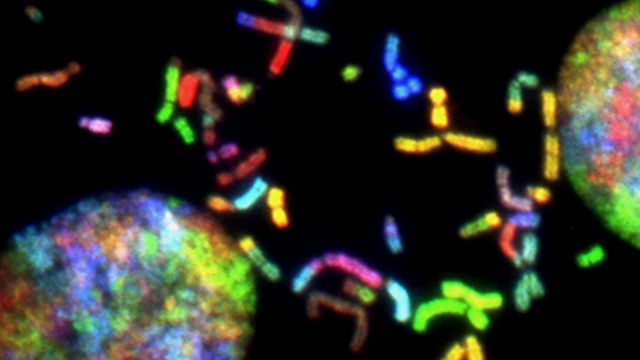
How Cancer Cells Keep Their Chromosomes Intact
New research has illustrated how cancer cells maintain their telomeres to keep dividing.
News
Study Reveals Why Cells Senesce Earlier Under High Oxygen Conditions
A new study demonstrates that replicative senescence depends upon ATM kinase, and that high oxygen generates a hyperactive form of ATM that forces cells to arrest earlier.

News
Cellular Blueprint for How We Think, Feel and Behave Created
Brain scans, genetic data and molecular imaging have been combined to create a detailed biological map that reveals the long-sought bridge between micro- and macro-level brain organization.
News
Environmental Chemicals Emerge as Skin Condition Risk Factor
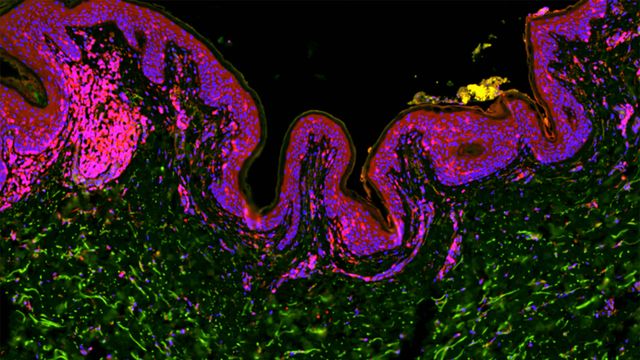
Evidence shows common endocrine disruptors can mimic genetic hidradenitis suppurativa signatures by lowering NCSTN in fibroblasts, suggesting environmental exposure may worsen symptoms and offer a new path for intervention.
Advertisement

