Trending News


News
News
Dynamic Behavior of Unstable Protein Revealed
Explore how the YB1 protein's intrinsic disorder helps it perform crucial cellular functions, impacting cancer therapies.

News
Why Important Genes "Go Quiet" as We Get Older
Researchers have uncovered a specific form of epigenetic aging that leads to the shutdown of key genes in intestinal stem cells.

News
Mini Lung Organoids Made in Bulk Could Help Test Personalized Cancer Treatments
Discover a simple, automated method of producing many lung organoids at once, open the door for more effective ways to trial lung disease and cancer treatments.

News
A Rare Disease That Burns Fat Instead of Sugar
A study using isotope tracing metabolomics found that people with Fanconi anemia fail to use glucose efficiently, show elevated ketones and signs of insulin resistance. The findings reveal metabolic inflexibility.

News
Simple Method Automates Manufacturing of Lung Organoids
Automated lung organoid production offers scalable, human-based models for testing therapies and accelerating lung disease research.

News
Drug Combination Can Sidestep Neuroblastoma Resistance Mechanisms
New research has identified a drug combination that can bypass the cellular defences of neuroblastoma that lead to relapse.
News
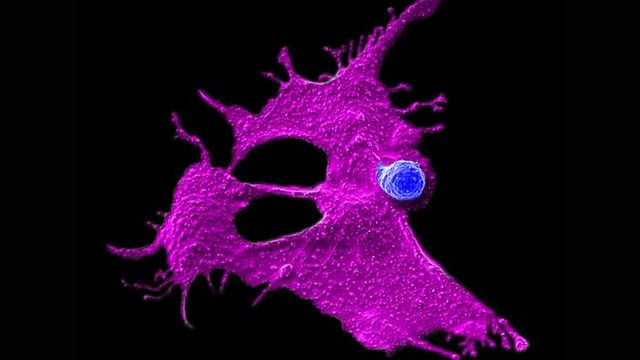
CAR-NKT Therapy Overcomes Barriers of Solid Tumors in Pancreatic Cancer Models
UCLA’s CAR-NKT therapy overcomes solid-tumor barriers, eliminating primary and metastatic pancreatic cancer in advanced preclinical models.

News
Many Patients May Not Need Long-Term Hormone Therapy for Prostate Cancer
A new study outlines that most of the benefits of hormone therapy for prostate cancer occur in the first 9 to 12 months, and extending therapy increases the risk of health problems.
News
Proteins Responsible for Cancer's Shapeshifting Identified
Some cancers can "shapeshift" and start to resemble cells from other organs. New research has identified the proteins involved.

News
Rare Mutation Predicts Strong Immunotherapy Response in Colorectal Cancer
A new study shows that a specific subset of mutations in the POLE gene is strongly associated with durable responses to immunotherapy in patients with metastatic colorectal cancer.
Advertisement